60 million years BC the Indo-Australasian tectonic plate crashed into the Eurasian plate and gave birth to the Himalaya. The Tethys Sea was pushed up which is why you can find sea shells on top of Mt Everest and fossilised ammonites in the Kali Gandaki Valley.
563BC (give or take) Siddhartha Gautama was born into royalty in Lumbini and lived as a Prince before gaining enlightenment as the Buddha – and gave birth to Buddhism, a philosophy centred, not on a god, but on a system of thought and a code of morality which is as relevant today as it was then.
1856 – Peak XV was declared the world’s highest peak and was later named Everest after the head of Trigonometric Survey who actually pronounced his name Eve-rest.
1914-18 – Around 100,000 Nepalis fought in World War I. Over 10,000 lost their lives. Thirty years later over 200,000 Gurkha served in WWII.
1934 – a huge earthquake killed over 8,000 Nepali in under a minute and destroyed a quarter of all homes.
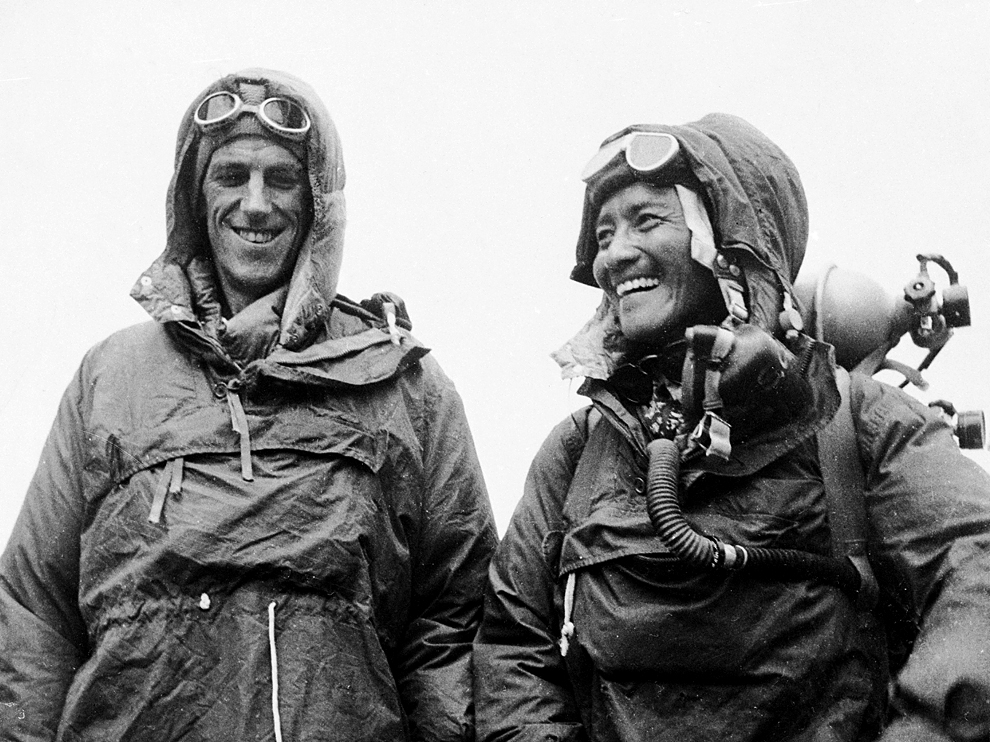
1953 – Everest was summited for the first time by Edmund Hillary and Sherpa Tenzing Norgay on the eve of the coronation of Queen Elizabeth II.
credit: National Geographic
1996 – May – eight climbers perished descending Everest’s peak on a single day, including two summit tour leaders.
2001 – A Prince from the Nepali Royal Family indiscriminately opened fire at a family gathering murdering his parents and eight others before shooting himself. His brother was crowned King.
2008 – Parliament abolished the Nepali monarchy, ending 240 years of royal rule.
2015 – April: a massive 7.8 magnitude earthquake struck central Nepal, killing nearly 9,000 people, injuring over 22,000 and leaving hundreds of thousands homeless. Rebuilding continues to this day.
Nepal’s culture and history is rich and its people, made up of over 60 ethnic and caste groups speaking over 120 languages, are extremely diverse. I have always, always wanted to go there.
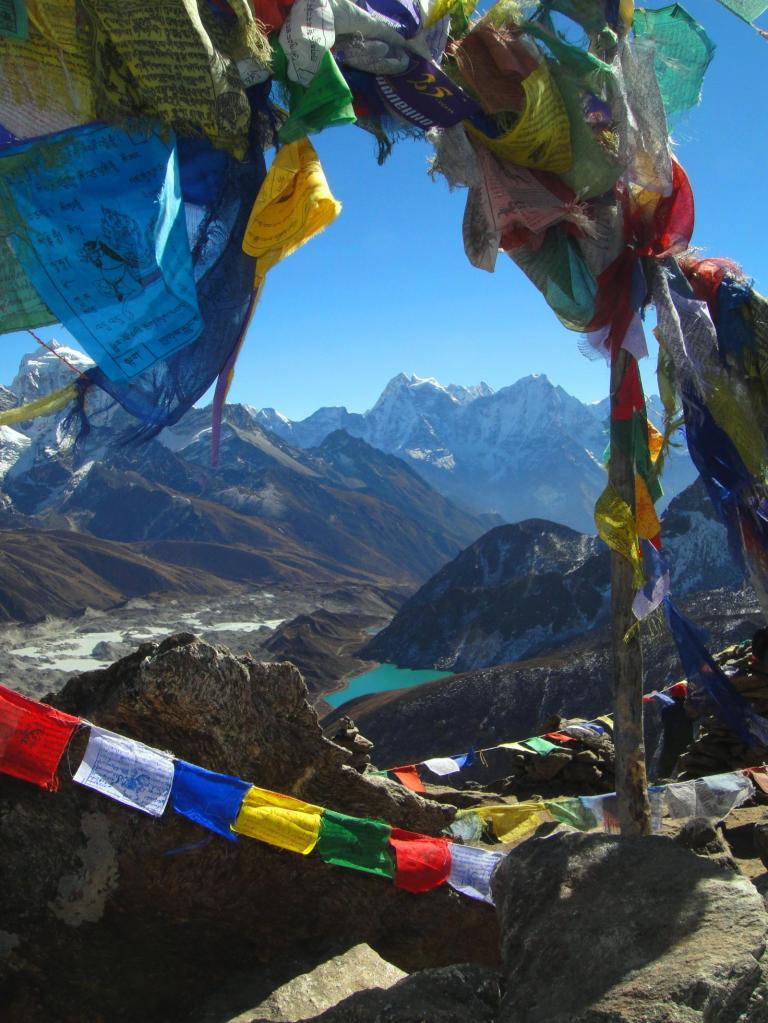
Sandwiched between the disputed lands of Tibet and the steamy plains of India, Nepal is the hallowed ground of Sherpa, Gurkha, monasteries, prayer wheels and yetis; a spiritual sanctuary of towering mountains, glacial lakes and, of course, home to the highest mountain on earth. And finally I get to go there this weekend, embarking on what will surely be the adventure of a lifetime in the Annapurna and the Himalaya mountain ranges.
I can’t believe this time has come around so quickly; I’m chomping at the bit to lace up my boots, put on my puffa, breathe in the mountain air and absorb, wonder and marvel at some of the most spectacular views I will ever get to experience in my life.
Part of me is also a little bit nervous; thanks to thrice-weekly Crossfit sessions along with kite surfing, swimming and walking Tiggy, I’m really fit. Yet…the average altitude for my high pass Himalaya trek is 4,300m where the air is 50% less than most of us are used to in our everyday existence.
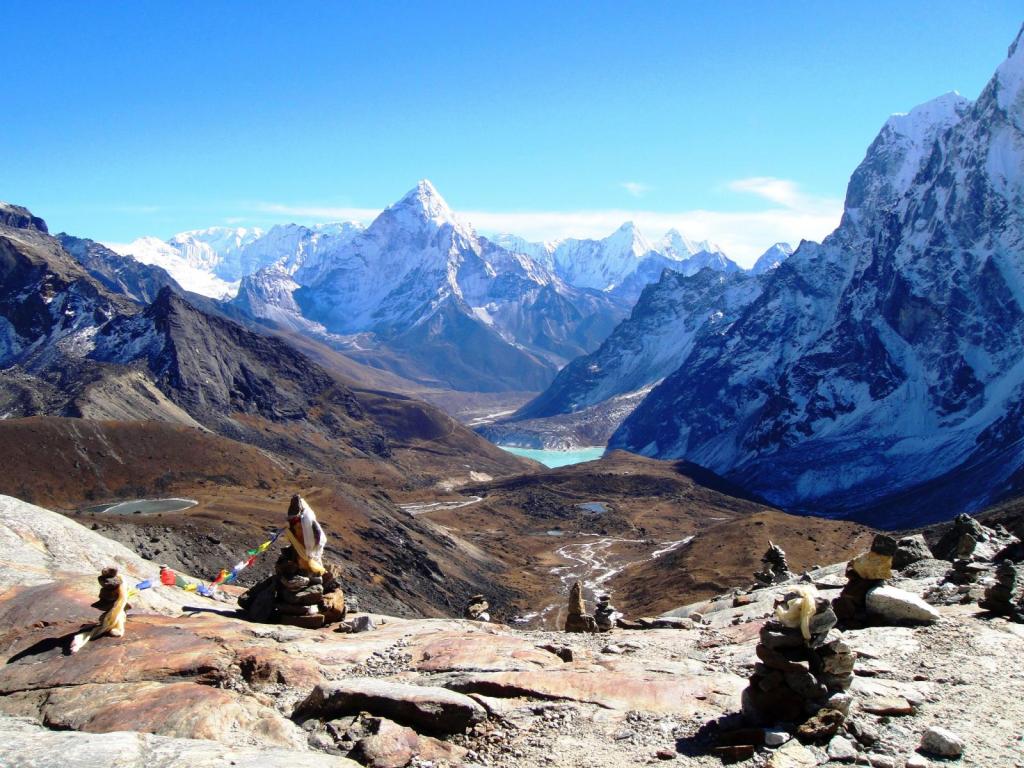
credit: Exodus
So I’m also prepared for it to be tough, everyone suffers at that altitude; sleep is elusive, headaches are to be expected, and the mere act of walking is physically draining. At night, sleeping in tea-houses and tents, the temperatures go as low as minus 30 degrees Celsius, which is a bit of a worry for someone who hates the cold as much as I do.
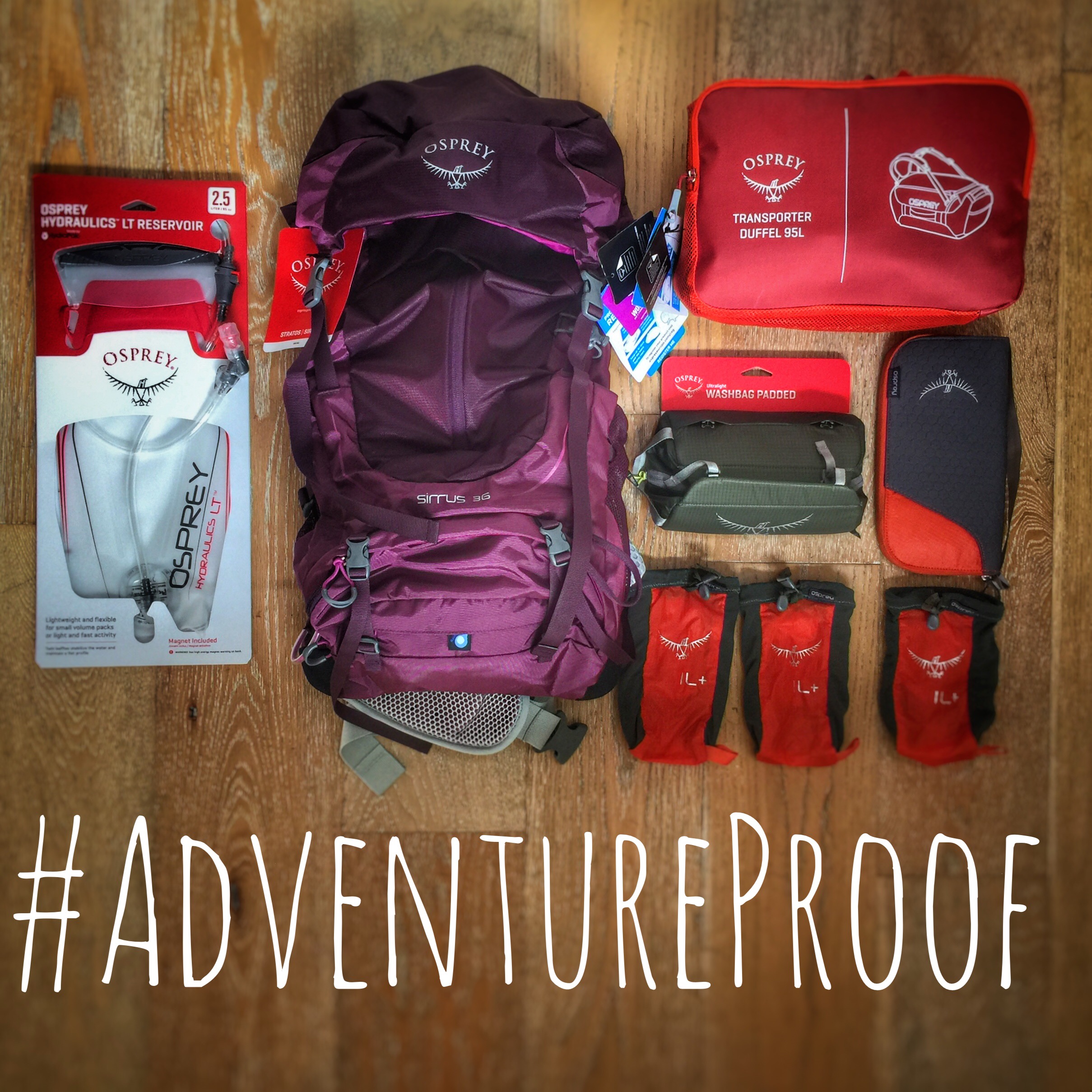
It’s not just a physical challenge either, it’s a packing one too as I can only take 7kg of luggage with me. Once you’ve considered a five season sleeping bag, a first aid kit, walking poles and a pair of crampons, this basically boils down to three pairs of knickers, two pairs of trousers, two t-shirts, a midlayer, a fleece, a Gore-Tex jacket and a very, very warm puffa…I doubt I’ll be hugging many people by the end.
I also have a whistle (in case I fall down a crevasse) a new fancy watch that boasts an altimeter, pedometer, compass and a storm alarm along with a very clever water bottle with a filter that means I could drink water out of a puddle and not fall foul of traveller’s tummy.
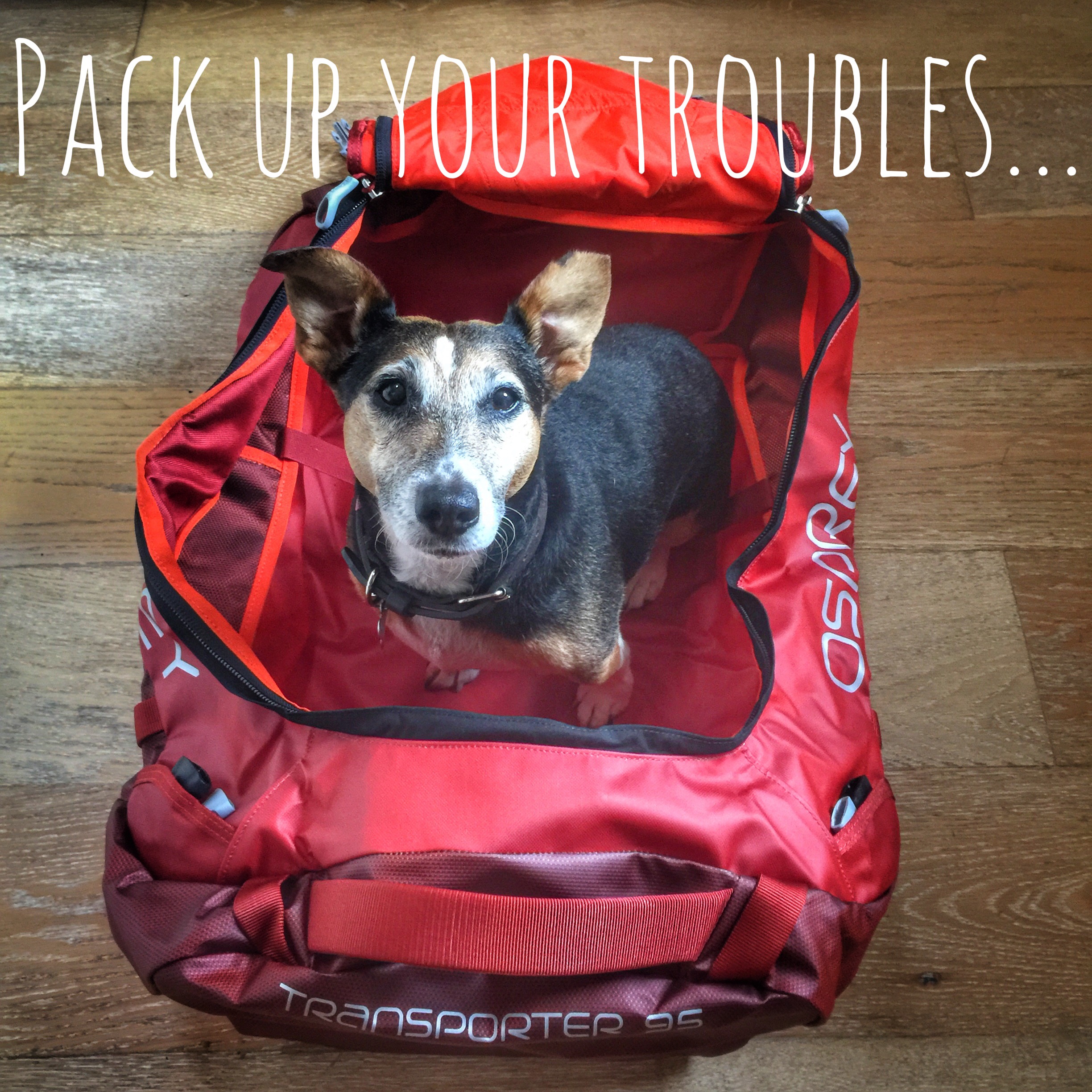
And all of these will be lugged around in my snazzy new red Osprey Transporter bag, which Tiggy has sussed means adventure is on the horizon, although sadly, she can’t come with me this time.
My first trek is the full 21 day tour of the entire Annapurna circuit; as well as views of the Annapurna and Dhaulagiri this offers an amazing variety of five different types of climates ranging from sub-tropical through alpine peaks to an arid semi-desert. The climax of the tour is crossing the iconic Thorong La Pass glacier at 5,416m.
I then have five days to rest, recuperate and wallow in plenty of bubble baths in Kathmandu before flying to the Himalaya to take on a quieter and more challenging, high pass 19-day Everest Base Camp trek; from the heart of the Sherpa homeland via the less trodden trails of the Goyko Lakes valley, traversing the icy glacier of the Cho La Pass and on to Basecamp where I hope to stand on the Khumbu glacier – the highest glacier in the world – at the foot of mighty mount Everest on November 14th.
Then plan is to then summit the Kala Patthar (The Black Rock) whose jagged peak stands at 5,643m and, clear skies permitting, offers spectacular close-up views of Everest.
By the end of the two treks I will have walked over 514 kilometers and, as I understand it, eaten a lot of dahl baat (rice and lentils).
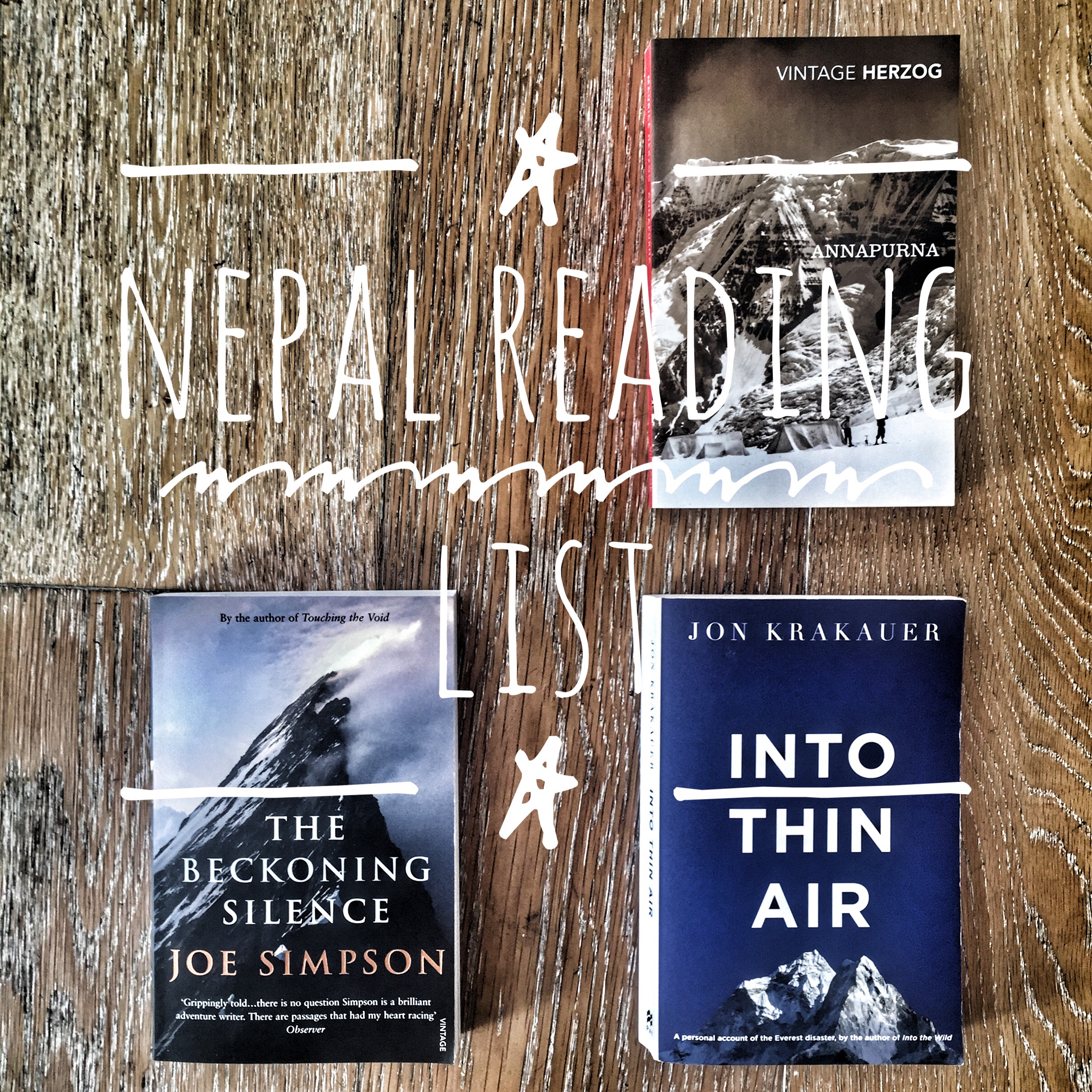
The luxury of free time on my eternity leave means I’ve been able to read so much about the region. First I devoured Jon Krakauer’s harrowing and moving Into Thin Air, his account of the 1996 Everest disaster which cost eight climbers their lives along with the lower leg, both hands and nose of fellow climber Beck Weathers.
I moved on to Chamonix native Maurice Herzog’s Annapurna – which he dictated from his recovery bed as the brave and heroic leader of the first team to ever successfully summit an 8,000 meter peak in 1951; in the book he eulogises over their new, advanced “nylon” coats and casually describes having his toes amputated in the carriage of a Nepalese train.
Finally, I’m just finishing native Yorkshire-man Joe Simpson’s gripping and engrossing The Beckoning Silence in which he faces up to the dangers of extreme climbing and mountaineering and the quiet acceptance of the loss of the lives of many friends.
Should I have harboured any desire to summit an 8,000 metre peak (I didn’t) then these books would most certainly have dissuaded me.
I feel a raft of strong emotions writing this. I feel grateful to have such an incredible opportunity to visit this magical land. I feel humble at the path that stands before me, knowing there will be moments that will test me to my limits. And, of course, I feel wretched at leaving Tiggy behind – adventures without her are never quite the same.
I do know I’m as ready as I can be for the adventure that awaits. And if there’s one thing my gap year has taught me, it’s that the biggest adventure you can take is to live the life of your dreams. It’s the most liberating, exhilarating and wondrous feeling – I feel that I finally know what it means to be ‘me’.
Updates to follow, wifi permitting.
Choose happy, never stop exploring and remember travel is the only thing you spend money on that will make you richer.
During a well deserved and delicious supper with Melody at Canteloupe where we feasted on a particularly tasty dish of feta cheese swathed in delicate sheathes of filou pastry and drizzled in local honey and cashew nuts, she told me about a remote lake, complete with its own refuge, high above a village called Fionnay and a walk you could do there via the track from La Chaux. I decided it would be our destination for the following day’s excursion.
After bidding Melody a fond farewell and after an extremely nail biting and stressful never-to-be-repeated blind reverse out of her driveway, Tiggy and I drove up to Verbier and checked into Hotel de Poste. We were staying there as our lovely host was heading back to Newcastle for a wedding.
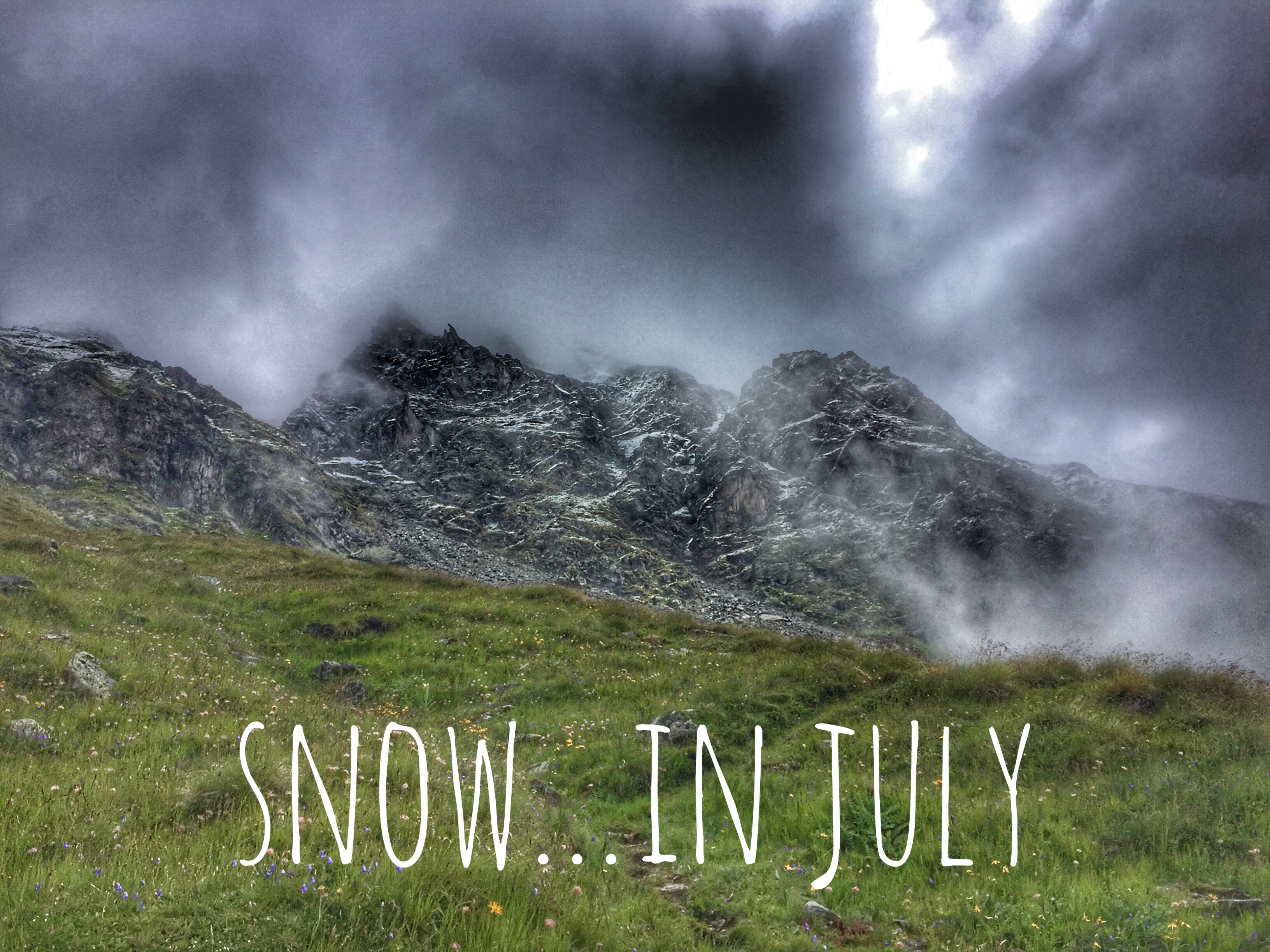
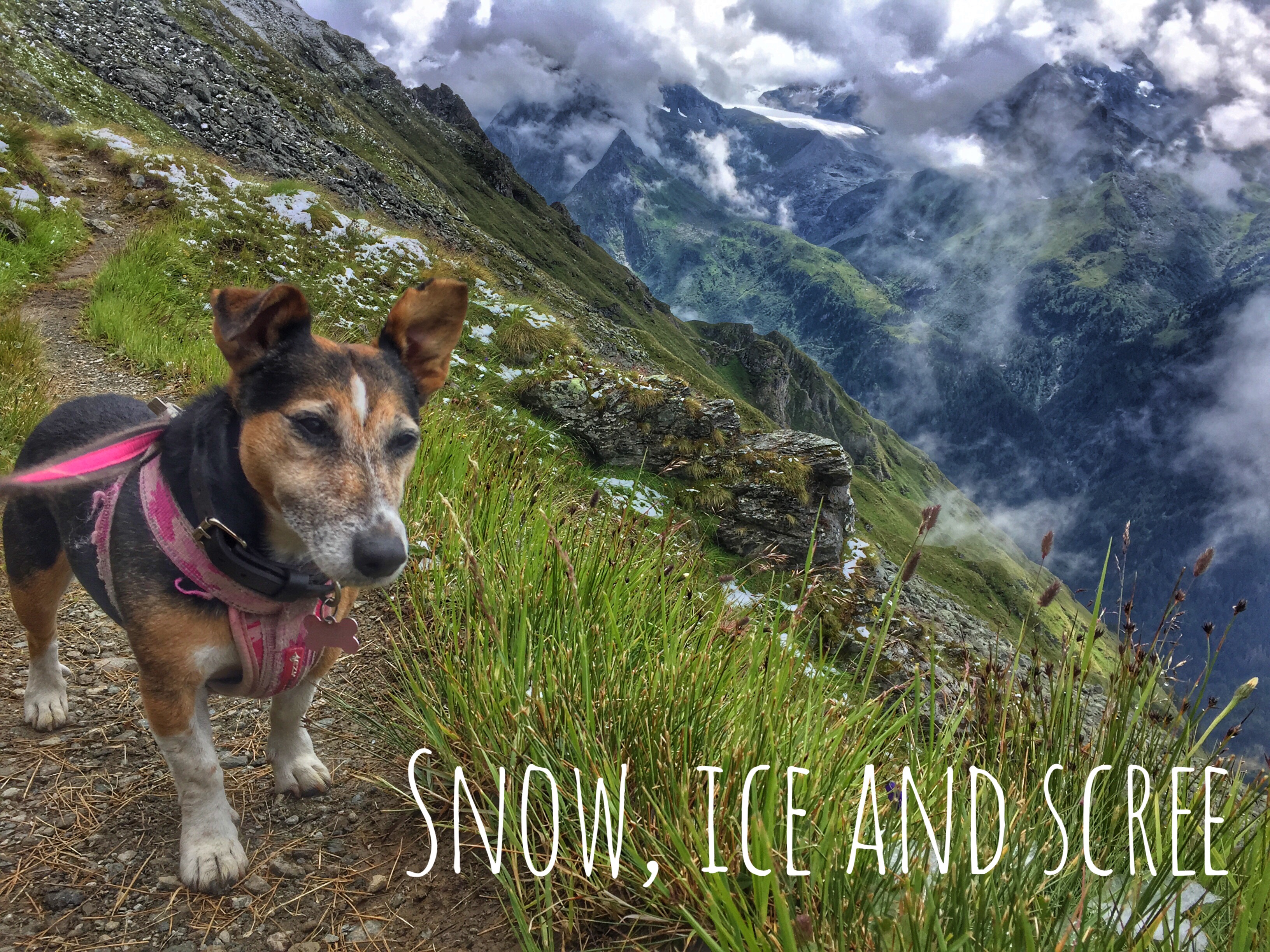
By 11am we were back again in the Medran bubble, ascending up to Fontenay once more where we warmed our legs up with a gentle stroll down the hill to La Chaux. The rain that had fallen yesterday had settled as snow on the higher ground – we were below the snow line, but the high mountain crests looked very wintery considering it was the end of July.
The emotionally draining drama of marmot-gate from the previous day was firmly etched in my mind and so, much to her bewilderment, Tiggy remained firmly attached to her lead and was thus rendered physically incapable from disappearing off in high speed pursuit of any bushy tailed creatures.
Today I had two walking poles with me – further practice for Nepal trekking, and a first for me as the more forgiving and gentle inclines of the Isle of Wight have never required me to use more than one, if any at all. Having been taken aback by how cold it had been, I also had a couple of extra layers with me, some biltong and a snack bar, plenty of water and Tiggy’s collapsible drinking bowl.
Two walking poles and an energetic dog at the end of a lead were actually a bit of an exasperating handful, so after attempting more than a couple of fruitless dog lead/walking pole combinations, I threaded the lead’s handle onto the waist strap of my rucksack which left my hands free to ‘pole’ without being tugged whilst ensuring Tiggy remained steadfastly tethered.
Consulting both the signs and the walking map at La Chaux revealed two potential routes to Lac De Louvie. The track, as recommended by Melody, was a lower route and a ‘blue’ on the walking map. The other route, which already had a few hikers on it, was a red route on the walking map, a path that appeared to zig zag round the side of the mountain to reach the lake.
Quite why I ignored Melody who has lived in Verbier for most of her adult life is, with hindsight, something I’m slightly embarrassed about, (hubris perhaps?) but I did, and duly set off following the other walkers along the red route.
We soon caught up and passed the two hikers who were having difficulty with the rocky terrain which had slowed them down to a snail like pace– apart from having to concentrate on where to put your feet the path was pretty horizontal and not particularly challenging at all.
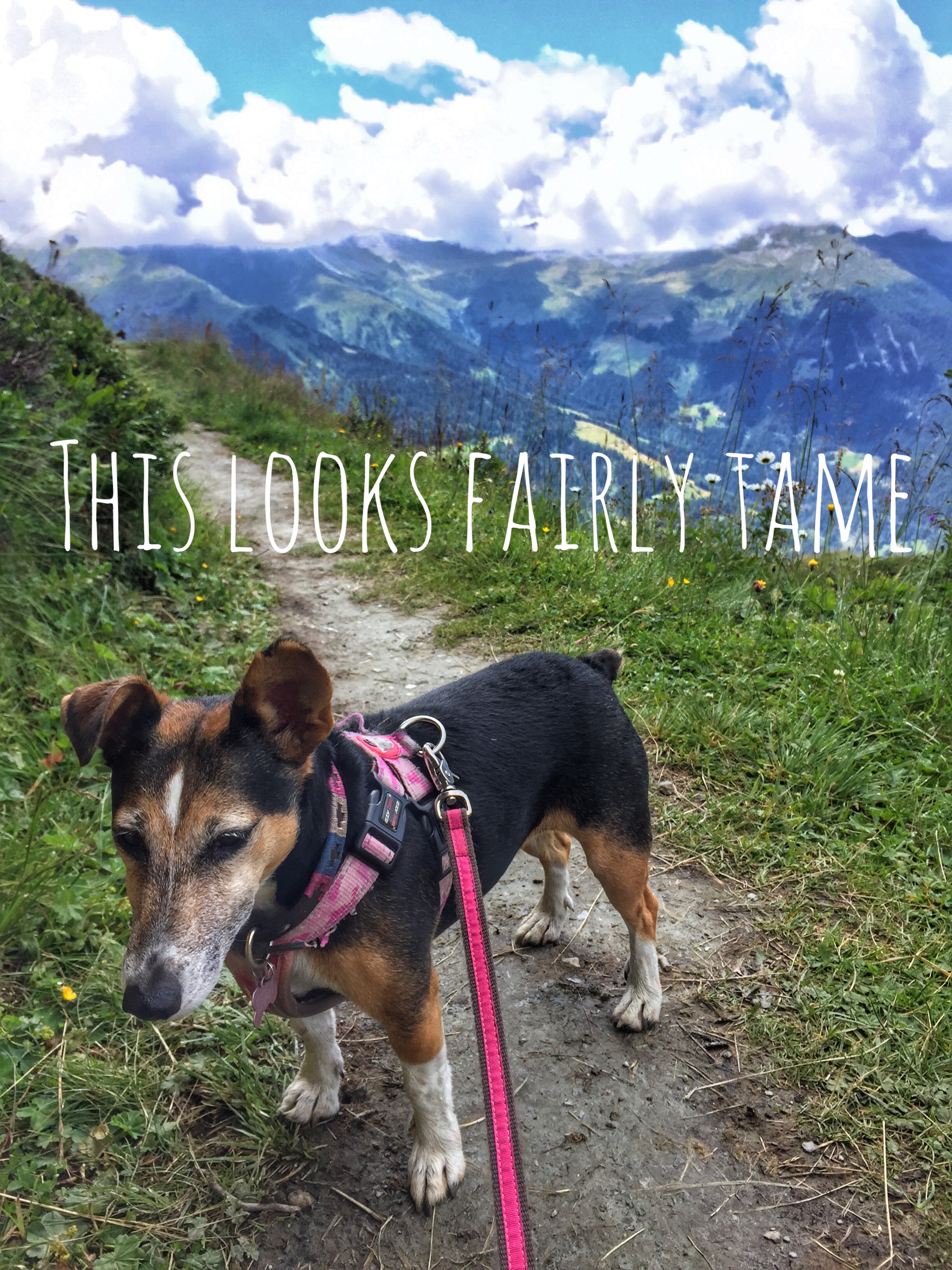
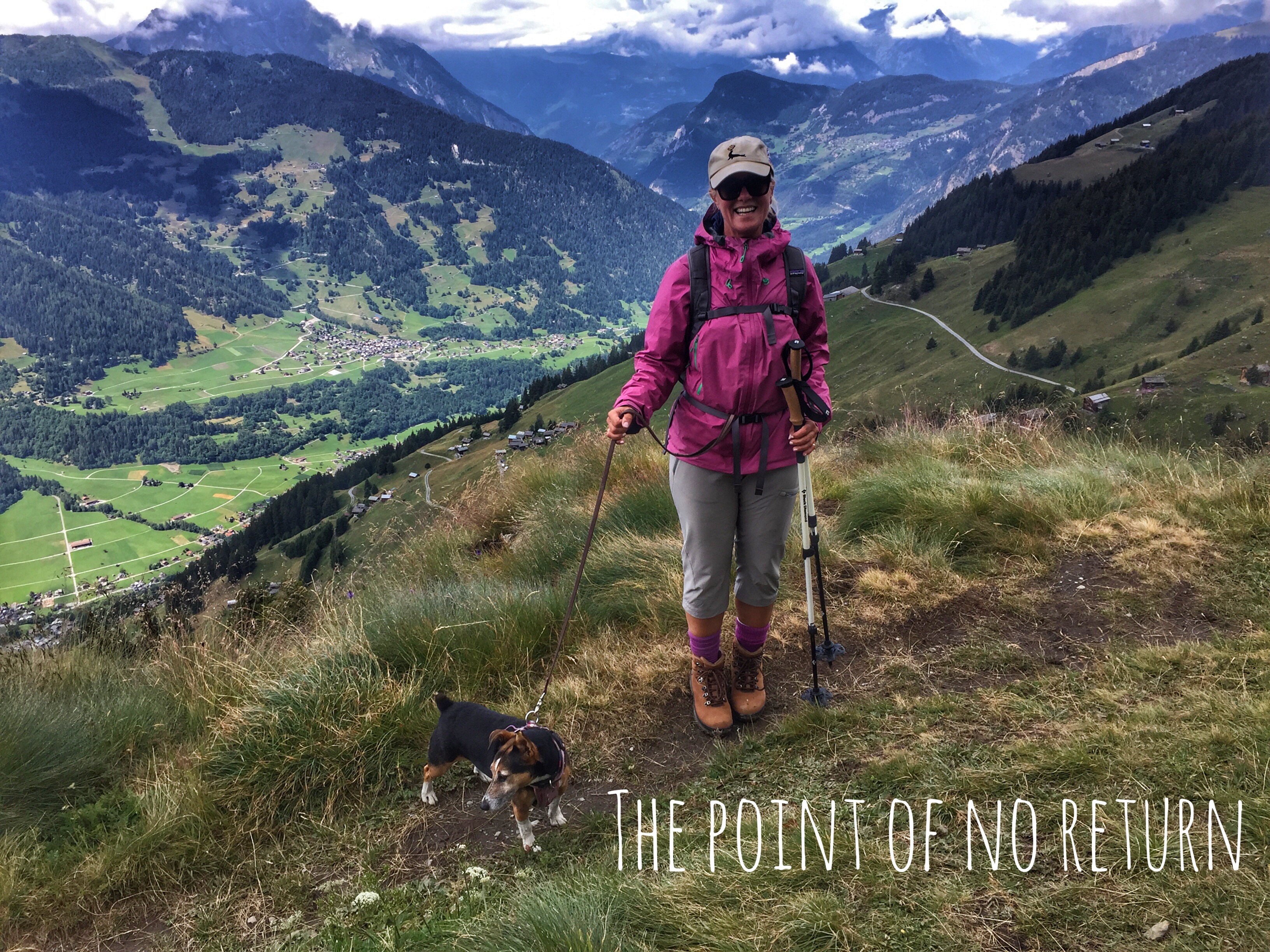
A little further along, at a fork in the path, we bumped into a couple with their Labrador who were taking a breather. The view was so lovely that I stopped and asked them to take a photo of Tiggy and I. The lady kindly obliged, I enquired if they had come from Lac De Louvie – ‘mais non’ she replied, looking slightly startled and alarmed, ‘on a faisait une petit promenade’. Oh, I replied, “nous allons la”. She looked even more startled, saying she’d never done it, and that it was ‘tres dificile’, which she repeated a number of times, glancing at her husband to back her up, which he did by nodding slowly and sagely.
I smiled confidently, ‘ca va’ I said, emboldened by the ease of the path thus far and confident in the fact that we were on a route clearly marked on the map. Pleasantries concluded, we started on our way.
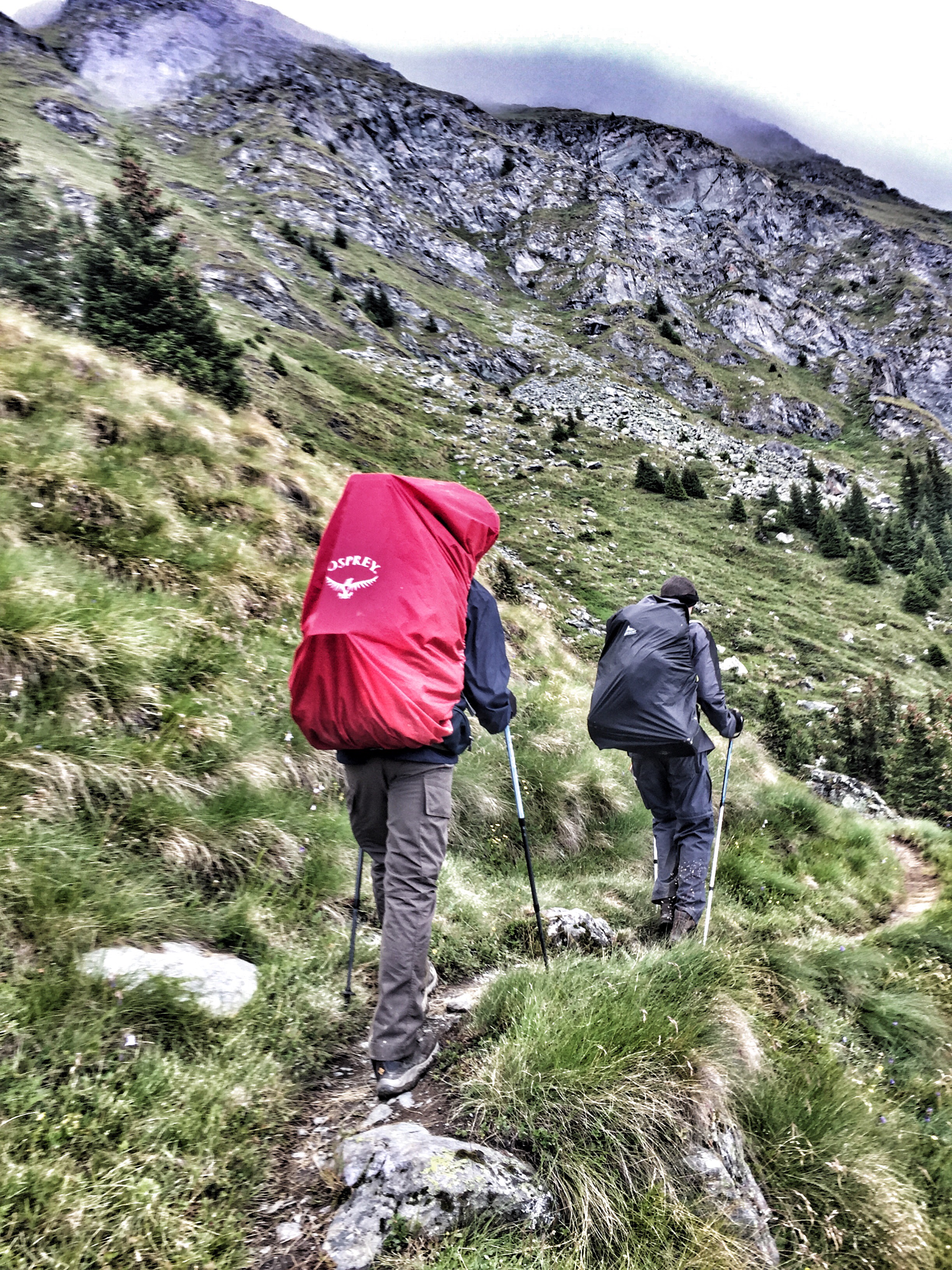
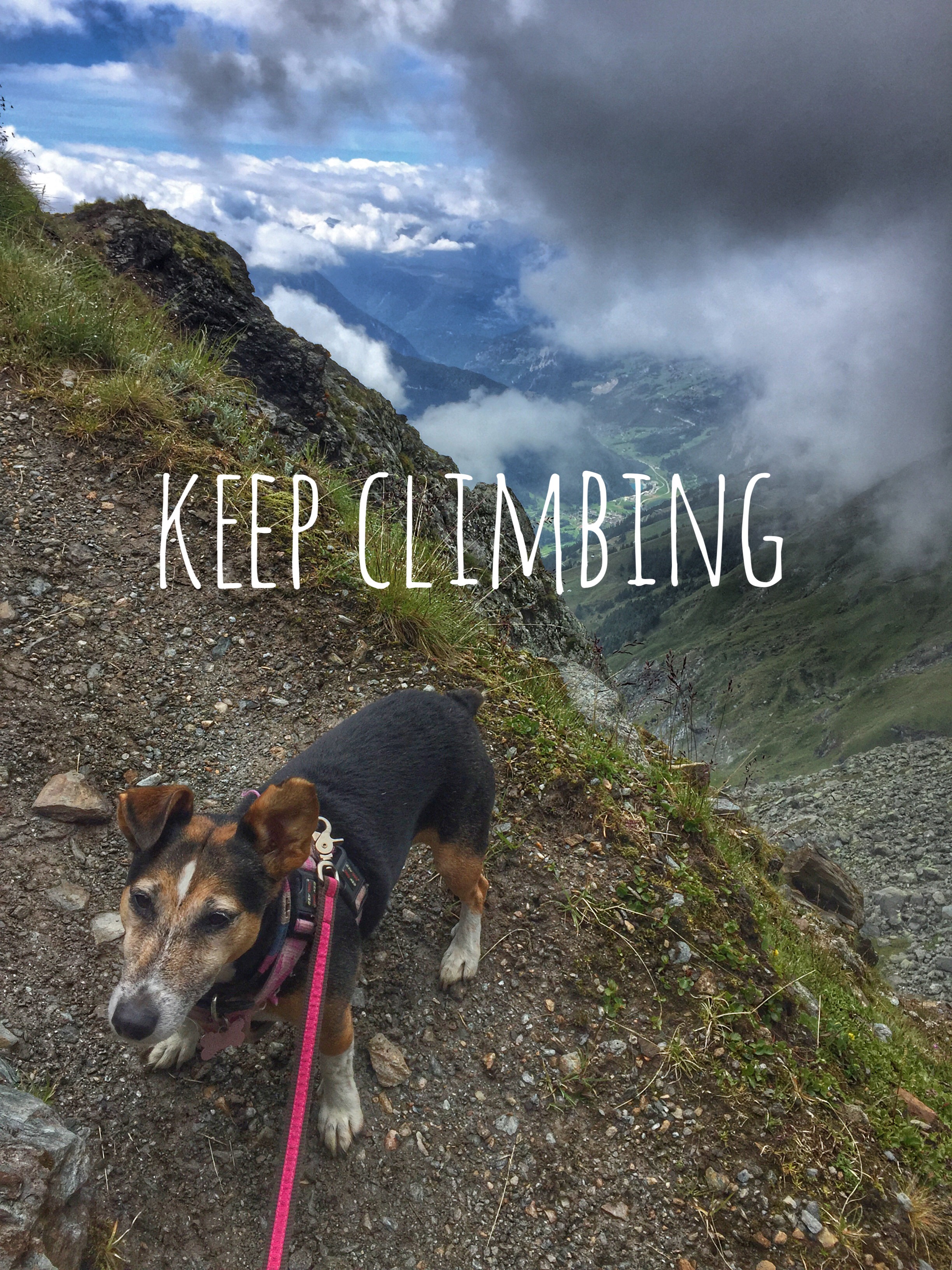
The path wound on a gentle incline around the side of the mountain and we soon rounded the corner leaving the civilisation of Le Chaux and the Mont Fort cable car behind us. In the distance I could see two hikers, one with a bright red rucksack clearly making their way. The air was cool, but I had all my layers on and the effort of slowly rising upwards kept me warm. Low hanging cloud meant that the top of the mountain was shrouded in mist, but I could still see the snowline above us.
It wasn’t long before I caught up with the red-rucksacked hikers who were two young Danes called – I kid you not – Hans and Christian. They politely smiled at my fairy tale quip, but I couldn’t work out if they were bored of similar digs or they simply didn’t understand. They were on a ten day hike of the haute route, the infamous walking trek taking in high pass routes in Switzerland and France.
The boys were making way more slowly than us as they were carrying all that they needed with them. They, like Tiggy and I, were also bound for Lac de Louvie, except they wouldn’t be descending to Fionnay to bus it back to Verbier, they were going to spend the night at the lake in the refuge.
Lashed to their rucksacks they had carabiners, ropes and a harness each – which I remember thinking was probably a bit overkill for a hike, but I assumed they maybe perhaps needed to use them on other routes of the haute route.
The gentle incline soon turned into a steep uphill slope and we were all, with the exception of Tiggy, breathing heavily (the boys especially so with the weight of their rucksacks); the effort arrested our amiable chat. I was glad of my double pole strategy, it definitely made navigating the challenging gradient a bit easier. It was certainly excellent practice for Nepal.
We feel into a natural cadence and order – Tiggy and I in front and the boys behind – Tiggy taking every boulder and slope in her stride, remaining absolutely resolute in her determination and desperation to err from the path in the hope of a chance to chase marmots.
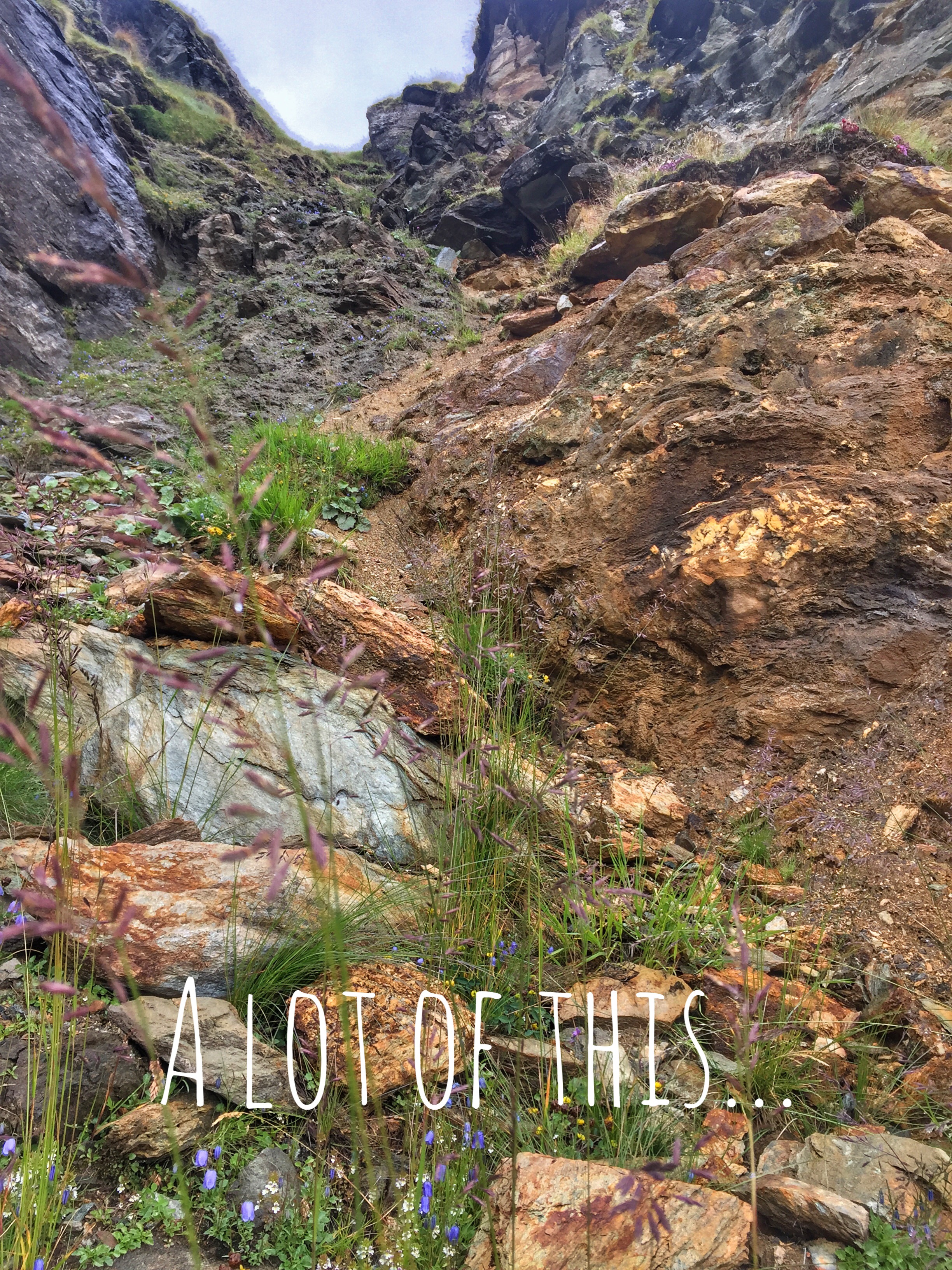
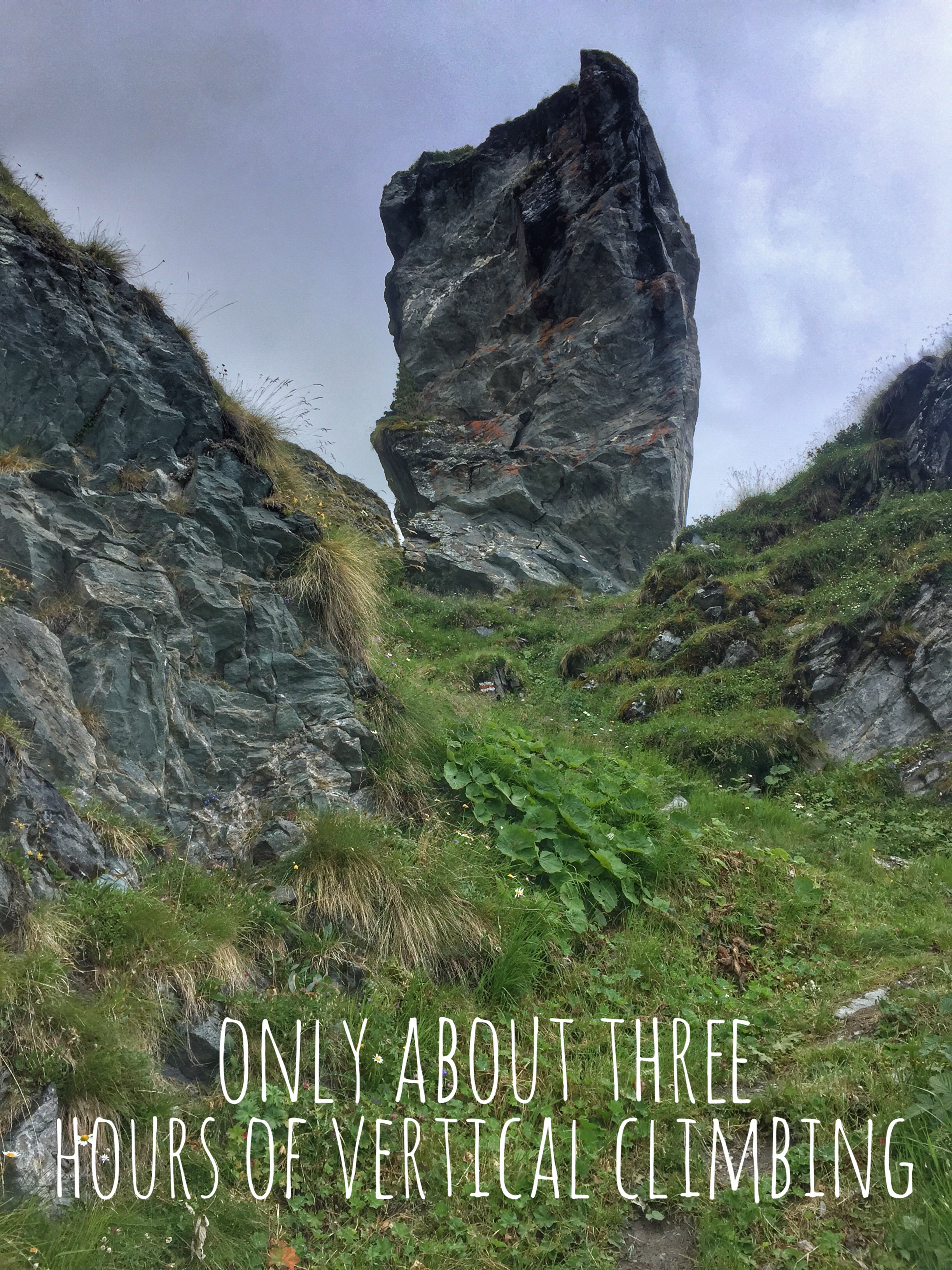
We walked in silence, up and up, and higher still; the snow line and clouds getting closer with every switchback. Looking ahead I could see some steep crevasses, covered in rockfall and scree, slicing deeply into the mountainside. My heart sank slightly when I realized that the path wasn’t traversing the side of the mountain all, but in order to successfully navigate the crevasses, we were going to have to go high enough so that we could cross either above them or at their narrowest point. This ‘red route’ was beginning to feel more like a black.
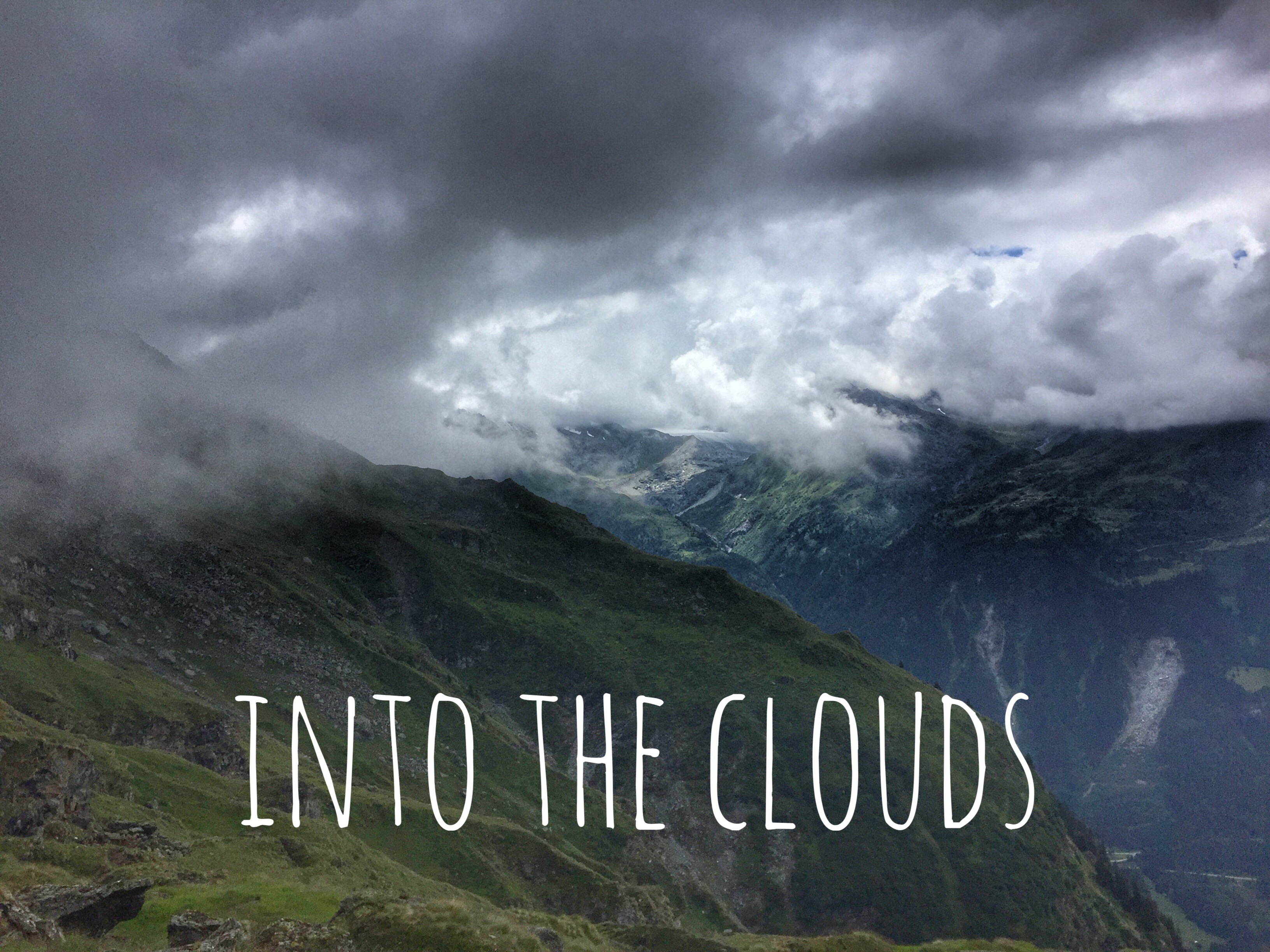
The air temperature cooled further still and after about an hour and a half we found ourselves in the snow line – clouds rolling up the side of the mountain towards us, either enveloping us completely in its chilly cloak or dancing around us offering tantalizing glimpses of what was to come. Over a vertical mile down below in the valley floor it looked lovely and warm – I began to appreciate the appeal of the blue route.
At times the path was confusing, but for the most part it was pretty clear, flags painted on rocks along the way helped us, indicating that we remained on the correct route.
We came across our first major challenge, a landslide, after about two hours.
It was at the point in the walk when I was beginning to get a bit irritated, just as we turned another switchback and I thought, we must be at the top now, there was another one, and another and yet another. Mountain hikes are devilishly cunning in that way. I placated myself with the reassurance that this was, indeed, a great Nepal warm up.
I was slightly concerned about Tiggy, who had never been at altitude before, but she continued to bounce along, leaping like a bunny rabbit up over rocks and boulders and waiting patiently for me at the top of every one before trotting on ahead, pulling at my waistband with her lead.
The landslide was at the top of the first crevasse we had to cross (yes, there was more than one). The unseasonal rain must have caused the path to slide away leaving a slippery slope of hazardous wet mud; it was a very, very steep gradient and a very long and extremely sheer drop to the side.
The boys, nonplussed, slipped off their rucksacks and quietly went about the businesses of attaching their harnesses and started to lay out one of their ropes.
“I go first” announced Hans, “Tiggy” he said, pointing at her “will go next, then you, and Christian will go last”. Ok, I said, smiling on the outside and feeling rather anxious on the inside, I thought I could just about manage, but how would Tiggy cope? Should I put her in my rucksack I wondered?
Hans clambered like spider-man up the scree to the left of the mud slide, it was about one and a half storys high. He was clearly a competent climber and made it look marvelously easy. He lowered the rope with a carabiner on the end saying “this is for Tiggy”. I attached it to her harness and, keeping hold of the lead so she was tethered above and below, I bent down to pick up her to lift her as high as I could (not very high as it turned out, being only 5ft 3”). This was to try make it easier for Hans to winch her up – rather like someone being rescued by the RNLI helicopter from the sea.
Tiggy wriggled which made me nervous, and before I could even say ‘ok’ for Hans to take up the slack and start pulling, she’d managed to get all four paws onto the scree and, completely non-plussed, bounded up the sheer face like a little mountain goat. Once at the top she peered back over the edge as if to say ‘come on mummy, what’s taking you so long?’. We were all rather incredulous at how easily she’d sprung up such a tricky and steep incline.
The carabiner was unclipped from Tiggy and lashed around my waist, a hefty tug from Christian made sure all was secure. Heart in mouth (I’m strong and fit, but am no climber and have no experience at all) I took my time to secure each foot and hand as I made my way methodically up the scree to the sound of encouraging comments from Hans above and Christian below.
A few of the rocks skidded beneath my feet, but I made it without needing assistance from the rope. Shortly afterwards Christian arrived and we sat down for some water and a bit of a breather whilst the rope was coiled.
“I definitely owe you guys a beer at the refuge”, I said. They smiled and explained that the walking route they were doing shouldn’t need harnesses, but they bought them to be on the safe side for moments such as these. They were only in their early twenties, I was so impressed at their maturity and how well prepared they were and extremely conscious that I was there – alone with a small dog – and whilst not ill equipped, I was certainly guilty of not having researched my route at all.
Therefore, I had no idea whatsoever what was coming up next.
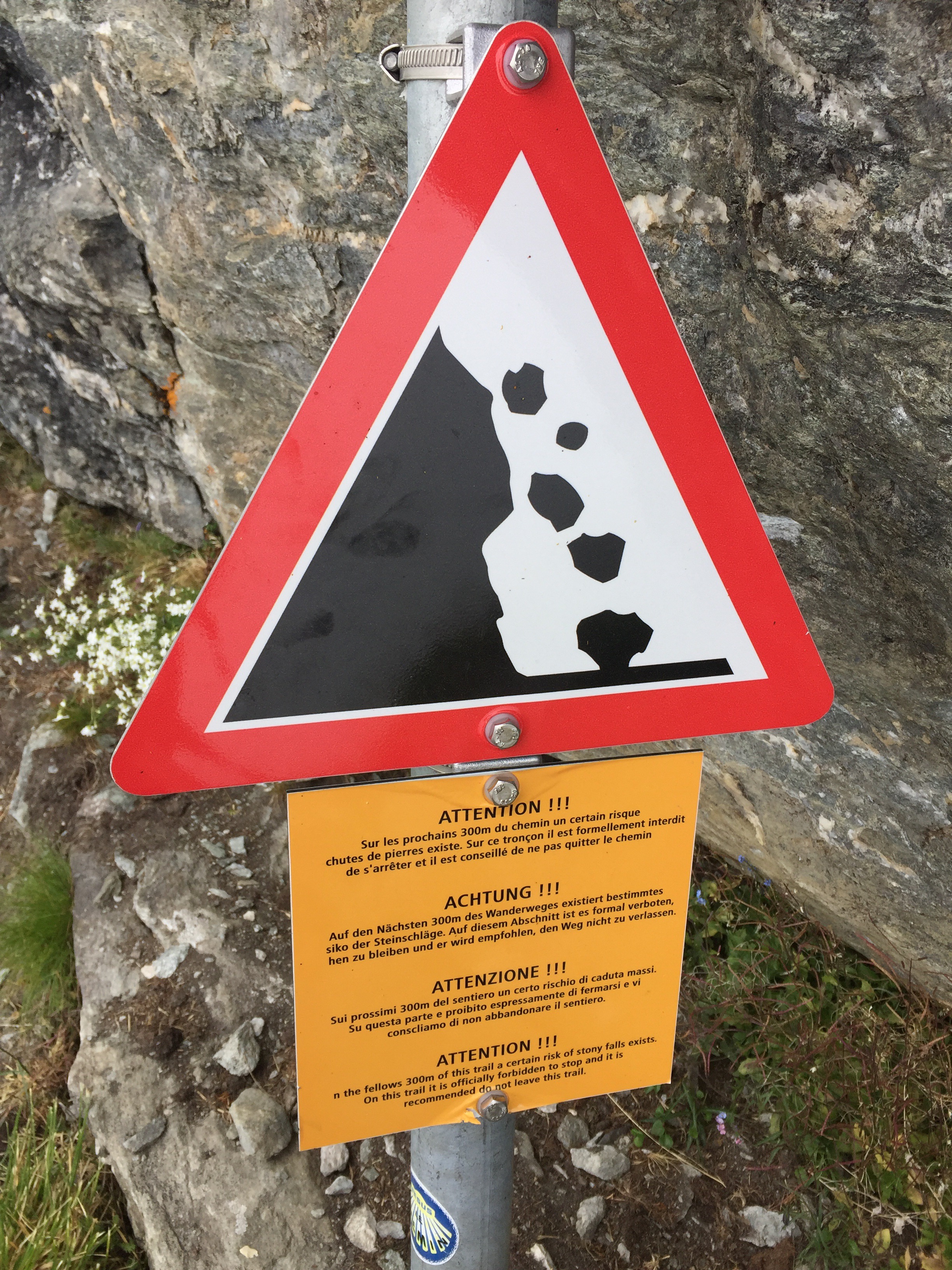
After about another half an hour of further ascent a triangular sign with a red boarder stood out brightly in the mist; the image was of a rockfall and the warning was written underneath in four languages. Poorly translated into English it said: “For the following 300m of the trail there is a risk of falling rocks. It is prohibited to stop on the trial and deviating from the path is not recommended”.
A sneaking thought entered my mind that perhaps I should turn back – but I was now over halfway to the lake, and I thought it would be safer and more sensible to keep going with the boys than to turn back alone. Plus the idea of going down the mudslide/scree without a rope as a failsafe in case Tiggy or I slid was not one worth entertaining.
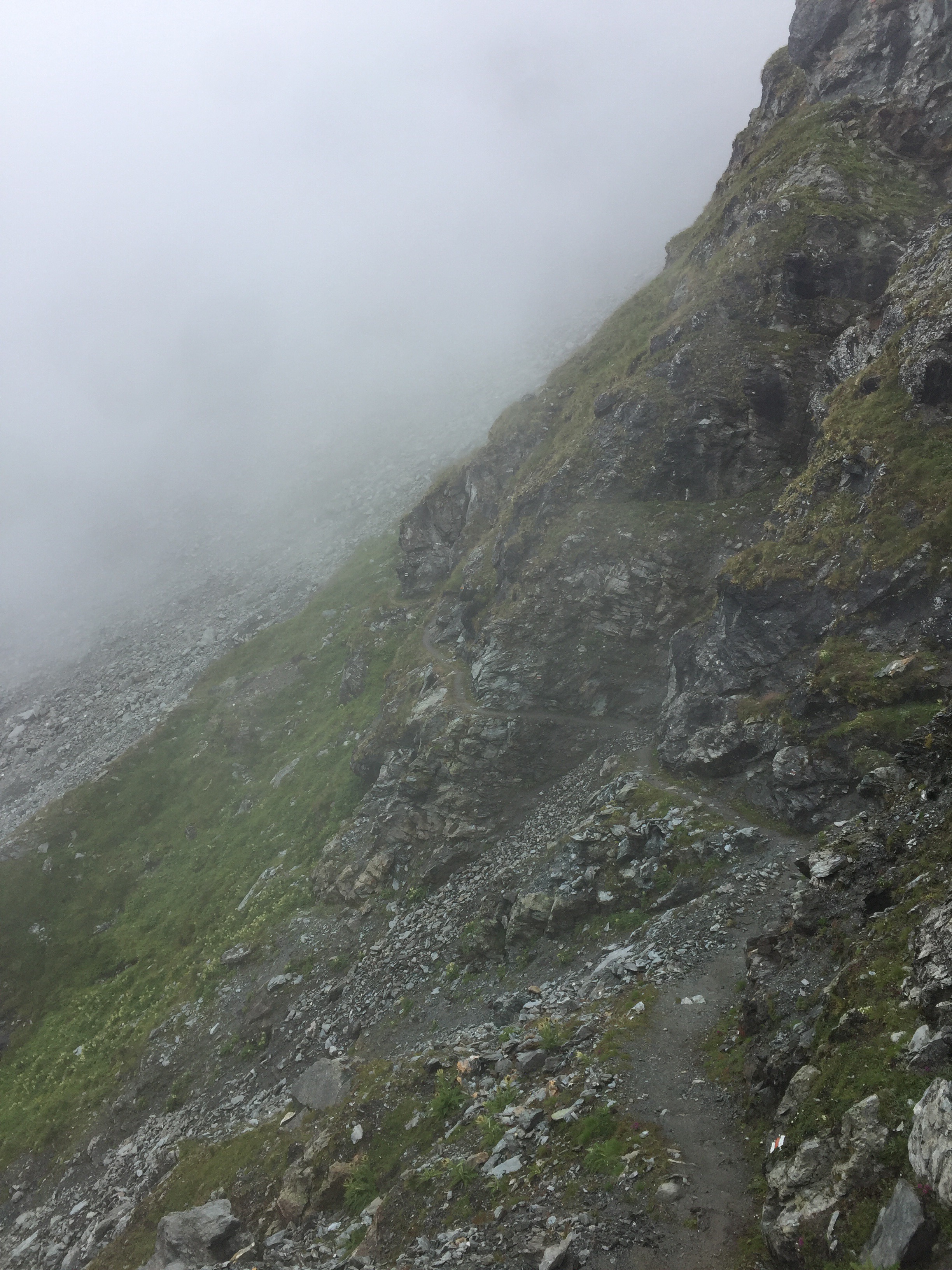
Out came the harnesses again – this part of the path, which was no wider than two footprints had a sheer drop down the mountainside to the right, a Via Ferrata style chain to hold onto at waist height to the left, whilst whatever sinister danger hovered above was covered in clouds and impossible to see.
We all stashed our walking poles in our respective rucksacks. I made a makeshift harness out of a shorter piece of rope, impressing the boys with my nautical knots – who knew that a bowline would come in handy at 2500 metres in the Swiss Alps?
The safety rope went from Hans’ harness, to a carabiner which was attached to Tiggy, then to me and then to Christian. Slowly yet with an unspoken sense of urgency to get across promptly we inched our way along in silence– I kept my eyes firmly ahead, hand over hand holding the iron chain and taking up the slack in Tiggy’s lead. Clouds kept rolling up and over us, making the visibility very variable, that didn’t bother me too much, but the moisture in the air made the path, particularly the rocky parts, quite slippery. This was not a place to be less than very sure of foot.
Every now and again Tiggy peeped over the edge – a swift yank on the lead from me ensured she didn’t go any further, I think she was just being inquisitive – I couldn’t imagine this was a particularly hospitable dwelling place for any mountain animal, let alone a marmot who requires the ability to burrow into soft ground.
We crossed in about fifteen minutes and on the other side we all breathed a sigh of relief. Then the clouds cleared and we looked back and caught sight of the perils that had been looming above us – a menacing overhanging cliff of granite from which spewed a tumbling ravine of rocks of all sizes. It was easy to appreciate how a landslide might happen – it was vulnerable, exposed and appeared somewhat unstable.
“I think I owe you two beers,” I said, laughingly.
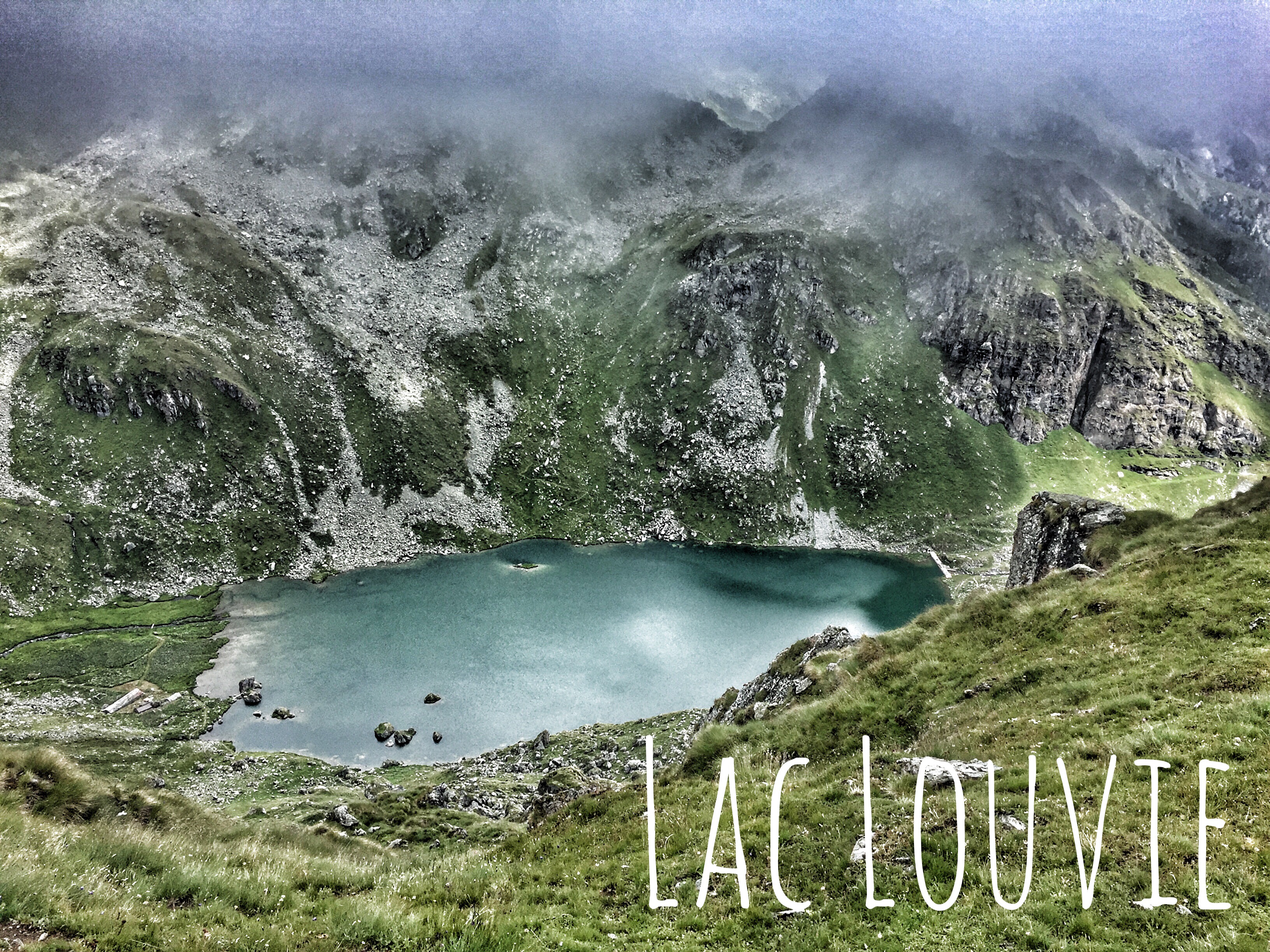
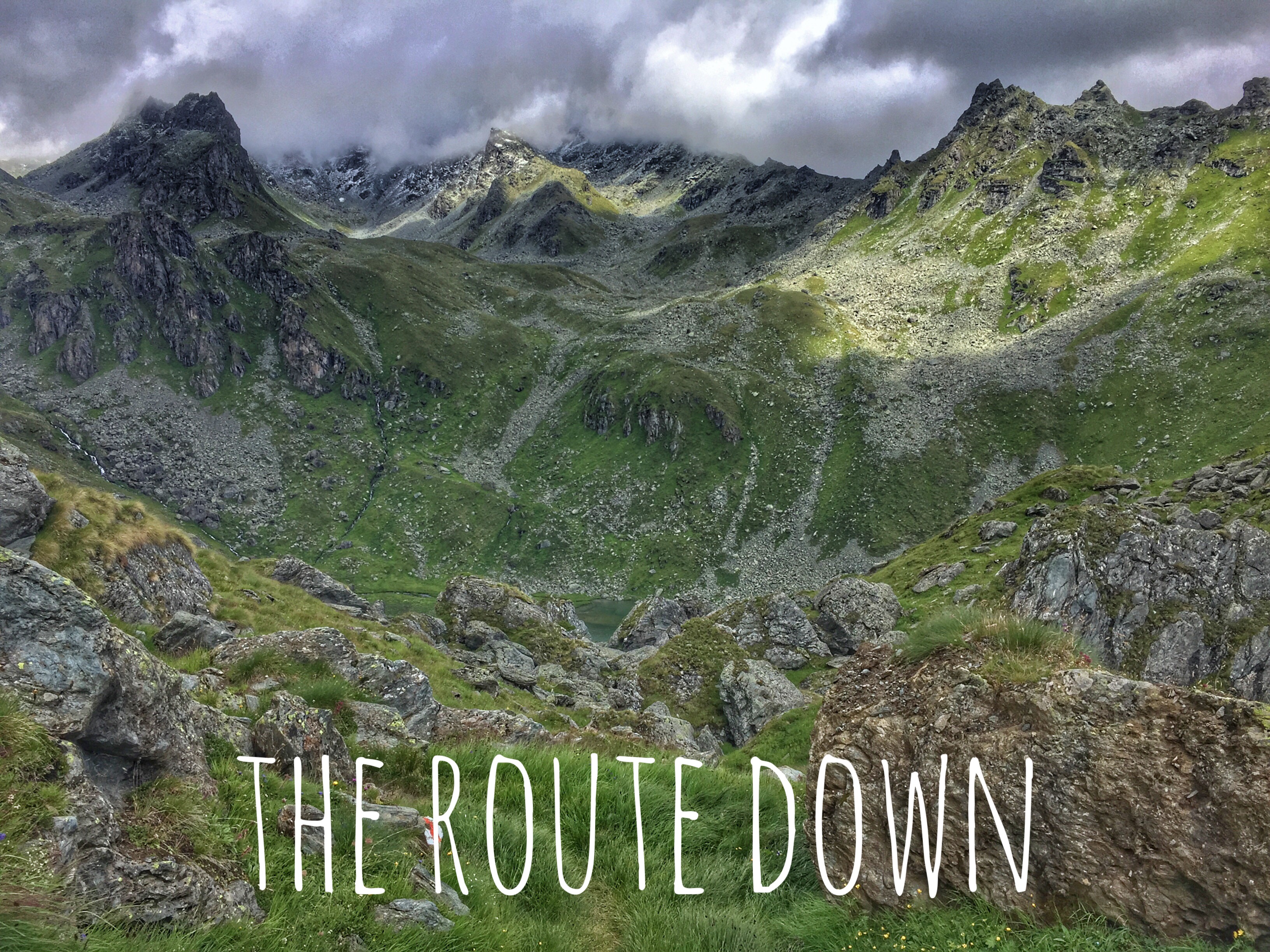
On we plodded – still ascending, until out of the mist we suddenly were standing on the narrow ridge of Col Termin (2,648m) – we had reached the top of the route! And from there, once round the narrow corner of the Col we could see down the other side of the mountain to the inky blue depths of Lac de Louvie (2,214m).
It was a breathtaking view – probably made all the more so because it was because it was such an unexpectedly arduous a climb to get there. It’s so true the harder you have to work for something, the better you feel when you achieve it.
We descended fairly rapidly – I was starting to become a bit twitchy and conscious of the time – the last bus from Fionnay left for Verbier at 5.20pm, it was already 3pm and it was at least an hour’s descent into Fionnay from the lake itself. Of course the boys were staying at refuge so it didn’t matter to them.
We wound down and around, and around and down. It’s a cruel trick of hiking that the uninitiated may be fooled into thinking that going up is the hardest part – and we’d been ascending steeply, non-stop for nearly four hours – but the reality is, it’s three times harder on your thighs to go down.
Gravity may keep us on terra firma and stop us from flying off into outer space, but it makes going down hill a lot harder as it accelerates the forward movement of your body, meaning your quads have to work terrifically hard to keep you at a controlled speed. Someone once told me it’s rather like driving your car with the handbreak on.
We were descending 434 vertical metres to the lake below, which would take only an hour – conversely it had taken four hours to ascend a mere 388 vertical metres via 4 miles of torturous switchbacks and taxing traverses.
We skirted round the edge of the lake – the snowy peaks from whence we came looming high above. I was fairly relaxed by now, it wasn’t far to Fionnay and we were on the homeward stretch.
One of my many regrets of the day was that I didn’t have time to treat myself to a wild swim in the lake. Oh how invigorating it would have been to toast our arrival with a bracing plunge into its icy cool depths, I longed to float on my back, gaze up at the peaks above and take a few moments to bask in the contentment, and relief, of safe passage. I’m sure it would also have been great cold-water therapy for my muscles too, which weren’t aching…yet.
I made a mental note to return another time with a swimming costume and an overnight bag and treat myself to a night’s stay at the refuge although, of course, it was not without some chagrin that I wouldn’t be guaranteed the company of two disarmingly handsome young Danes.
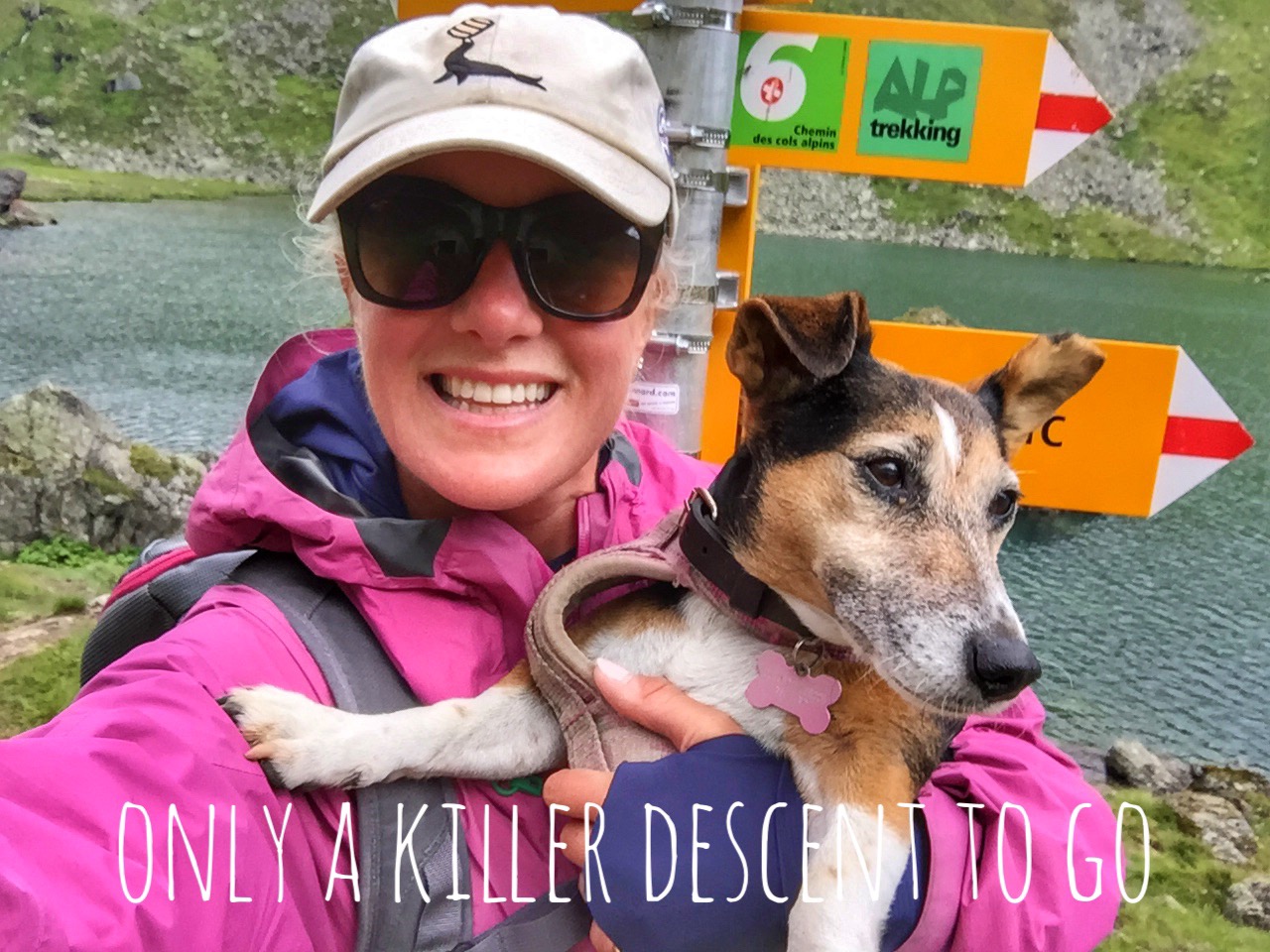
We collapsed euphorically at the refuge (2,214m) and I kept good on my promise of an extremely well deserved round of beers. I can’t begin to tell you how good they tasted! Tiggy had a little paddle, a long drink from the fresh water trough and some of my biltong. I wolfed down my snack bar. Glancing at my watch I saw it was already 4pm and time for us to go.
The signpost said it was 1 hour 10 minutes to descent to Fionnay, nestling snugly in the bottom of the valley a reasonably hefty 724 vertical metres beneath us.
After a slightly smelly but very warm and heartfelt hug with the boys and a tickle for Tiggy, we waved goodbye to our walking companions and unassuming heroes. Whether it’s sharing a connection over poorly dogs, as I’d experienced in Spain when Tiggy swallowed a stone, or bonding over a challenging hike, my gap year really has reaffirmed my view that the majority of human beings truly are kind, generous and good, and that we share far more in common with each other than we have differences dividing us.
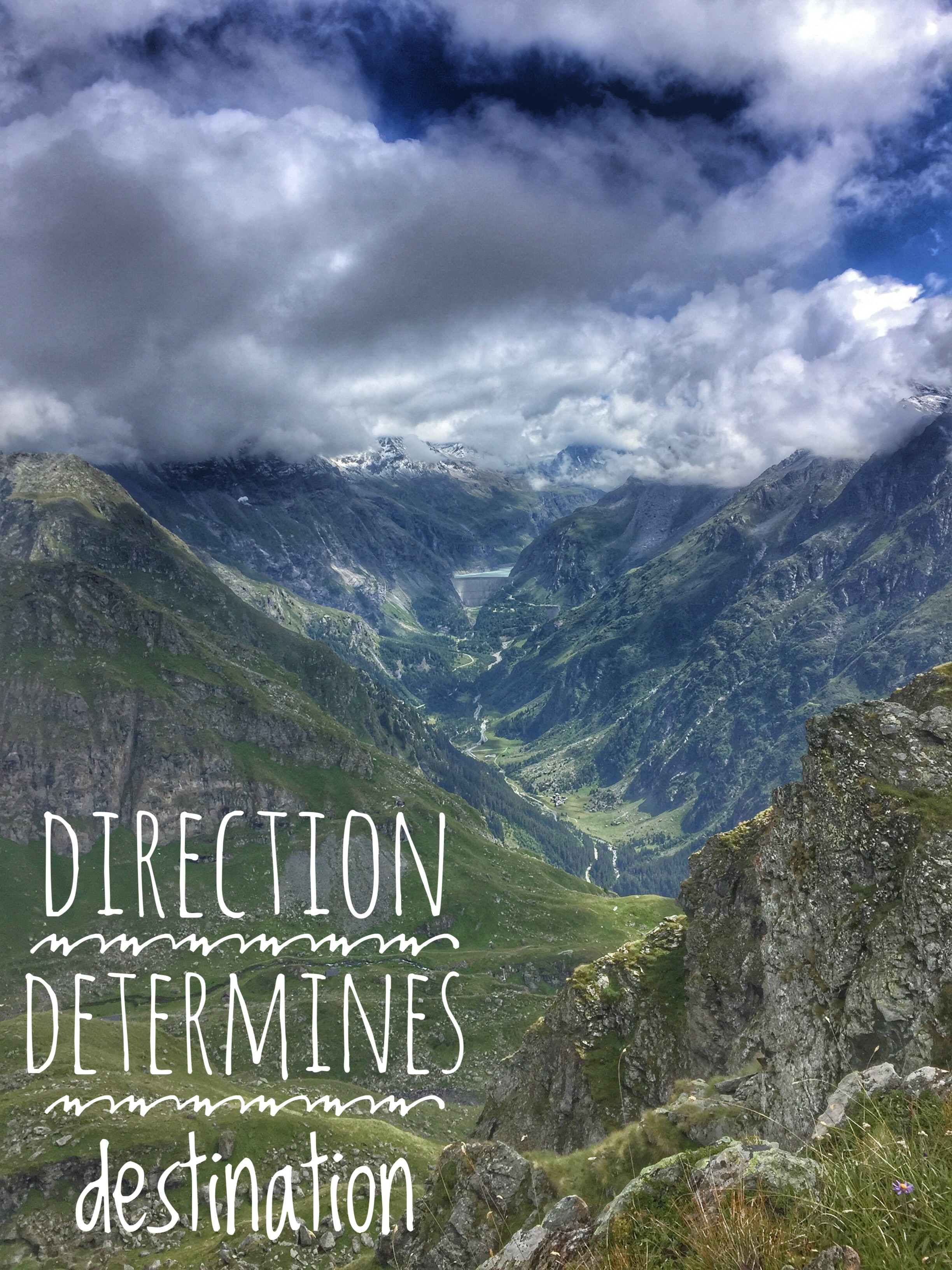
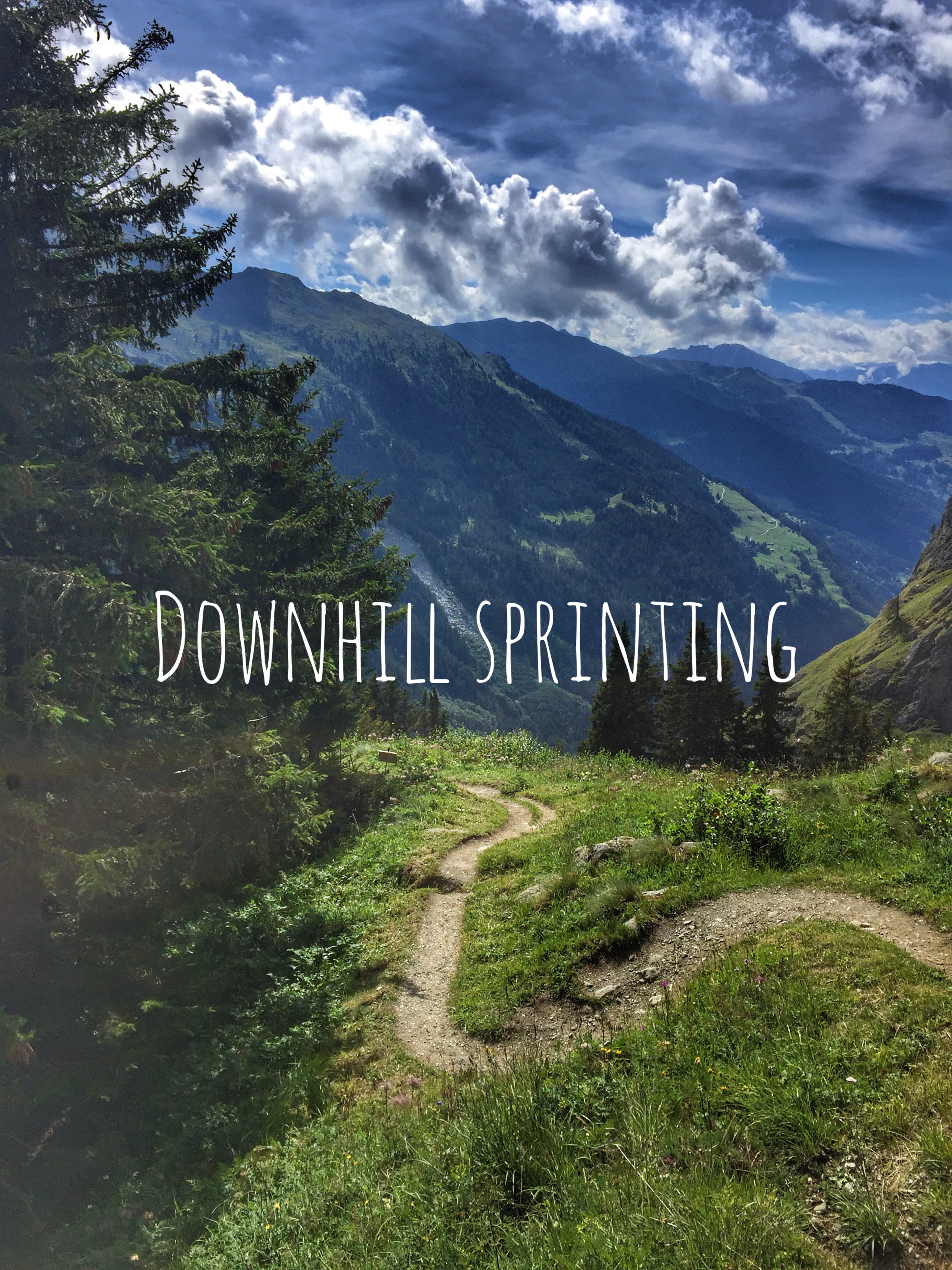
I’d like to say it was a pleasant and meandering stroll down to Fionnay – but actually it was an hour and fifteen minutes of extreme thigh burn and screaming knees, even the magnificent views of lakes, dams and glaciers didn’t and couldn’t make up for how much my legs and knees hurt. We’d been walking for five hours by then and, all in all; the top of Col Termin to Fionnay was a total descent of 1,158 vertical metres (0.72 miles). Ouch, ouch, ouch, ouch, ouch.
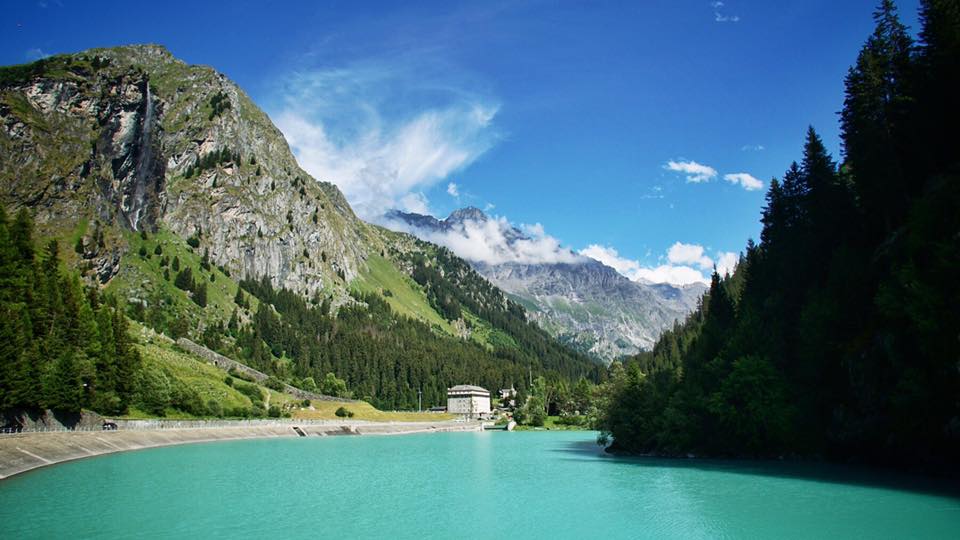
I reckon we must have been about half way down when the striking blue lake of Fionnay came into view. The stunning turquoise colour comes from glacial flour, created when rock underneath the surface of the glacier is ground into very fine sediment that runs off with the melt water in spring into rivers and lakes. Glacial flour is so fine and light it stays suspended in water for a long time and, when the sunlight reflects off the floating flour on a lake, it creates a dazzling turquoise hue. It really has to be seen in person to fully appreciate the richness of the water in all its glory; photographs, even with an Instagram filter, don’t do it justice. I ran out of time to even take even the hastiest of snaps, so this photo is borrowed from one of Melody’s portfolio.
(c) Melody Sky photography
Looking at my watch it was 4.50pm, we had only 30 minutes to get down and find the bus stop – we were cutting it more than fine. I reckoned just by eye-balling the path, we were only about half way down.
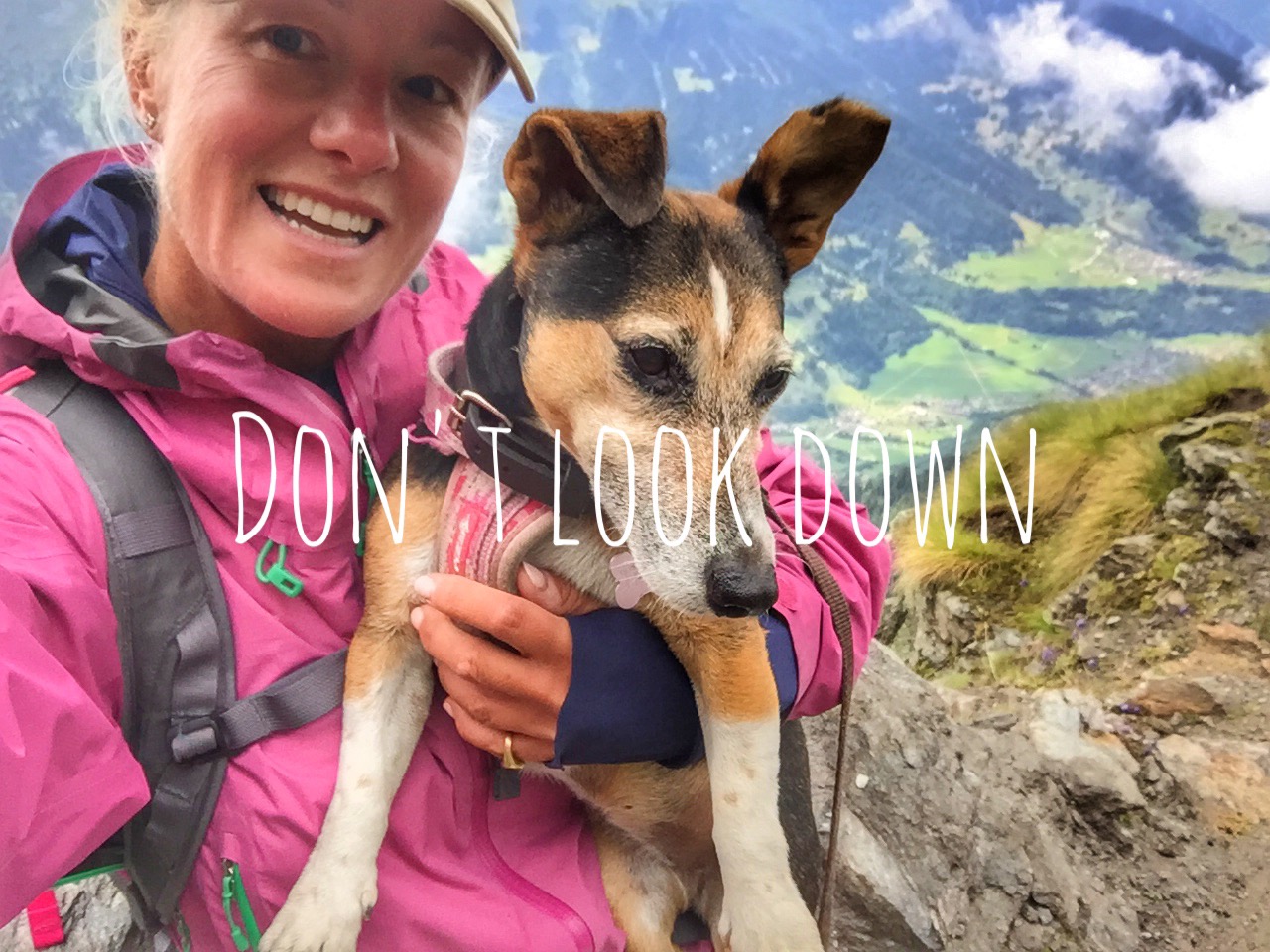
Tiggy was still attached to my waist strap, but now instead of striding out in front, she trailed behind me. Her short legs must have been absolutely spent at this point. Picking her up, I put her in my rucksack and hoisted her onto my back – her little head sticking out and resting on my shoulder. And then, with an extra 8 kilos of load, I started to jog down the hill. If my thighs were burning during the first half of the descent, they were now absolutely screaming and my knees were extraordinarily painful.
It got warmer and warmer as we descended – a drastic difference from the icy cool snowy and misty peaks above – sweat streamed down my face. We must have been quite a sight – me, as pink as my t-shirt, puffing and panting and Tiggy’s foxy face peeping out of the top my rucksack. I’m sure she would have been ok to keep going on all four paws, but I was worried she might implode if I made her run down after already having walked so far – Tiggy is super fit, but also such a loyal and devoted companion, she’d keel over and die before she would give up and stop following me.
Of course, if we missed the bus from Fionnay I could have arranged a taxi I’m sure, but I’m reasonably confident that a 20k winding trip in a Verbier cab would have more than blown my daily budget. I was pretty jolly keen to get on that bus.
Given that we were out of the clouds, it would have been wonderful to be able to saunter slowly down, stop and admire the view – the impressive glaciers, the intense blue hues of the lakes, the richness of the foliage and the vast variety of alpine flowers. Not today! Twist after twist and turn after turn, I kept on jogging, very thankful for having ‘double poled’ as at least they helped take some of the impact from my poor quads and knees.
I could see a small group gathering on the roadside beneath us, I assumed that must be the bus stop – my watch said seven minutes to go and I could see that I wasn’t going to make it if I kept to the snaking path. Jogging more rapidly I ignored the switchbacks and took the direct line of flight straight to the gate – the steep incline wreaking even more agony on my creaky knees.
The bus came into view at the far end of the village. I waved my poles in the air to the crowd at the bus stop and puffingly shouted ‘Arretez le bus, s’il vous plait’. No one even lifted a hand to acknowledge my plea, at this point, I was pretty sure I was stuffed.
The ground finally flattened out, my jog turned into as fast a run as my knees would allow, Tiggy bouncing uncomfortably in my rucksack behind me. The bus pulled up, the small crowd jostled to get on.
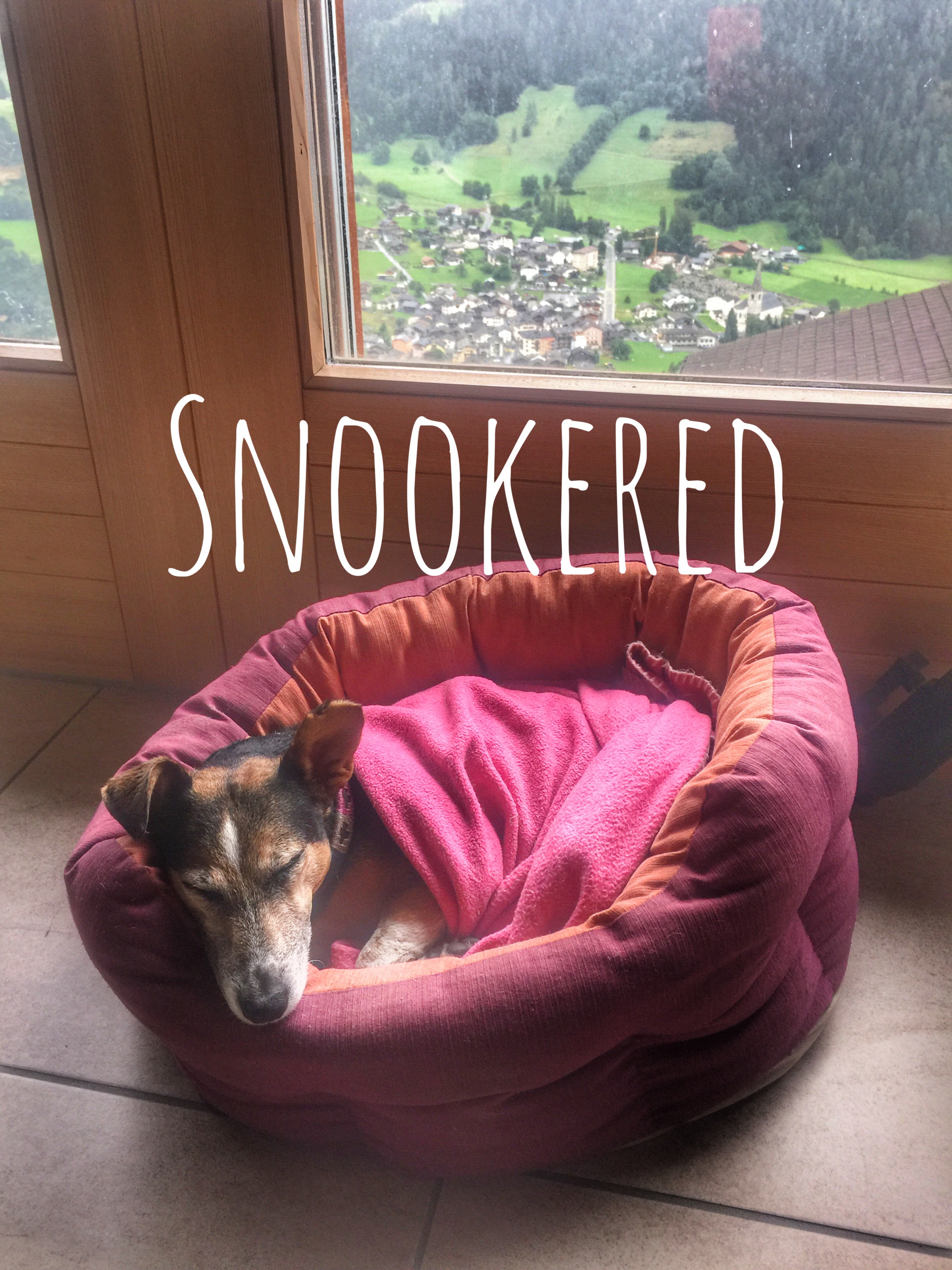
My lungs burned. I tripped over my feet but managed not to fall. I caught the eye of the driver as the last person was getting on – he held the door open for me as five seconds later I arrived. Totally spent and unable to speak, I nodded a grateful thank you as I heaved my tired limbs up the steps onto the bus. I flopped into the front seat and gulped down all that was left of my water, saving a mouthful for Tiggy who, as soon as she was freed from the confines of my rucksack, curled up on my knee and went straight to sleep.
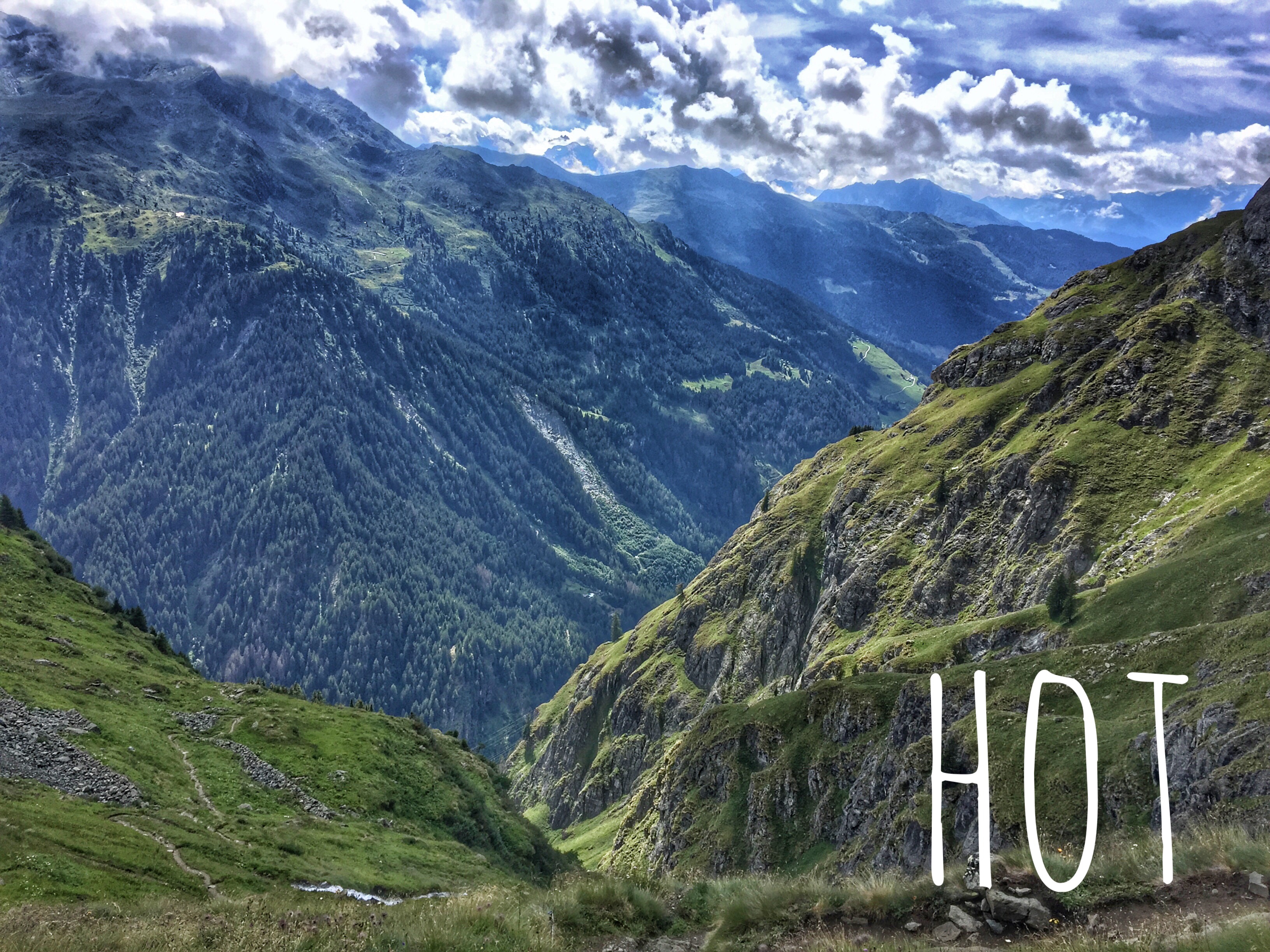
I leaned my forehead against the window as the bus wove its way down the valley. I looked up to the dizzying heights of where we had come from – still blanketed in cloud, it was almost unfathomable to believe how cool it had been up there, it was so scorching hot down in the valley.
The bus deposited us in Le Chable then, as the bubble had already shut, we waited for another bus to take us up to Verbier. I finally opened the door to our hotel room just before 7pm, I was wrecked and boy, was I smelly! Tiggy was fed a very generous portion of kibble for supper whilst I wallowed in a bath until the water started to go cold. Post bath I stretched my legs out in a variety of gentle yoga poses, hoping beyond hope that this would help reduce the almost certain onslaught of stiff and sore muscles the next day.
We had walked over 11 miles, taken 27,784 steps and climbed 163 floors. Distance wise, that’s longer than any single day I’ll be doing in Nepal – except there the challenge will be the altitude and not just the distance. In Nepal I’ll be averaging an altitude of 4,200m where the air has 50% less oxygen than at sea level; the highest point I’d been to in Verbs was 2,650 where oxygen levels are just over 70% of that at sea level.
Melody had, thankfully, fed me a substantial breakfast of smoked salmon and scrambled eggs – so I had been well fortified for my unexpectedly challenging and long hike – but apart from that, the only things I’d had eaten all day were a snack bar and half a packet of biltong. I was ravenous.
It was a pleasant and blissfully short stroll out of the hotel and up the hill to Verbier’s infamous Fer a Cheval, scene of many boozy apres ski adventures. There, I perused the menu whilst gulping down more water and sipping on an ice-cold glass of dry white wine.
Tiggy curled up on my puffa on the bench next to me and continued her restorative snoozing. A friendly, local ex-pat couple on a neighbouring table came over to fuss over Tiggy and enquire what bought us to Verbier. I explained the rationale behind vising friends and getting my legs fit for Nepal. That naturally took us onto converse about the day’s hike – when I told them what we’d done they were really impressed. They couldn’t believe Tiggy had managed it, I was both pleased and relieved we’d done it, but still had an internal niggle of guilt that I had risked stretching little Tiggles beyond her physical capabilities.
I asked them what they’d recommend to eat. ‘The lasagne’ the chap replied ‘but you only need a half portion’ the lady added ‘it’s really big, we’ve just shared one’. I didn’t have the energy to explain that I hadn’t eaten for eleven hours – so I just said thank you and ordered a full portion along with a token side salad. I ate every single delicious morsel, if licking the plate was socially acceptable, I probably would have done that too.
It can’t have been more than fifty steps downhill from the Fer a Cheval back to the hotel – every single one was agonizing.
Getting out of bed the next day was somewhat of a comedy affair; I commando rolled like a beached whale onto my tummy and shuffled my legs off first, face down and with my torso still on the bed, I pushed myself up to standing so that I could try a few tentative steps. Actually it wasn’t bad at all! Walking out of my hotel room I was hugely relieved that my legs definitely felt weary and a bit stiff but not nearly as bad as I had thought they would be.
And then I attempted to descend the three flights of stairs from my bedroom to reception; a meager three steps down proved so painful that I had to turn around, come back up and somewhat shamefacedly push the button to call for the lift.
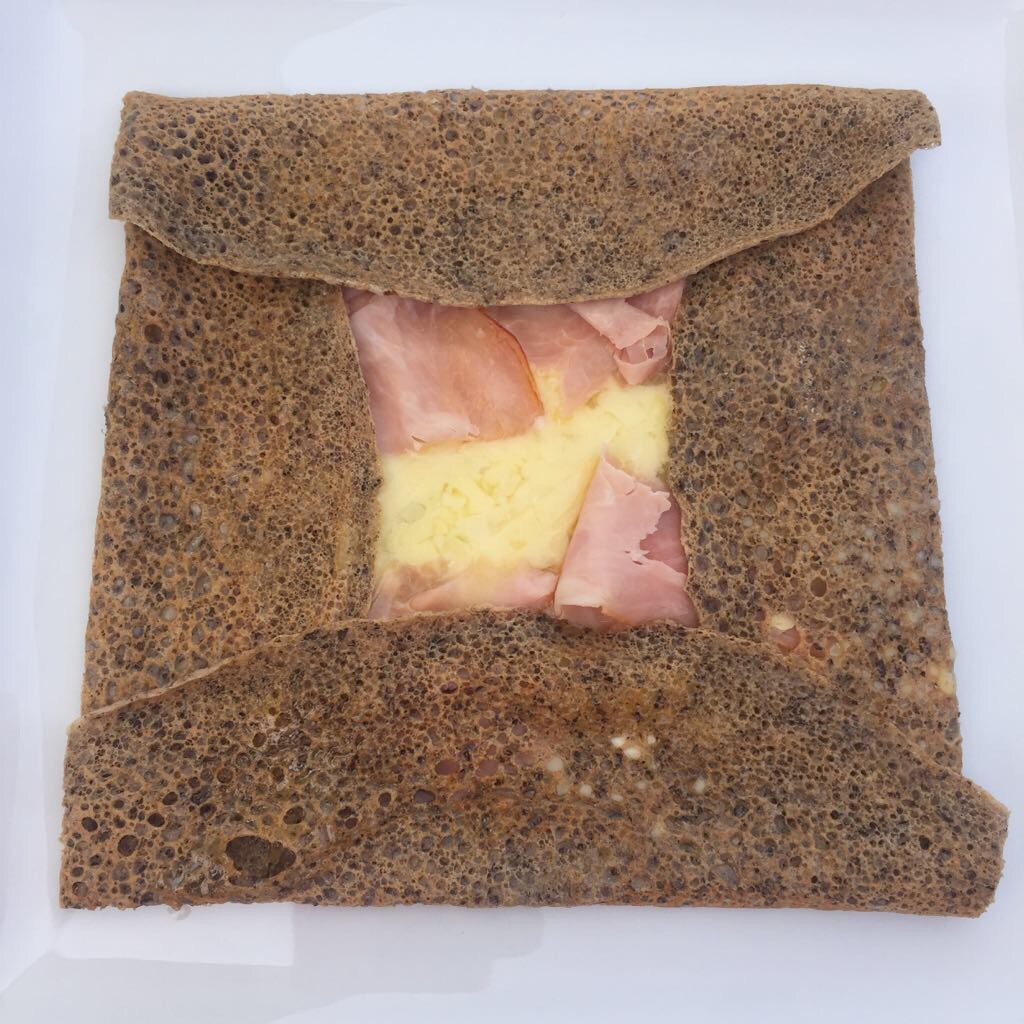
A hearty breakfast of crepes and coffee was thoroughly enjoyed on the sunny terrace of the Milk Bar, and then we could dawdle no longer.
Time to climb back into The Beast to commence our long drive back up through France. As a regular reminder of the prior day’s escapade, clambering down and hobbling round to the passenger side to pay the toll at every peage was utter agony.
The five hour drive back up through France offered plenty of time for musing and rumination; it was an arduous hike but not impassible or impossible. If I hadn’t been up against the clock it would have been a lot easier, and the walking map was scant in details as to the difficulty of the route. It was demanding, but certainly far from the hardest trek I’d ever done. I’m usually a cautious and careful person when it comes to matters of safety, so whilst we were never truly in grave danger, I was definitely a little bit unsettled by the escapade.
Why had I ignored the route Melody had recommended, as well as not heeding the advice from the local couple walking their dog?
On reflection, the beginning of both the blue and red run looked beguilingly similar and un-taxing. A subsequent conversation confirmed Melody had recommended the blue route more for Tiggy’s sake than mine. I’m a very contrary person and when the local couple said that the red route was very hard, the obstante part of me looked at them (they were quite a lot older than me) and assumed that their yardstick for ‘hard’ was different from mine. I’m particularly of the mindset that when someone tells you something shouldn’t be done; it’s more a reflection of their limitations and not yours.
Hmmmm.
In Nepal, thankfully, I will be led by guides who are always to be obeyed and I’ve read enough about disasters at altitude and in the Himalaya to gladly acquiesce any decision making to those far more knowledgeable and experienced than I.
The Alps have taught me a number of important lessons before heading out on much more challenging adventures. As Sir Edmund Hillary so aptly said
“It’s not really the mountains we have to conquer, but ourselves.”
Chapeau, Sir Ed, chapeau.
Choose happy – heed the advice of locals (except for portion sizes on lasagna) and always befriend handsome young Danes.
Love, Sophie, Tiggy and The Beast XOX
La Chaux 2,260m to Col Termin 2,648m = 388metres (0.25 vertical miles up)
Col Termin 2,648 to Lac Louvie 2,214m = 434m descent (0.27 vertical miles down)
Lac Louvie 2,214m to Fionnay = 724m descent (0.45 vertical miles down)
Col Termin to Fionnay = 1158m descent. OUCH (0.72 vertical miles down)
Isn’t it funny how you can go away for ages, come back and only five minutes later feel as if you’ve never been away?
Tarifa and our beach-based life seemed a world away by day two of being tucked back up in my little Cowes cottage. Tiggy immediately found her way back to her favourite snoozing sunny spots and I swam a number of times off Cowes beach. There had been a heat wave in the UK and the water felt ten degrees warmer than the goose-bump inducing briny shallows of Tarifa harbour.
Water temperature aside, I certainly preferred swimming in the ‘Reefa as, even though the Solent is super clean, the water visibility was really poor. I couldn’t even see my hands in front of me and I kept swimming into giant clumps of seaweed, bringing me to a sudden, shuddering stop. It was an inefficient way to swim as each encounter meant I trod water and spluttered madly whilst trying to work out the optimal way to navigate past my free-floating obstacle.
Either that or the seaweed would brush past my body, making me jump with its tickly fronds and getting loosely tangled in my legs, like an octopus lazily wrapping its long tentacles around me. This resulted in mild panic and for my legs to involuntarily kick, rather violently, in my attempt to free myself from my aqua captor. It was all a bit stress inducing. The tide was strong in Cowes too, I could swim vigorously for ten minutes and only cover about ten metres in distance – of course the upside was, after such an energetic exertion to go nowhere slowly, I could float back, suspended by saline and carried by the current, to return to my starting point whilst making zero effort at all.
Two weeks quickly passed by and we were on the road again. This time driving down through France, via a Portsmouth – Le Havre overnight ferry, with my friend Sammy and her son Joey. I’m not sure whether it was Joey or Tiggy who was more excited about sleeping on the ferry – but Tiggy certainly was thrilled to have been upgraded to a pet friendly cabin rather than be locked up in a chilly, stainless steel gaol. It was a late night crossing and we plonked her basket on the cabin floor before flopping into our bunks (Joey on top, Sammy and I below). Less than ten minutes after lights out, the temptation of a cosy bottom bunk with me in it clearly proved too much, and as the ferry gently eased out of the harbour, I felt a little warm ball of fur bounce onto the end of the bunk and wriggly around to make a toasty nest where Tiggy stayed, pleasantly warming my toes and snuffling contentedly, until we all fell sound asleep.
Disembarking the following morning at 8.30am we then drove 500 long, hot and noisy miles to Chamonix, where we arrived, absolutely shattered and almost too tired to speak, precisely twelve hours later. I slept the sleep of the dead that night – to be fair, I always sleep well in the Alps, although I may have been aided and abetted by copious glasses of chilled white wine and fine food from our lovely hosts.
Chamonix (or Cham to those that know) was our first destination because I have decided that’s where Tiggy, The Beast and I will spend the ski season component of our gap year, and I was keen to secure my accommodation for the winter. I haven’t actually been to Chamonix for about twenty years, but I’ve chosen to spend a winter there because it’s a “proper” town, in fact it’s the Alps’ largest, and (so my theory goes) will be less claustrophobic than a smaller, or more remote resort. It’s also driving distance to resorts frequented by my friends – so I would hopefully be in easy reach of company should I feel the need for it. And finally, Chamonix boasts a good reputation for ski touring and cross country skiing – both of which I’m a complete novice at, but keen to conquer, particularly if Tiggy can come along too.
I would have loved to be in Verbier where I both love the skiing and have some lovely friends – however I decided that I’d probably end up both an alcoholic and bankrupt if I even began to attempt an entire season there. Epic fun though it might be, becoming a Farinet and Farm Club regular with my name emblazoned on a bottle behind the bar is not one of the strategic objectives for my gap year, although I think I may have been guilty of that during one particularly prolific winter in my twenties. Some things are certainly best left in the past, and I’m far more of a late, long, luxurious lunch and early to bed vintage now.
In Chamonix a teeny-weeny, picture-perfect mazot was located, on the sunny side of the valley, with views of Mont Blanc and in the gardens of a far grander chalet. I concluded that, although small, it was perfectly formed and would be a snug little sanctuary for Tiggy and I. A wincingly huge deposit secured it for us for the season.
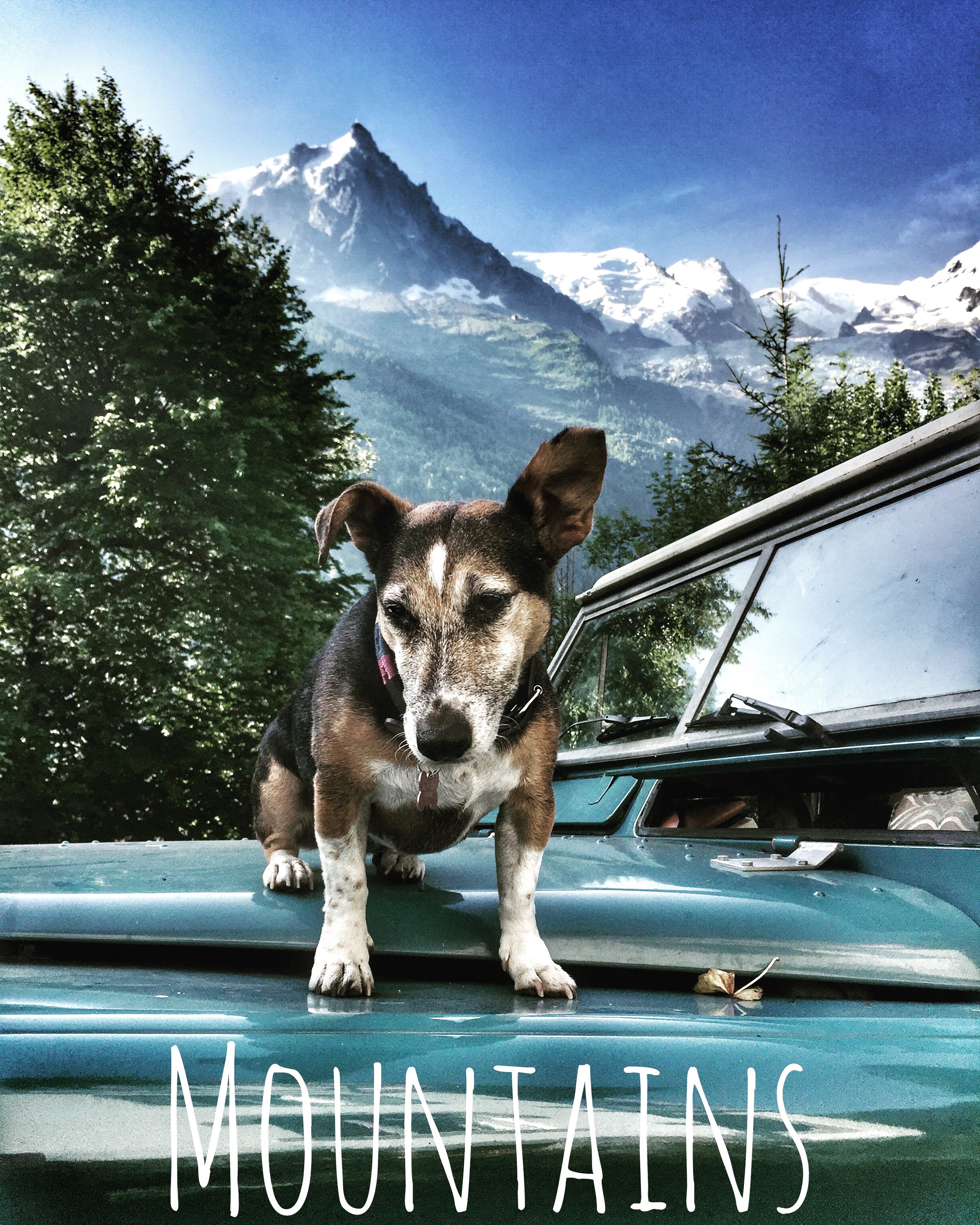
Our host’s house also offered stunning views of Mont Blanc (or Monte Bianco if you’re looking at it from Italy). Towering above Chamonix at 4,808m, it’s the highest mountain in the Alps, and the highest in Europe if you exclude Russia’s Caucasus peaks. It was strange, and slightly scary, to think that the second part of my upcoming trip to Nepal would average walking at about that height for nineteen days.
A little below the peak at 4,260 metres, Mont Blanc is also home to Europe’s two highest toilets – they were delivered there by helicopter in 2007 as excrement from the 30,000 annual skiers and mountaineers was turning Mont Blanc into Mont Marron during the annual spring thaws. Apparently, during busy times, they are also serviced daily by chopper – I bet those pilots have great dinner party chat.
Every day of our stay there, the sounds of helicopters could be heard, flying to rescue mountaineers and climbers who had got into difficulties. Over 100 people die on Mont Blanc every year and Wikipedia tells me that Mont Blanc’s summit is ascended by an annual average of 20,000 mountaineers. This means a very sobering one in every two hundred people who set off to conquer the summit won’t make it off the mountain alive. Better odds than Everest, but just demonstrates how technically difficult a climb it must be (the summit is 800m lower than both Everest Base Camp and Kilimanjaro).
We didn’t climb anything, our contribution as Chamonix tourists was to stay safe, shop (a skateboard for Joey, some Arcteryx shoes for me – I avoided Chanel as that’s definitely not on my eternity leave budget), eat pizza and burgers and drink beer. After a fun filled couple of days being spoilt by our hosts, whose little sausage dog, Herbie, became utterly besotted with Tiggy, it was time to move on to Morzine.
Morzine was the location for the wedding of one of my best girlfriends. It was a whole weekend affair with guests flying in from all over the world to celebrate the occasion and this entire trip had been planned around it. Sammy and I were both somewhat cheekily titled “Maids of Dishonour”, Tiggy was invited too and even The Beast had an official role as back up wedding car. Adorned with flowers and ribbons, he looked magnificent, although unfortunately he blotted his copybook by getting oil on Sammy’s dress, about which I was terribly upset and she was marvellously decent, as only a truly kind and generous friend would be. This was the only dark cloud to an otherwise wonderful weekend, full of love, joy, vats of wine, yards of trays of tartiflette, hours of energetic dancing and heaps of chatting and catching up with friends old and new – many a happy memory was made.
Morzine was very busy – full of mountain bikers who take advantage of the vast ski lift infrastructure and use it to transport them and their bikes skyward and then hurtle back down the mountain via paths of varying technical complexity at an alarming speed. Just the kit alone was enough to put me off – anything that requires full body armour, an ice-hockey style caged helmet to protect your face along with knee and elbow pads is definitely not for me.
Purposefully choosing to ignore the many tantalising offers of paragliding and mountain biking, I took advantage instead of Morzine’s amazing outdoor Olympic sized swimming pool. Nestling in the valley floor there’s something breathtakingly special about swimming along and seeing a jagged sea-saw of mountain ridges every time you lift your head out of the water to take a breath.
This was my first fresh water swim for a long time, in fact, since before I’d been to Tarifa. I had clearly become very accustomed to salt water swimming as I very nearly sank when I took my first few strokes. I was really surprised by the marked difference in buoyancy from the sea – not only did it require significantly more effort to stay afloat, let alone actually propel myself along, but the water felt really different too; the pool water had a far more slippery sensation in my hands, like liquid silk caressing my fingers as they glided and slid with each stroke; when I exhaled, the bubbles of breath resembled silvery, shimmering beads of mercury, rising to the surface before escaping to freedom into the mountain air.
I’ve read before that, because the skin is our largest organ, some people regard swimming as a sensuous sport. This was the first time I’d ever really appreciated that; I really did feel caressed by the water. Open air swimming – whether sea, lake or pool – is quite simply one of my favourite pleasures in life. And as I floated on my back, gazing up at the mountains, I made a vow to myself to still swim regularly when I’m eighty – compete with a Barbara Cartland-esque pink flowery swimming cap and a robust, ruched swimming costume
It didn’t take too long to get accustomed to the less buoyant water and lap after lap, turn after turn, I soon fell back into my familiar cadence and enjoyed the peaceful tranquillity of a rhythmic, restorative, hangover curing dip in the mountain air. I swam two kilometres, a pretty standard swim for me in the ‘Reefa, but I was certainly more weary after completing that in the fresh water pool.
Of course my weariness had nothing to do with the fact that we had danced, non stop, for five hours at the wedding the previous night – pausing only at 10pm to quickly wolf down some tasty tartiflette and wedding cake before, re-energised by stodgy carbohydrates and on a sugar high from buttercream icing, we energetically threw ourselves back around the dance floor until the DJ ceased spinning his digital decks at 1am. As one of our friends wryly observed on Sunday it was rather like attending an international Zumba convention with a particularly smart dress code and a more even balance of male to female delegates.
After round three of the nuptials on the Sunday which consisted of a delicious barbecue and bottle after bottle of fine, chilled rose, the guests started to scatter and wove their way back to airports, transfers and trains to leave the magic of the weekend behind and resume their normal lives once more.
For Tiggy, The Beast and I, it was time to move onto yet another adventure. And early on Monday morning we waved goodbye to Morzine and drove slowly, in the pouring rain, along the valley floor and out of the resort before climbing up a series of aggressively steep switchbacks to Chatel (which we normally ski to from Morzine) over the Bec Du Corbeau (1,992m) and through an un-patrolled border into Switzerland, which would have nearly passed un-noticed had it not been for a flurry of Swiss flags adorning the chalets that lined the road immediately after.
The weather was truly awful, relentless rain and low hanging cloud, not only was it damp and miserable, it was pretty chilly too. All in all, it was a bit disappointing. It should have been a delightful drive – the sort that would have Jeremy Clarkson et al foaming at the mouth as we zig-zagged down the mountain – but it really was pretty dismal driving conditions. Although I’m proud, pleased and relieved to report that the windscreen wiper replaced by me, without any external assistance, coped admirably with being used in anger for the first time (it’s predecessor had flown off, unexpectedly, mid way through a particularly blustery drive in Tarifa).
The final stop of our trip was Verbier, where we stayed with Melody who lives in a beautiful chalet with huge picture windows, perched precariously half way up a very steep switchback between Le Chable below and Verbier above. Parking at Melody’s required nerves of steel, and great driver dexterity – including stopping and reversing up a near vertical incline combined with outstanding spacial awareness.
These are not skills I profess to have in abundance: I’m not a particularly competent driver; The Beast is really heavy and hard to manoeuvre, particularly in small spaces, and his hand break isn’t great, meaning that steep, hill starts (particularly in reverse) are far from easy. After a particularly stressful attempt on our third day where it smelt as if I’d burnt The Beast’s clutch to a cinder, I decided I would avoid parking at Melody’s again until I had an automatic car complete with parking sensors, a better turning circle and a boyfriend who would park it for me.
Melody, who originally hails from Scotland, is really a Verbier native having lived there for over eighteen years where she runs a very successful film and photography company. Her life is a bit like a North Face advert (one of her many clients in fact) and rather than living an adventurous, adrenaline filled life in the mountains vicariously through her Instagram feed, I was very keen to explore some of her pictures in person. Also, my upcoming Nepal trip is only two and a half months away, so I needed to knock out a few miles in the mountains and start to get my legs fit.
Tiggy and I bubbled up to Verbier for our first day’s hike. Compared to the hustle and mountain bike bustle of Morzine, it felt very quiet. Although I have to say, it felt incredibly luxurious to not have to queue for the bubble or share it with strangers. Mind you, I did miss my friend Damian, with whom I’ve shared many a glass of fizz whilst bubbling up from Le Chable to Verbier for a Big Night Out.
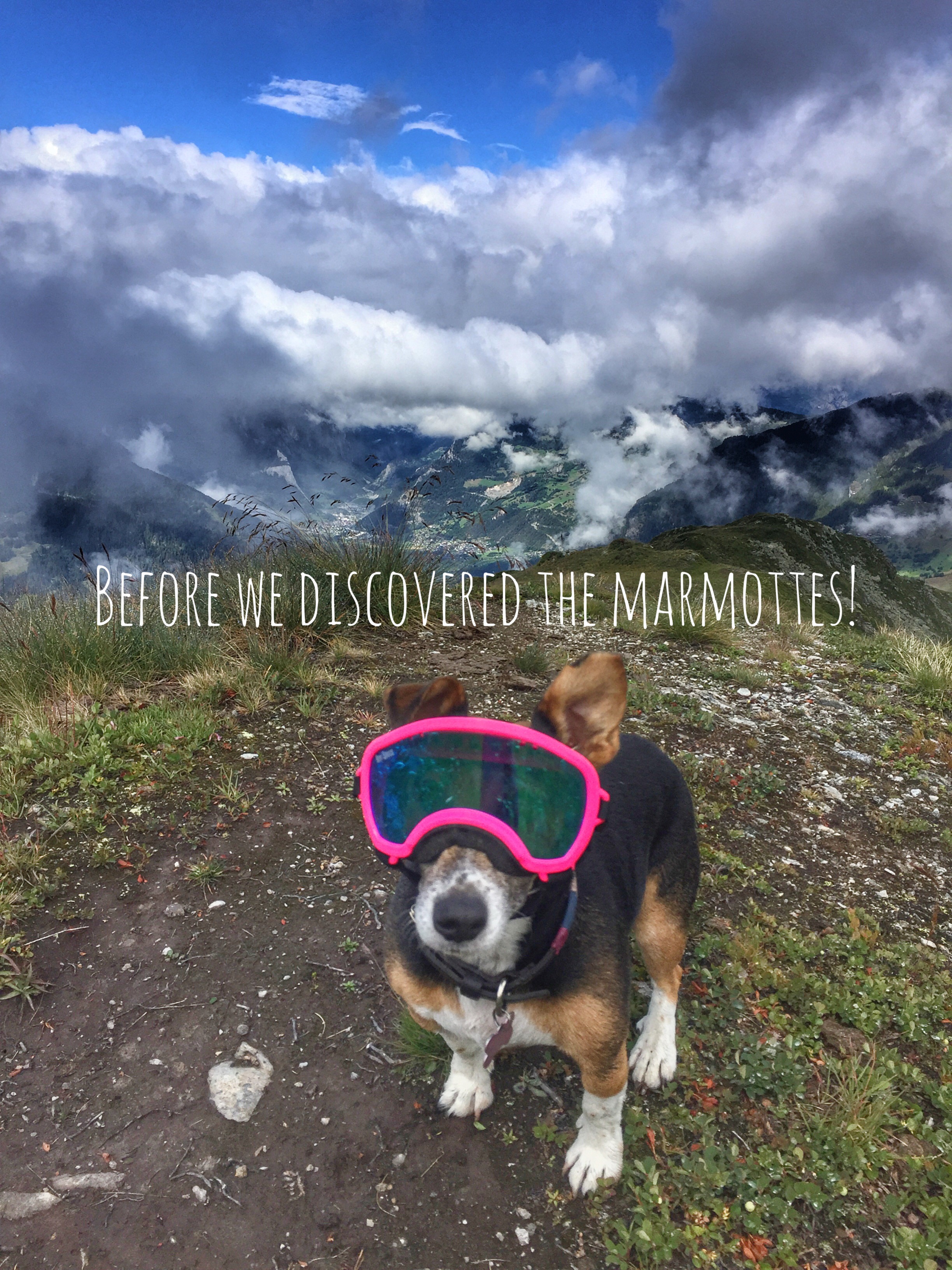
Tiggy was rocking her doggles and, as per usual, we had to stop for more than a few selfies with everyone from the lift operators to a gaggle of tourists from South Korea. If I ever run out of travel funds, I shall simply set up a pop-up photo-booth and pimp Tiggy out.
We took two bubbles and disembarked at Fontanet (2,485m) where the air temperature was noticeably a lot cooler than down in the valley at Melody’s where it remained unseasonably cool. I was glad I’d packed my down vest and immediately put it on along with my gore-tex jacket, a quiet, little voice in my head wondered if I should have packed gloves and a hat.
The mountains look so different when they’re not covered in snow and walking on the runs was a very interesting, unpredictably mixed experience. Some of the easy-peasy, smoothly groomed blue runs that I have hooned down so often were, as expected, lovely alpine meadows, carpeted in flowers and soft, mossy grass whilst other blue runs were covered in ankle-twisting, inhospitable scree and the jaunty little off-piste side runs that we love to take so much were far too steep and a definite no go on foot.
From Fontanet we started to climb the winding blue run up to the top of the Attelas chair lift (2,733 metres). Every now and again Tiggy stopped to stick her head into the entrance of an enticing hole, I wasn’t sure what they were home to as they were definitely too big for a rabbit, but, to a dog bred for ratting and hunting, they clearly smelt extraordinarily good. Tiggy does love to roll in fox poo, so I kept ushering her away, just in case they were a fox’s lair, as the last thing I wanted to do was return to Melody’s stinking of ‘eau de renard” – that would probably have ensured we would never have been invited back. We walked up past a flock of mountain sheep, whose bells we heard before they came into view, grazing away on the lush alpine grasses. As the life of a sheep goes, theirs must be pretty good, I bet they taste good too…
Sunny and hot, it was not, fog kept drifting in and out and at the top I was slightly perturbed to find we were in a total white out. I pulled the hood of my hoodie and jacket up, my hands were freezing so I tucked them inside my jacket arms, and the helpful little voice that wondered if I needed a hat and gloves became a little bit louder. Thankfully, having skied it often, I knew where to go and we walked down a surprisingly steep blue run, mercifully out of the clouds, to the two lakes of Lac Des Vaux (2,543m).
I’ve never seen these lakes before as they are always frozen and covered in snow in the winter, they were a very pretty and enticing tanzanite blue; a gap in the mountains enabled me to see far down into the valley, as stunning in summer as in winter – it was a quietly, contemplative moment. The little voice in my head, back in helpful mode, reminded me how lucky I am to have this gap year and to make sure I remember moments like this. I smiled and gave Tiggy a little tickle. Alluring though the colour of the water was, it was far too chilly to even contemplate dipping a toe in and my hands still hadn’t warmed up, so I didn’t even test the water with my fingers. However, the air felt cooler just standing by the water so I think it’s safe to assume that temperature of the lakes was on the “f**k me it’s freezing” side of cold.
Turning around, I scrambled and Tiggy bounced back up the steep blue run, back through the freezing fog and descended down the winding blue run. The plan was to head beyond Fontanet following a leisurely descent to La Chaux (2,260m) to enjoy a late lunch – and then potentially take the cable car to the summit of the glacier at Mont Fort (3,330 metres), the highest peak in the Verbier valleys.
Let me rephrase that – this was the plan until Tiggy discovered her first marmot.
It didn’t occur to me to keep Tiggy on a lead – no matter where we go, Tiggy is always within eyesight of me and, even though I don’t need to watch her every bounce, I always instinctively know where she is. In fact, she panics if she can’t see me, and if she ever pauses too long to linger over a particularly tempting scent, all I have to do is turn around and shout ‘left behind’ at which point she will always abruptly stop whatever she is doing and run towards me at full pelt. Being ‘left behind’ is no laughing matter for anyone, but particularly not to a little doggy who was often abandoned by her previous owners outside in a cage with no shelter for long stretches of time. Separation anxiety means Tiggy is nearly always in my shadow.
But not today. It turns out the tempting little hole that Tiggy found so enticing was actually a burrow belonging to a marmot. I now know this because I saw one, bushy tail and all, scampering through some long grass to the side of the walk on our way down. I also now know that the Alps are riddled with marmots and that they are related to squirrels, another irresistible animal if you’re a Jack Russell terrier. And they hibernate in winter, which is why you never see them when you’re skiing.
We were nearly at the bottom where of the piste where we were going to take the left fork towards La Chaux and lunch. I was beginning to get hungry (it was the cold, I’m sure). I heard Tiggy stop behind me, head down yet another hole. “Come on Tiggy, left behind” I called. She lifted her head up and started to trot obligingly towards me. At that moment a furry creature with a long tail shot out of the hole and, without a moments hesitation, Tiggy darted after it at top speed. The marmot scurried into the long grass and Tiggy hurtled after it, not far from its tail.
Tiggy, I hollered, and was met with silence. I couldn’t even hear her running in the grass. I kept calling her name along with ‘left behind’ – I scanned the grass for moving strands to give away her presence, there wasn’t a whisper of wind – the grass was motionless. I kept calling her name, in a cheerful voice, so she wouldn’t think she was in trouble. Nothing. The mountain was eerily quiet. I realised that since we left Fontanet about four hours earlier, we hadn’t encountered another soul.
All of a sudden I wasn’t cold anymore. In fact I was really rather hot and clammy. I ran down through the long grass calling her name. There was no sign of life anywhere. The helpful/unhelpful voice in my head was on full ‘imagination gone wild’ mode; I saw pictures of Tiggy with her head stuck down a hole, unable to get out; I saw pictures of Tiggy running round an unfamiliar mountain, frightened trying to find me and confused by strange smells; I saw pictures of Tiggy bleeding having been badly bitten.
A mind out of control will play interesting tricks on you; directed it’s your greatest friend.
I don’t know who said that, but it certainly couldn’t be truer.
Running back up to the spot where I last saw her, I told myself to calm down and get a grip. Should I call for help I wondered? If they send helicopters for lost climbers in Chamonix would they do the same for a dog? (The answer is no, of course, but I did seriously consider it as an option.)
Fifteen long and extremely anxious minutes went by. My tummy was gnawing, my hands were shaking, the only reason I wasn’t crying was because I knew I needed to keep my voice calm so she could hear me and not be scared to come back.
I kept calling and calling and calling and calling and calling. Not a murmur of noise, not the slightest of movements. The minutes crept by. I took long, deep breaths to keep myself calm(ish).
I don’t know precisely how long it was, I think thirty minutes, and then I lost it. No longer was my voice measured and friendly. I screamed and screamed and screamed her name until I couldn’t scream any more. And then I screamed again and again and again.
I saw the grass move first, out of the corner of my right eye, and then I saw a scared little face with frightened eyes, huffing and puffing with all her might and running at full pelt towards me. I attached her lead before I even hugged her. Sitting down with a thump, I pulled her closely and then gave her some water whilst I composed myself.
Who knows where she was or what happened. My guess is she chased after the marmot and didn’t realise how far she’d gone, and then when she stopped and couldn’t see or hear me, she got scared and started running, probably in the wrong direction. Women’s voices don’t carry well in the air (I know this from sailing) – so perhaps she didn’t even hear me until I started screaming.
With still slightly shaky knees, I stood up and we walked calmly down to La Chaux, Tiggy’s lead firmly attached to my wrist. I had a huge glass of wine with my 27CHF bowl of spaghetti. Tiggy nonchalantly gnawed on a chewy – it was as if the previous hour had never happened.
We were too late to do the Mont Fort cable car, which was shut anyway because of fog. Still a bundle of twitching, nervous energy I decided to walk down to Verbier to meet Melody. It’s quite a long walk. Longer than I realised in fact. I think it took us two hours. Lower down as we walked along the road it started to rain. By the time we got to the bottom – via two very steep red run short cuts – we were drenched, it was a good way to break in my new walking boots and a great test run for Nepal.
We arrived in Verbier (1,500m) and bubbled back down to Le Chable to collect The Beast and drove back up to Melody’s where I had a bath and Tiggy fell sound asleep. We had walked 9.7 miles and climbed the equivalent of 102 floors.
It’s easy to forget how small we are sometimes, but out here, the mountains sure find a way to remind you.
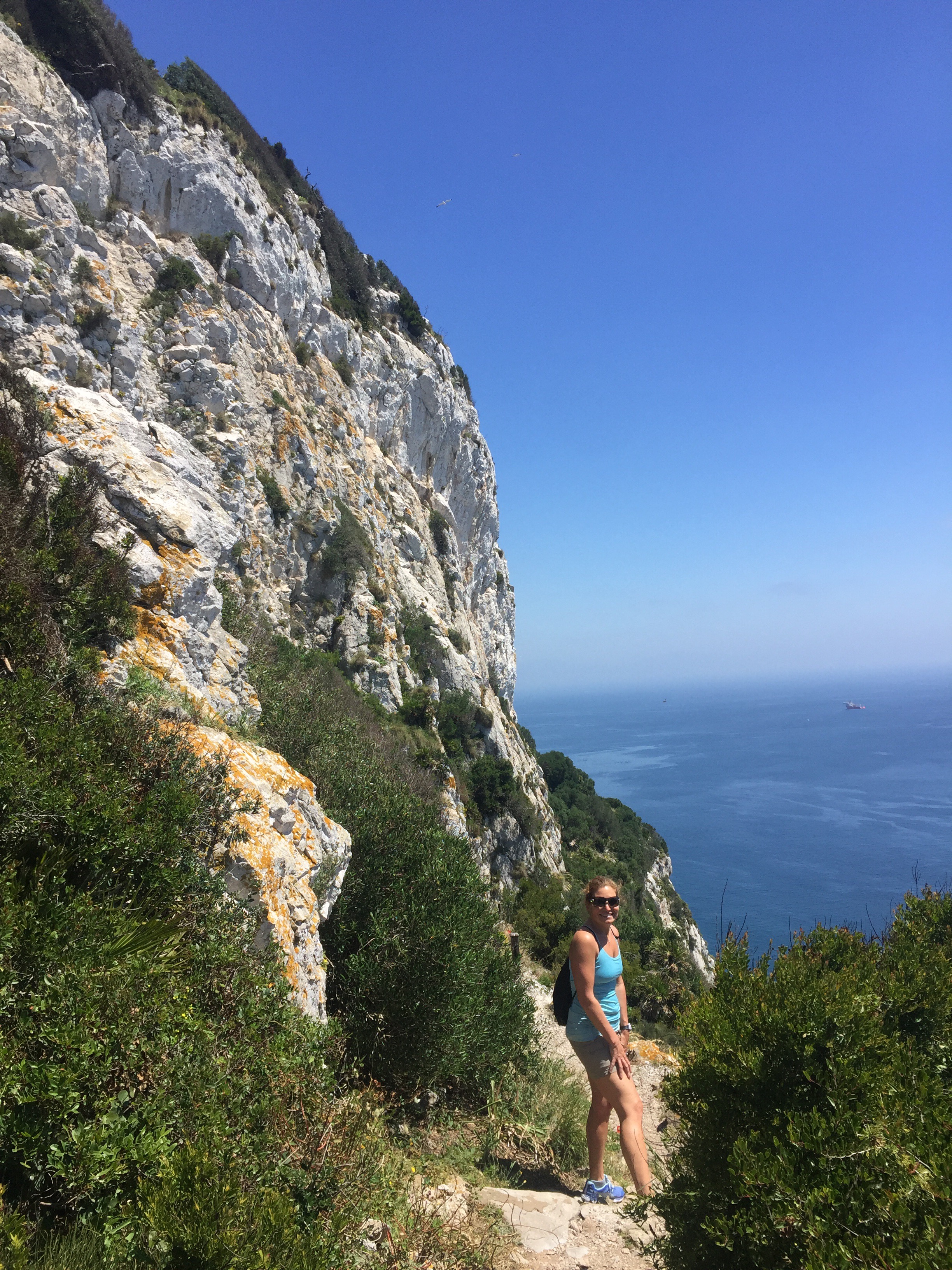
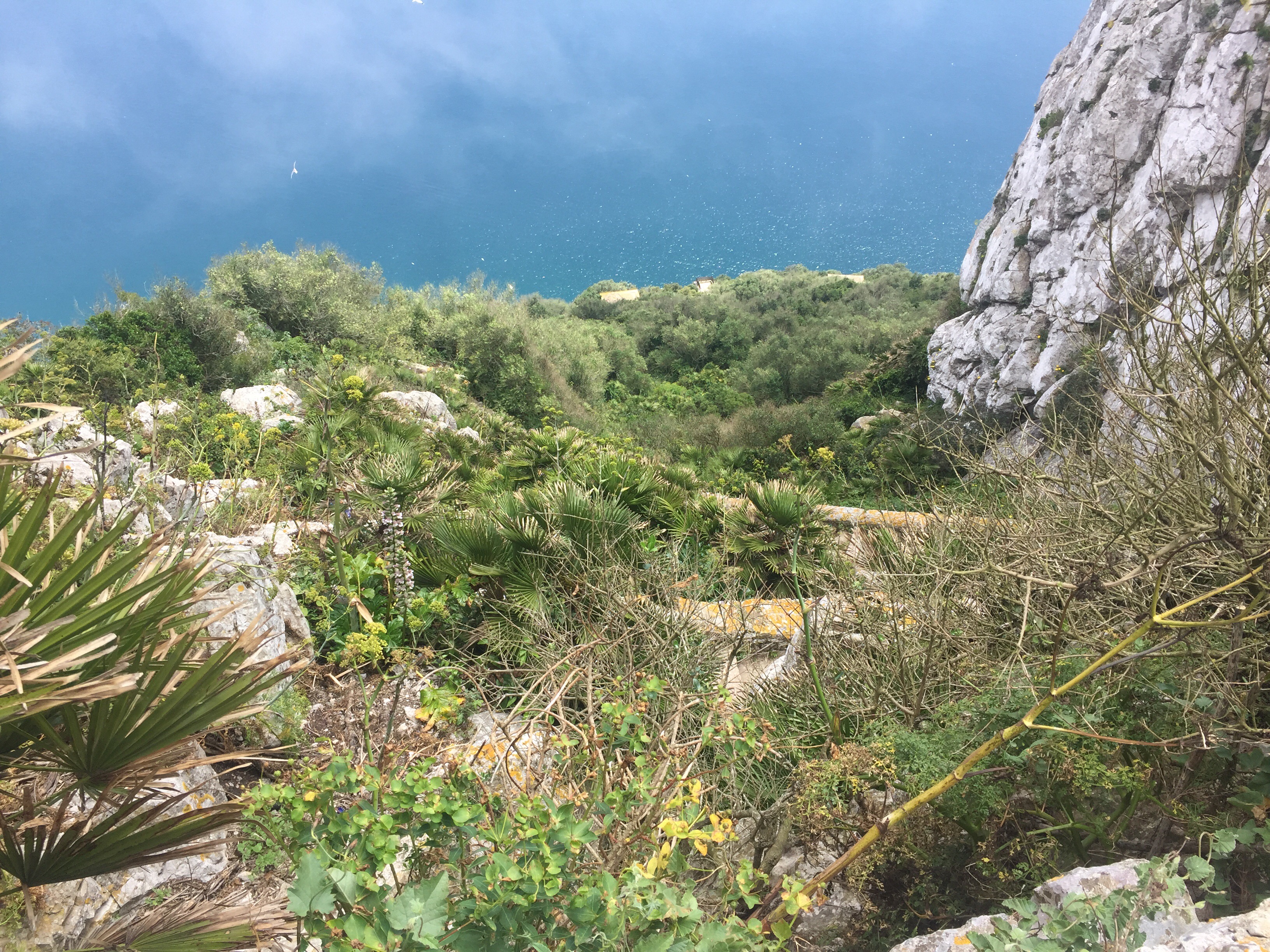
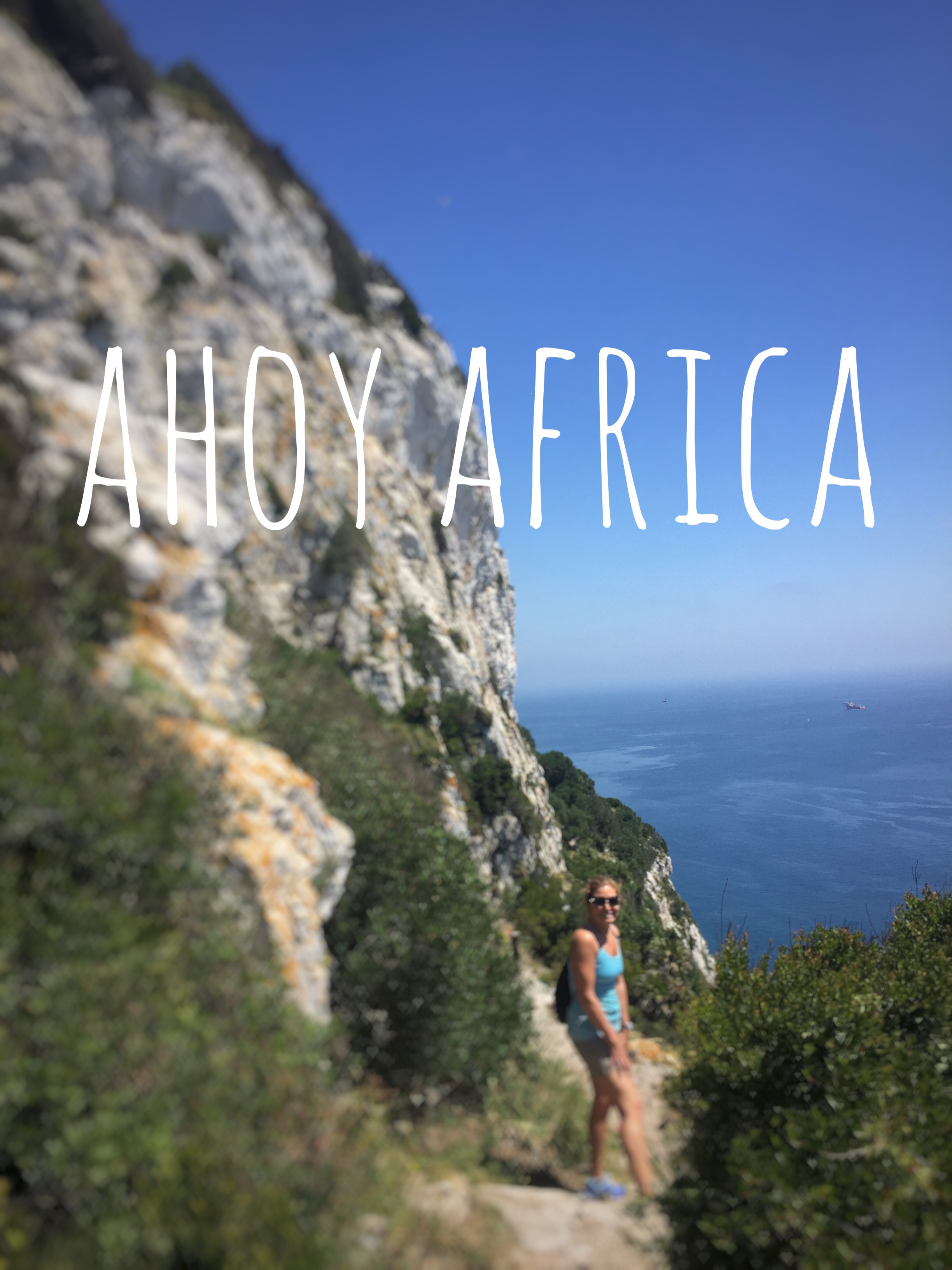
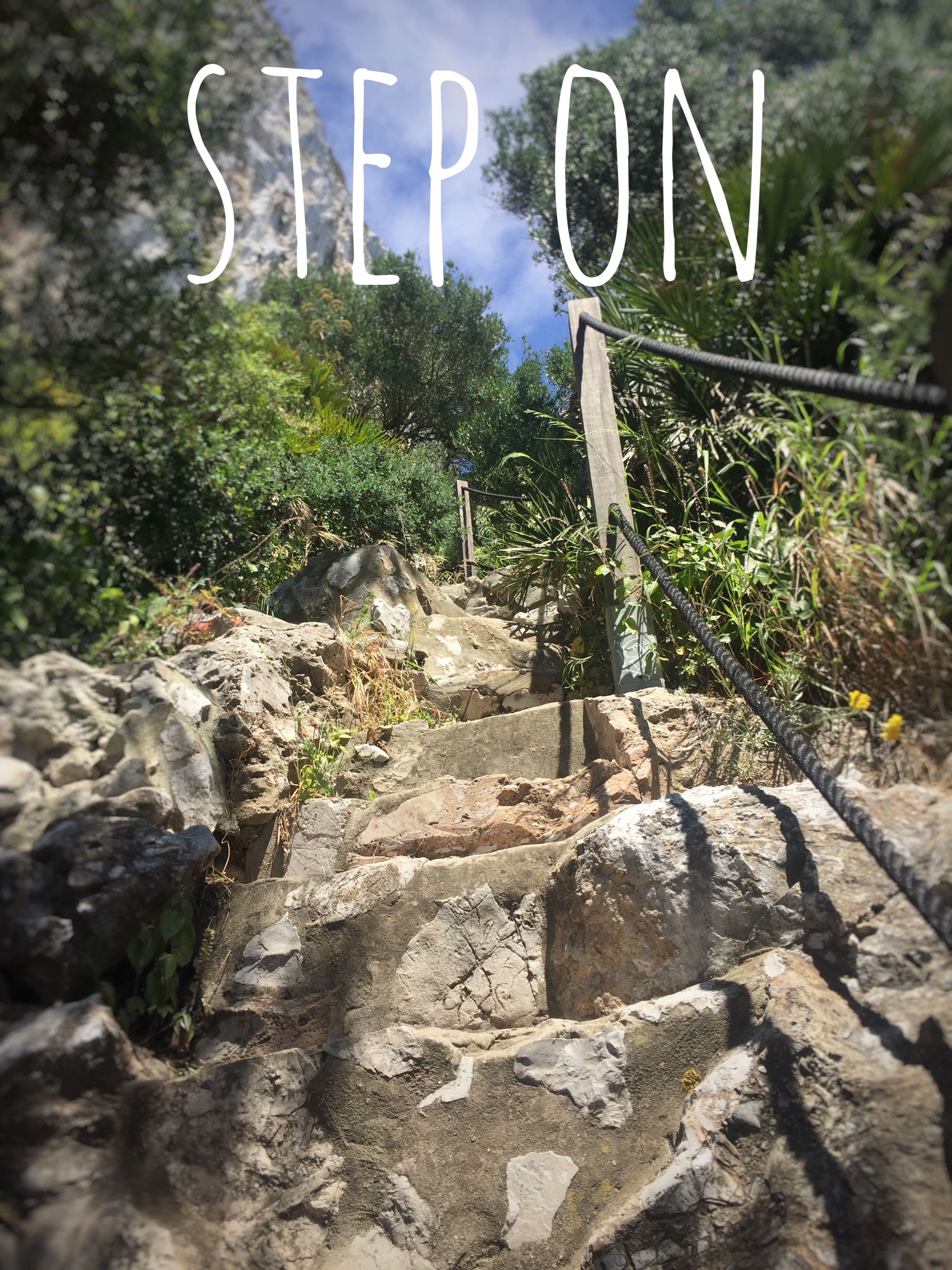
This week, along with two friends who were over from the UK, I hiked Gibraltar Rock via the Mediterranean Steps. It was a stunning, steep and sweaty climb up a narrow, rocky and winding footpath which hugs the south eastern side of this 1,398 feet high limestone British territory, previously known as one of the Pillars of Hercules.
I left The Beast on the Spanish side and walked, with my friends, through border control onto British soil. And there commenced our day of unanticipated, remarkable moments. The first frisson of excitement came as we realised that the road and walkway into the town was actually the runway for Gibraltar airport – basically it was a level crossing, but for aeroplanes and not trains.
We were the last to cross before the barriers came down and, nipping at our heels, followed a dustman vigorously sweeping the path behind us, no doubt to ensure that no errant discarded cigarette butts or other debris could cause issue to the planes about to taxi down the runway.
Two minutes later the ground shook and the air reverberated with the roar of a Monarch aeroplane taking off, transporting the very creme de la creme of Brits abroad back to the motherland.
And then we were thrust into the hustle and bustle of Gibraltar’s Main Street, a place which surely can appeal only to those with a penchant for grimy and grotty looking pubs and the chips-with-everything brigade or those who can’t survive a holiday abroad without something from Marks and Spencers (handy though, I suppose, if you’ve forgotten to pack your knickers).
Why on earth would anyone come here for a holiday, I wondered, as we made our way through the throng of tax free shoppers. It felt as if we were on the set of Phoenix Nights and I half expected a Peter Kay ‘Is this the way to Amarillo’ flashmob to spring up on us at any moment.
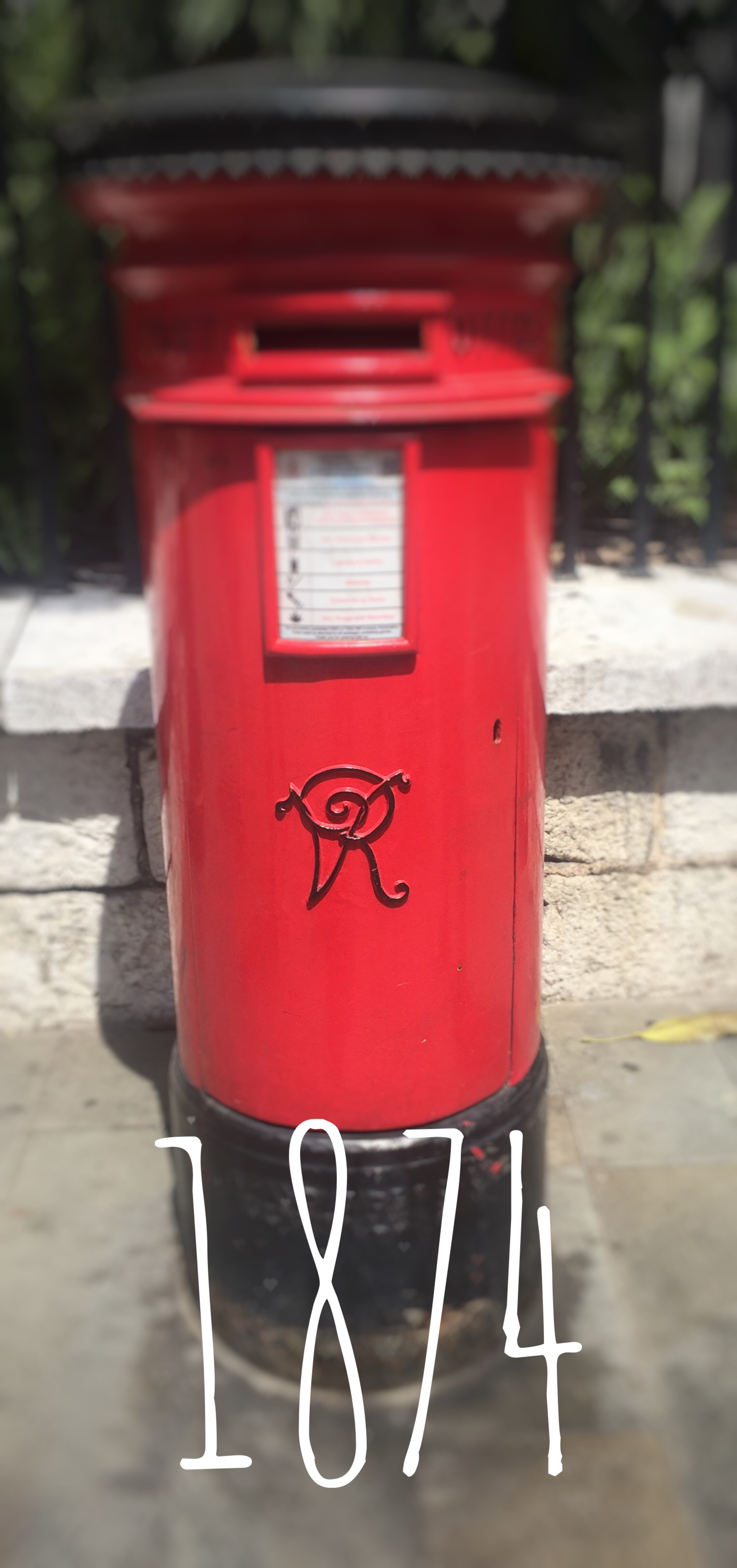
Amongst the melee though, if you looked closely, there were little, precious gems of quintessential British cultural icons all along the way: an original red telephone box; an extremely rare Queen Victoria Royal Mail pillar box which, post-walk research revealed, dated back to circa 1874 when all pillar boxes were painted red to stop people walking into them; a Game of Thrones-esque cannon that could fire at a steeply downward facing angle, invented by the British military and a huge strategic success against the Spanish and French during the Siege of Gibraltar in 1782.
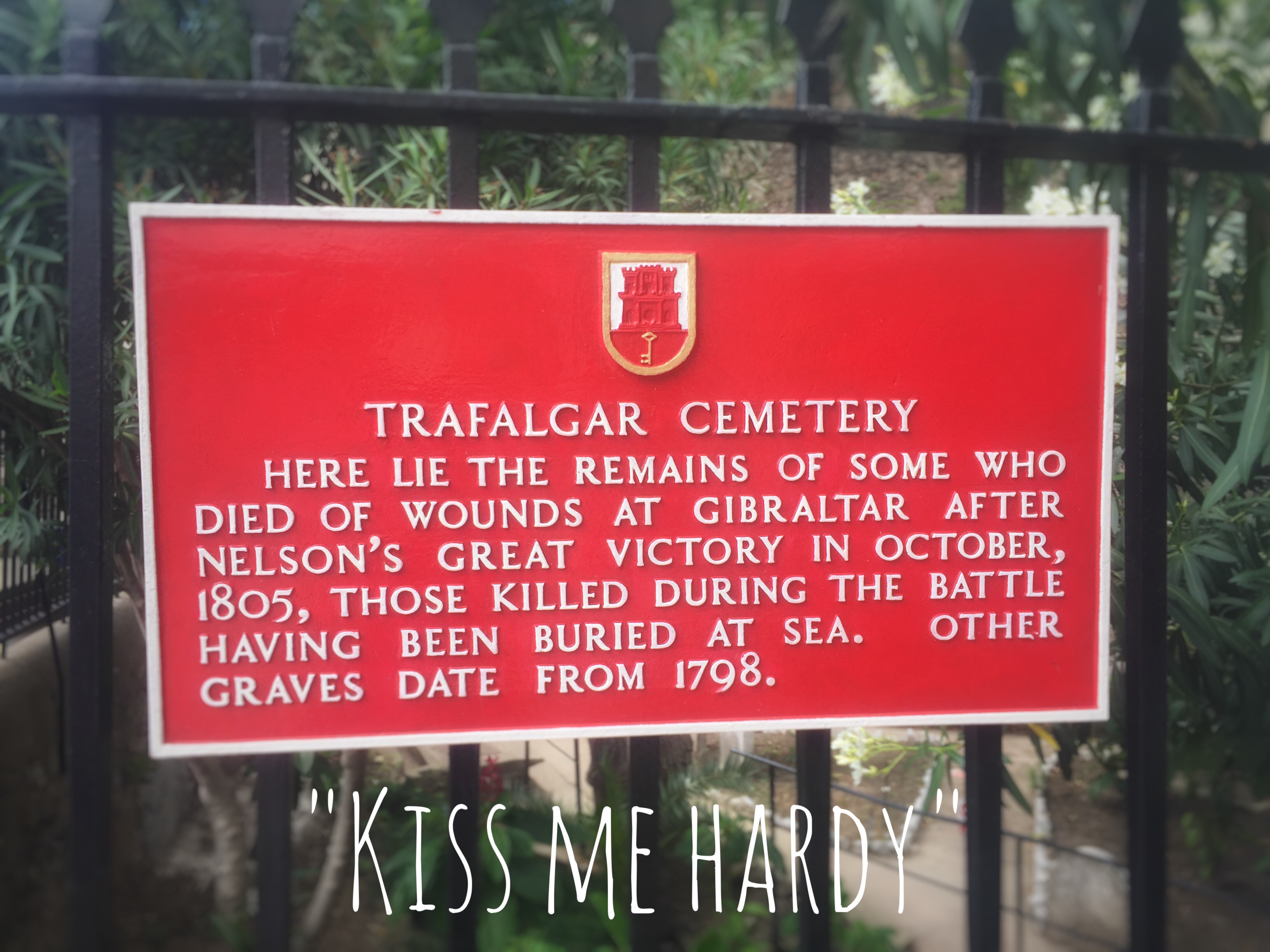
And then, turning a corner on the far side of town as we began to climb up to the National Park, we chanced upon Trafalgar Cemetery – where those who died from wounds post the battle of Trafalgar in 1805 were buried. All except Nelson himself, that is, who was pickled in brandy aboard HMS Victory by a sharp thinking surgeon before undergoing a two month journey back to England for a suitably fitting state funeral and burial at St Paul’s Cathedral.
Somewhat underwhelmed by Gibraltar thus far, we started to climb and leave the town behind us – along residential roads lined with high rise apartments, a crumbling, rusting and tumbledown casino, a quietly chic looking Art Deco hotel that must have been something to behold in its heyday and, just like across the border in Spain, roads bearing startlingly fast drivers, particularly considering the narrowness of the streets.
Finally we arrived at the entrance to the National Park and a steady incline up to Jews Gate and the start of the Mediterranean steps. It cost an exorbitant 50p per person to enter the National Park, I can hand-on-heart say it’s exceedingly good value for money.
And there we stepped into a different world – one where we replaced the waddling protagonists from the high street with a sanctuary of solitude and silence, save for our puffing breath and the mis-identification of many an indigenous plant and flower by me. “Oh is that the Gibraltan narcissi?” I pondered out loud, looking at a pretty pale purple flower. “No, I think it’s bindweed”, my friend answered.
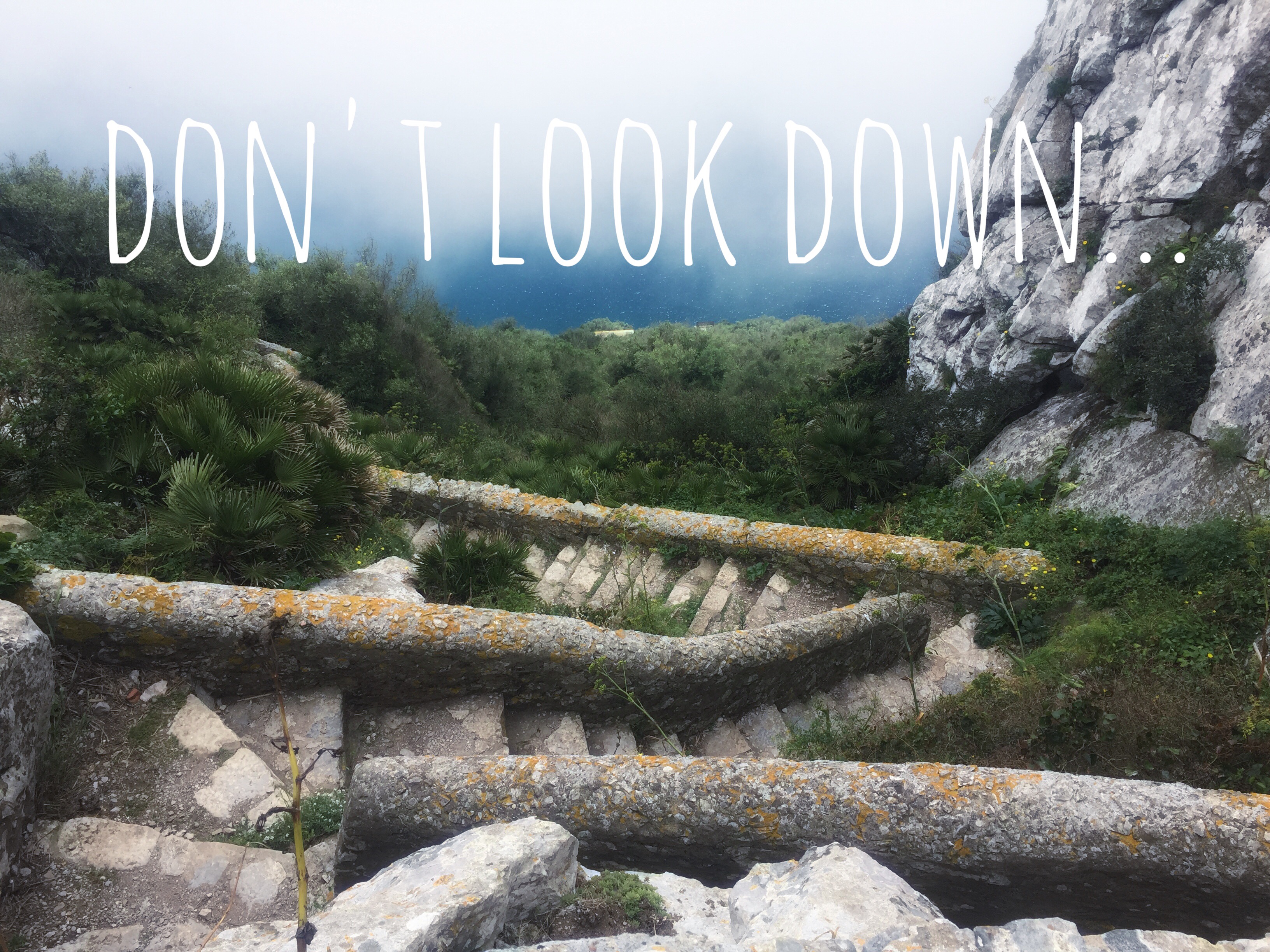
The Mediterranean steps were originally constructed by the British Military as part of the fortification of the Rock. I can’t imagine how hard it must have been to build the steps in the searing heat with the inhospitable terrain but I hope they took some small solace in the breathtaking views across the Straits to Morocco, we certainly did.
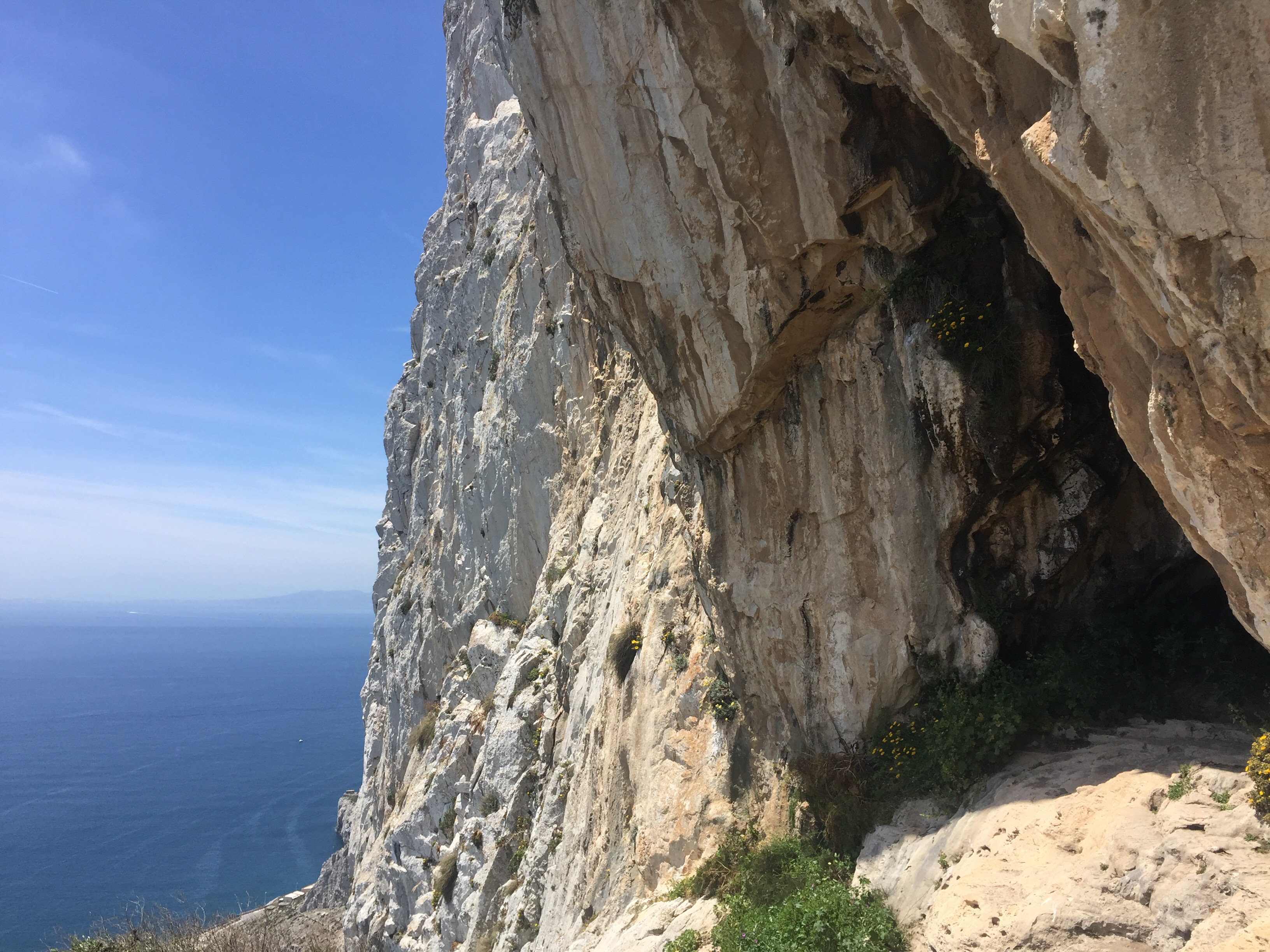
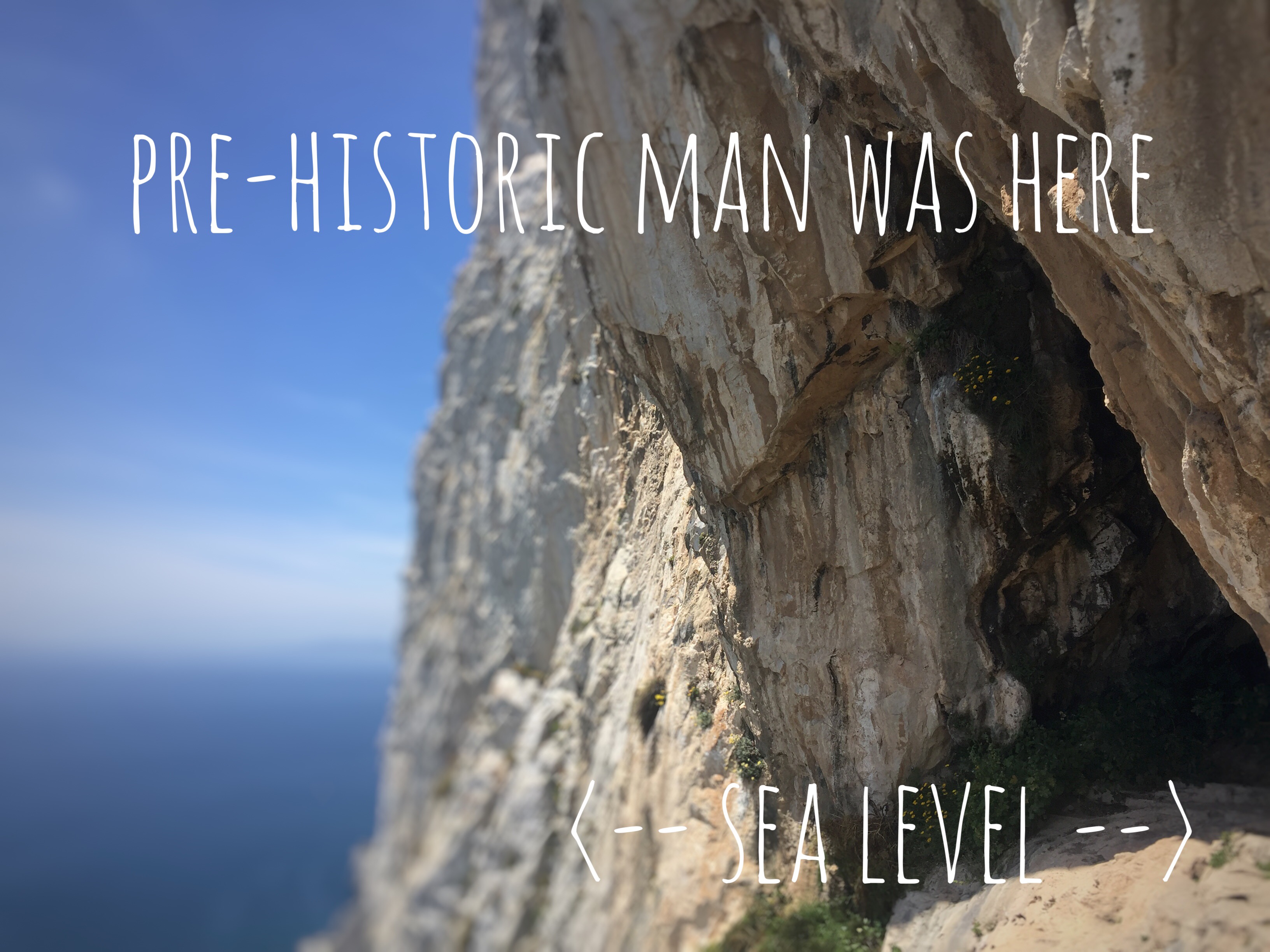
Half way up we passed pre-historic caves which were once at sea level, it took a while to get our heads round that one. We explored countless look out bunkers from World War II and marvelled at how the unfathomably heavy machinery, still in place and perfectly preserved had been hoisted up there, and we even spotted a peregrine falcon swooping below us.
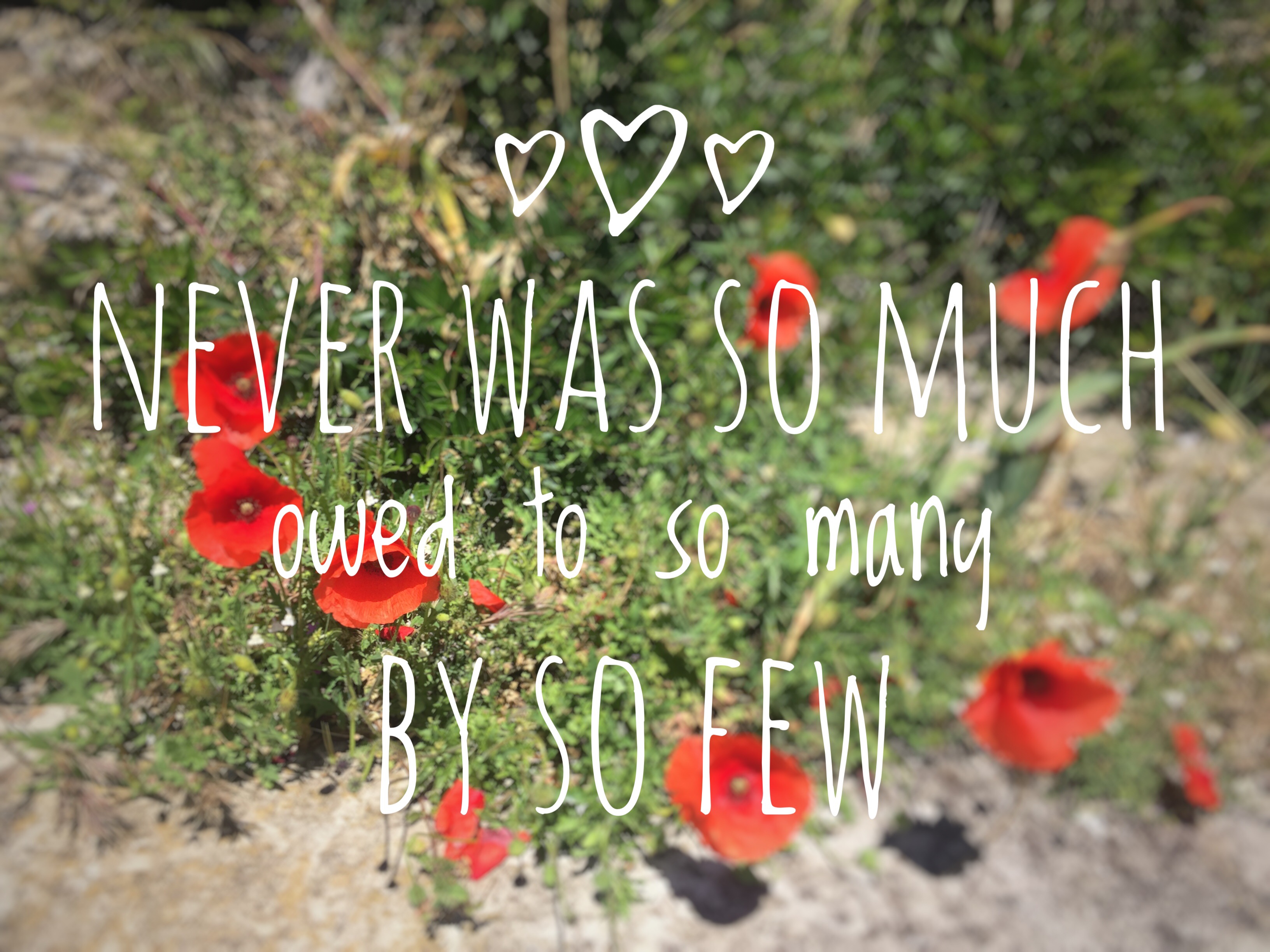
Wild poppies lined the rocky path – which, on reflection, seemed very apt given the provenance of Gibraltar’s military significance in British history.
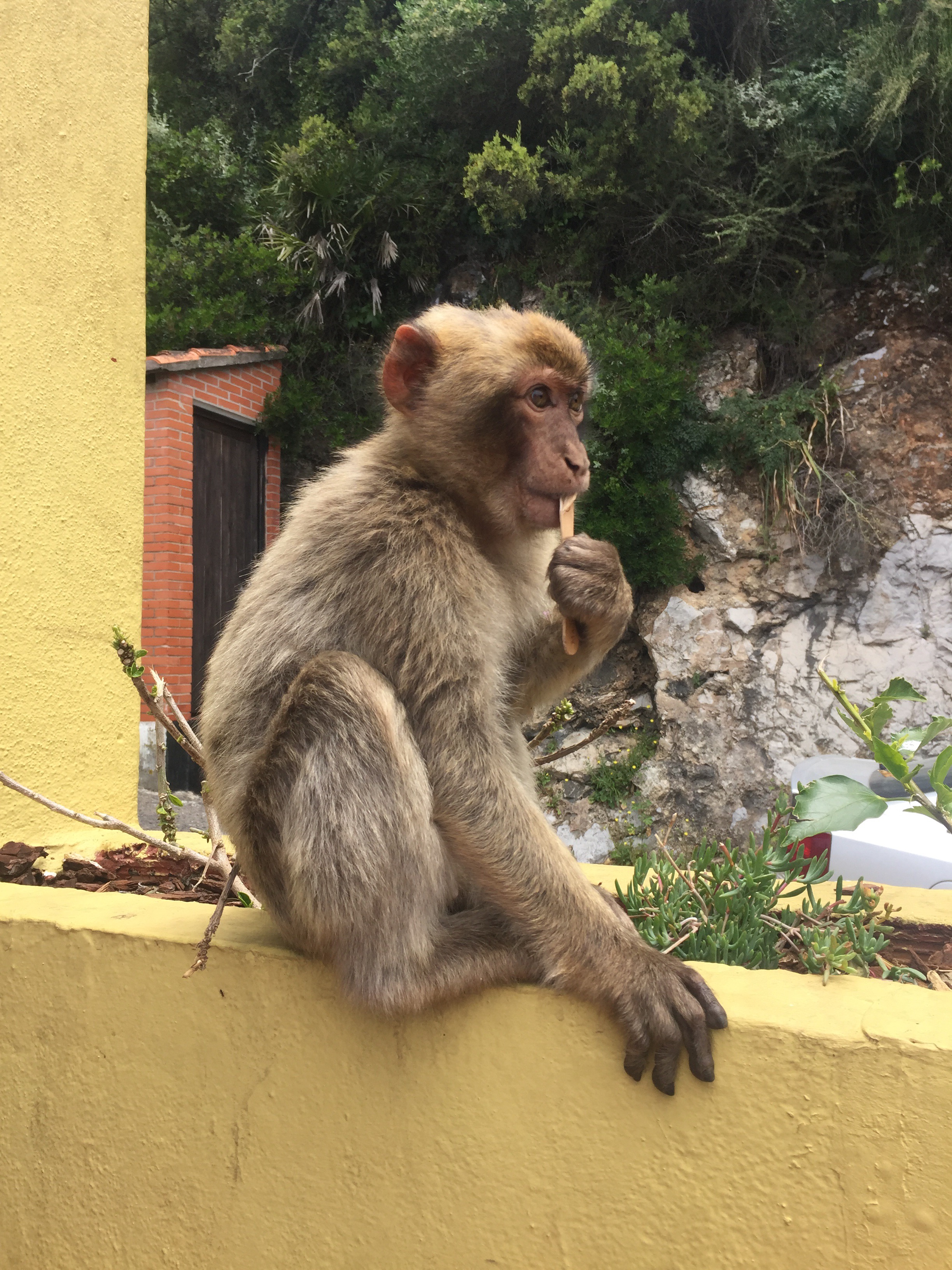
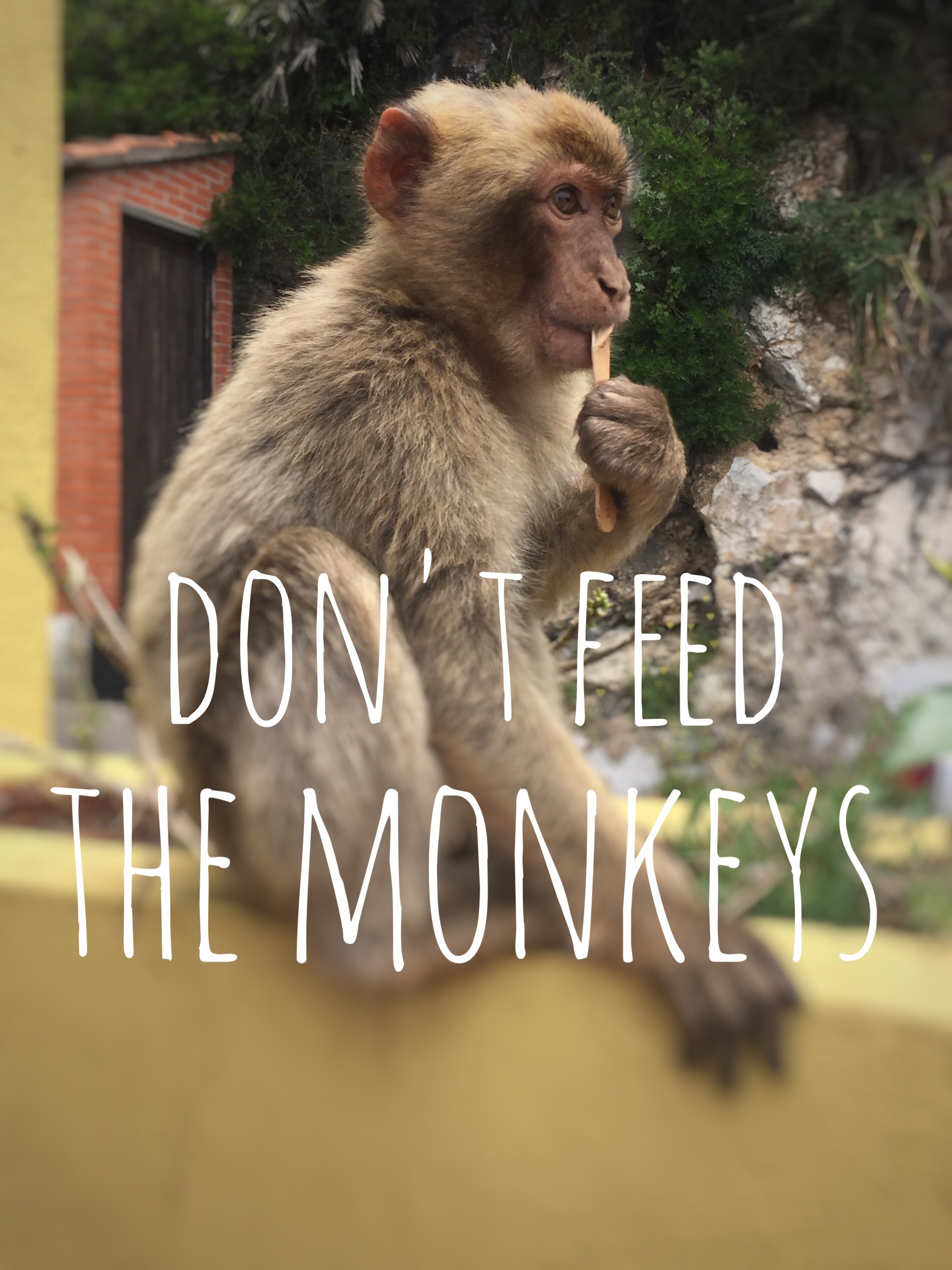
It’s at this juncture that I could become a total history bore – many of the stories from the Rock are such stuff that Hollywood blockbusters are made of. But in an attempt to keep you interested (spoiler alert: there’s a cute picture of a monkey-eating-a-magnum to come), I’ve boiled down my potted knowledge to the following fascinating facts.
The Rock is famous for the Great Siege Tunnels – a series of passages and tunnels that were excavated in circa 1780 and formed the basis for what turned into an underground fortress in World War II, housing guns, hangars, ammunition stores, barracks, kitchens and hospitals. To put this into context; Gibraltar is 2.6 square miles yet the tunnels are a whopping 34 miles long. During WWII, this stronghold accommodated 16,000 men along with all the supplies, ammunition and equipment needed to withstand a prolonged siege – some of the soldiers often would go without seeing broad daylight for over two months.
Fifty two years after the Second World War ended in 1997, it was discovered that we had a highly classified plan called Operation Tracer to secretly seal six men into a specially drilled out tunnel with radio equipment to report enemy movements, should the Germans have captured the Rock.
The operation was so covert that only a select few in Whitehall knew about it. A six-man team underwent rigorous psychological and aptitude tests for being entombed alive in an underground bunker (although heaven only knows how you test for that?). Provisions for a seven year sojourn in the “Stay Behind Bunker” were amassed.
The team waited, top secret and under cover, in Gibraltar for two and half years. Thankfully, despite being completely surrounded by occupied territory, Gibraltar remained under British power and, after the war ended, the cave was closed off, still top secret, and the team were disbanded to resume civilian life.
Rumours of the Stay Behind Cave apparently swirled around for decades in Gibraltar, until discovery of the chambers in 1997 by the Gibraltar Caving Group. The authenticity of the site was confirmed by the last surviving member of the Tracer team who died in 2010 – imagine keeping that a secret for fifty two years?! Clearly they chose its potential inhabitants well.
Finally – when World War II broke out, the majority of the civilian population, some 22,000 people, were evacuated to Morocco, the UK, Jamaica and Madeira so that the military could fortify Gibraltar. Many lived in camps in awful conditions and were passed from pillar to post, the last of the evacuees weren’t able to return until 1951 – an astonishing six years after the war had ended.
The civilians were evacuated so that 30,000 British soldiers, sailors, and airmen could move to the Rock to defend the vital shipping routes to the Mediterranean and so that six carefully selected men could be sealed alive in a Stay Behind Bunker should Gibraltar have fallen to the Nazis.
So, all in all, we owe quite a bit to Gibraltar and its people.
During the last ascent of the walk, we came across the Macaque Barbery Apes which infamously reign over the top of the Rock. They’re not actually apes at all, they are tail-less monkeys, and the only population of wild monkeys in Europe.
Despite a £500 fine for feeding the monkeys and signs everywhere saying that they are not to be fed, we encountered monkeys eating Digestive biscuits and remnants of a Magnum ice cream….*rolls eyes*. No wonder they were a bit mental.
I wasn’t a big fan of the monkey – and neither was Tiggy as, unbeknownst to her, they were the reason she’d been foisted on a kind friend for the day back in Tarifa. We all felt that the odds of one feisty Jack Russell Terrier vs two hundred and thirty monkeys may not be in our favour.
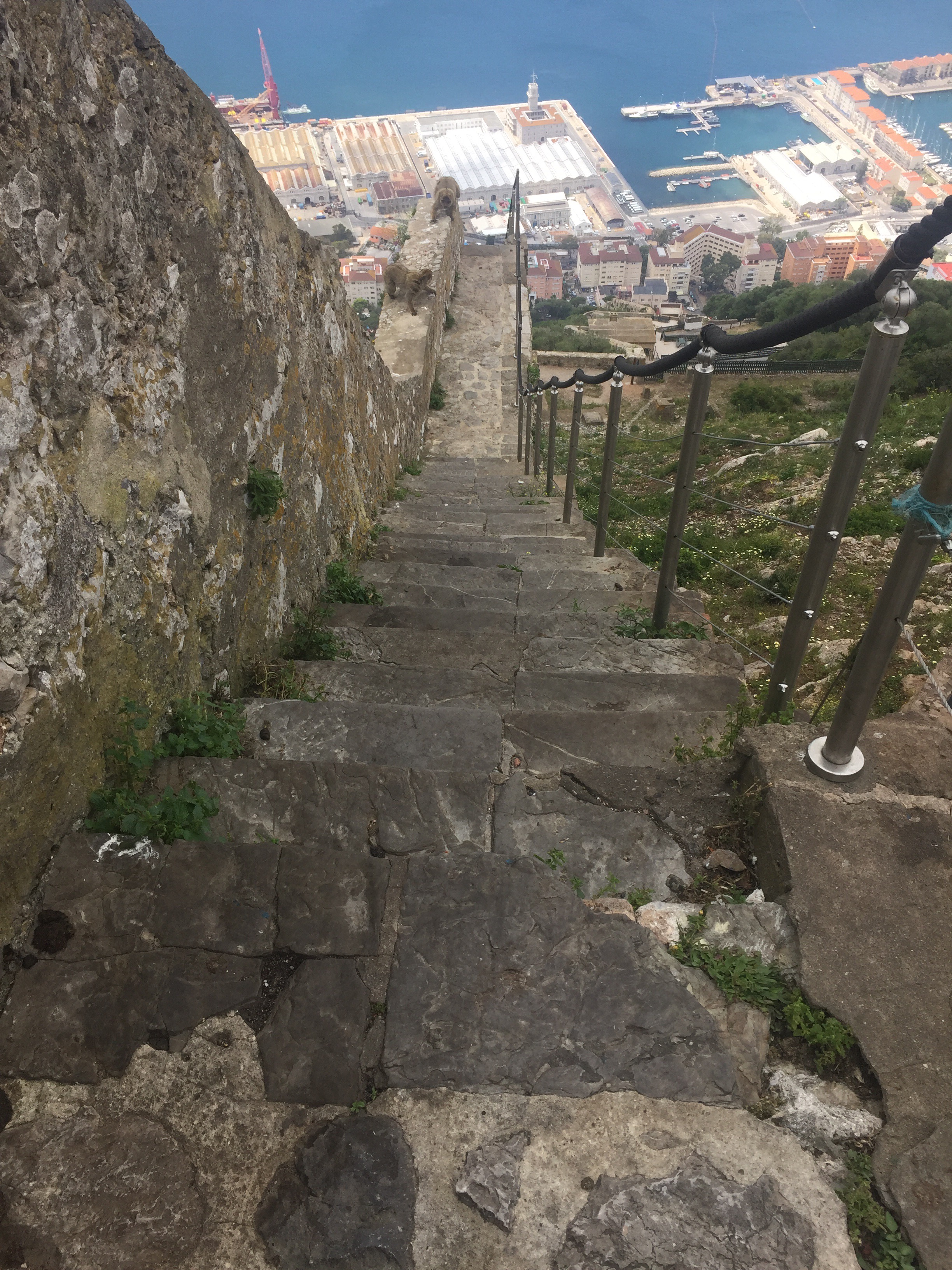
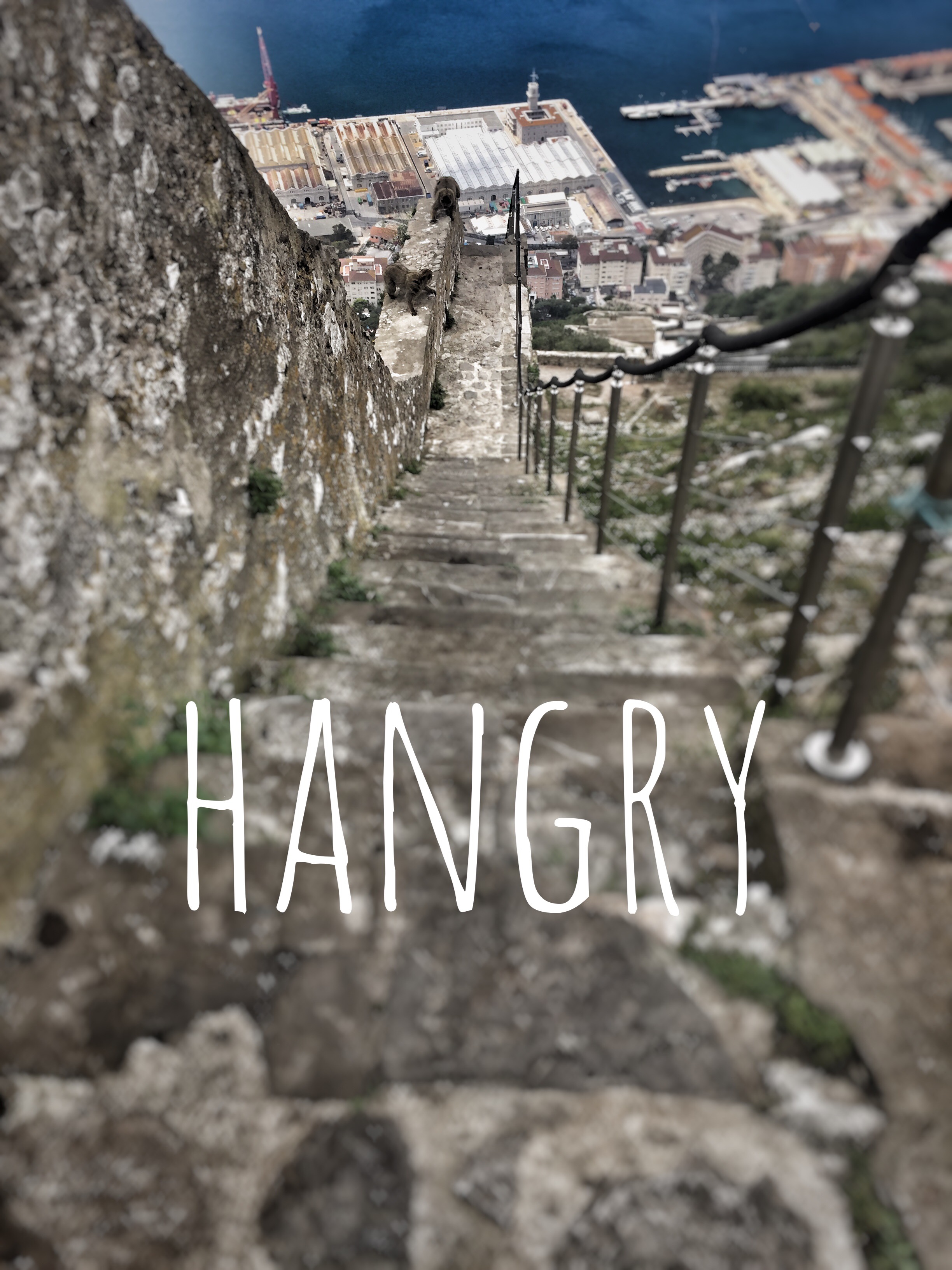
Finally we came across the medieval steps which we both tentatively and hurriedly descended as they were patrolled by some rather possessive looking monkeys who ‘may become aggressive if cornered on the steps’.
We meandered back to the national park entrance via the large chimneys of the now-defunct military kitchens – and braced ourselves to face the sights, smells and sounds and the onslaught of the High Street once more.
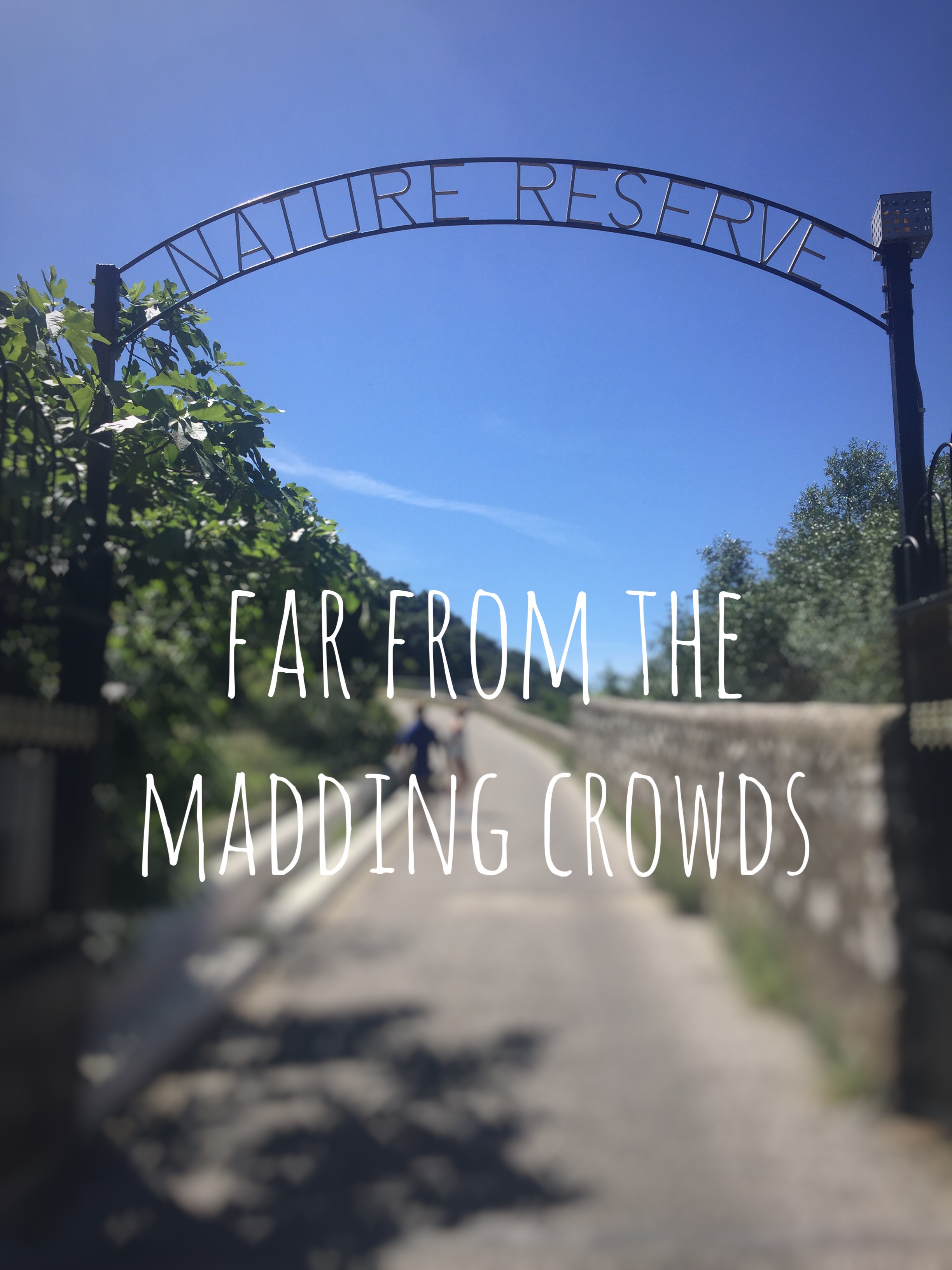
I don’t feel my description has done justice to how stunning the walk was – the amazing views made the glute-toning, challenging steps all worth while and it felt special to be able to cherish the magic of the Rock far from the madding crowds who ascend it via cable car, take a selfie with a monkey, scoff an ice cream, turn around and go straight back down again.
Thirteen miles, 99 floors and 30,214 steps later we crossed the border once more to our cars (this time we had a near miss with a military plane landing on the runway). And with a big hug and very fond farewell I parted with my friends who returned back to the splendour of their 5* hotel (with the luxury of a bath!) and The Beast and I wound our way back through the spectacular views of Spanish National Park to Tarifa.
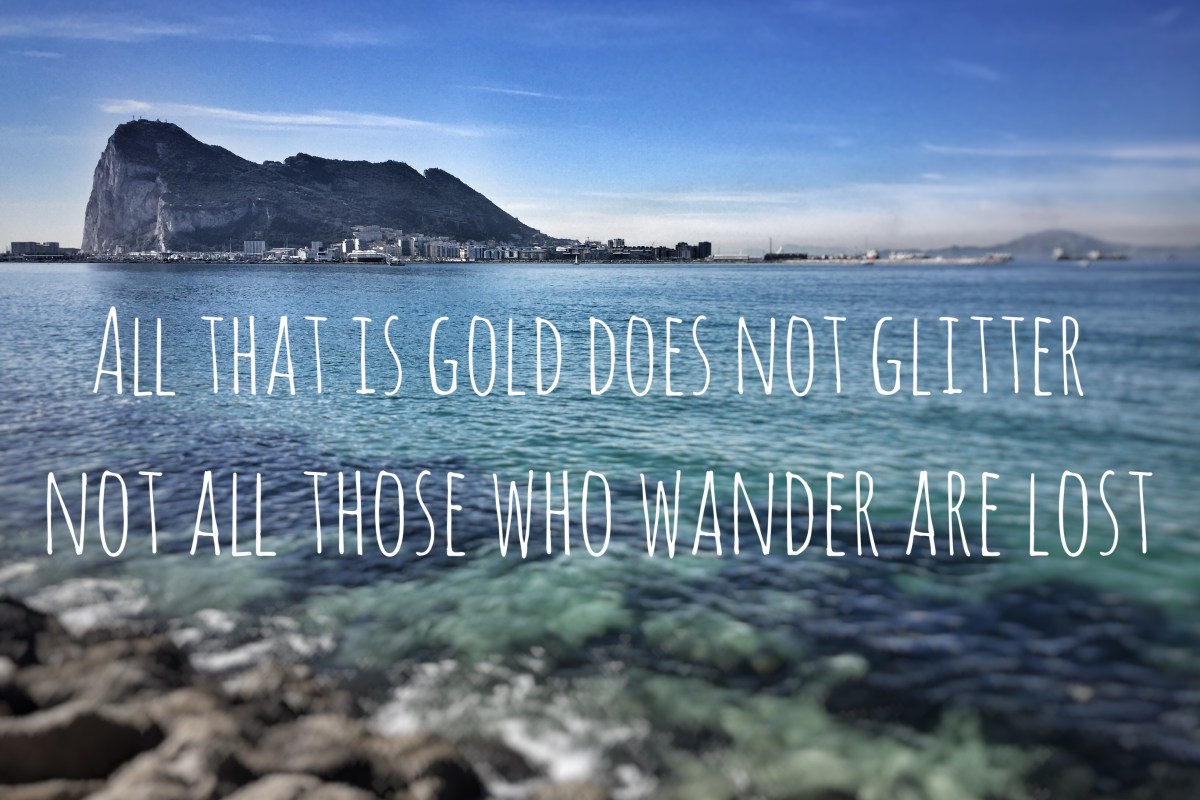
Driving back I thought about my first, instinctive impression of Gibraltar – were one to judge it by its cover – a tacky kind of Blackpool with guaranteed sunshine and marauding monkeys instead of donkeys – but as Tolkien said, ‘all that is gold does not glitter’ and to uphold that impression would be a great dis-service to both the Rock itself, the history it holds, as well the Gibraltarians and their extraordinary lives.
Plus, trust me, once you’ve climbed those steps for an hour and a half, navigated and negotiated with hangry monkeys and walked back down again, a plate of double-fried egg, sausage, chips and beans with lashings of HP sauce for £5.99 and all polished off with a pint of lager top might not seem quite such a bad idea after all…
It takes a long time to grow old friends and this was the most perfect of adventures with the oldest of friends. Our lives are a tapestry made up of occasions such as these, special moments to be stitched into memories.
Tolkien continued his beautiful poem with ‘not all those who wander are lost’. I love wandering – and our Gibraltar expedition proved that it doesn’t matter where you wander, on cliff tops, on beaches, in cities, in mountains, down rivers or canals – there’s always something interesting out there to learn and discover, wherever you are – all you have to do is go and look for it.







 Live The Life You Love